From Roman Evora to Porto: 10-Day Historic Journey
Explore Roman temples, Gothic cloisters, and royal palaces on a curated journey for two.
Duration: 10 days
Region: Multiple regions across Portugal
From 4500 EUR per person
Overview
Portugal's layered past unfolds across ancient stone ramparts, Roman columns, and river valleys cultivated across millennia. Over the course of this curated 10-day private journey, you trace the kingdom's evolutionary arc from Lisbon's maritime monuments and Moorish alleys to the UNESCO World Heritage monuments of Evora and Sintra. Northward, the fortified village of Obidos and the granite streets of Porto reveal the commercial and monastic traditions of the Middle Ages, culminating in the terraced slopes of the Douro Valley, where wine trade history dates to Antiquity. Accompanied by your dedicated private driver, this journey offers an unhurried exploration of Portuguese civilization, heritage, and timeless coastal landscapes.
Day-by-day itinerary
Day 1 — Arrival in Historic Lisbon
Arriving at Lisbon International Airport, you are met by your private driver and escorted to your hotel. Once settled, take an unhurried walk along the Tagus estuary where caravels once set sail, absorbing the capital's timeless light before an independent evening for dinner.
- Personal meet and greet upon arrival at Lisbon International Airport
- Direct private Mercedes-Benz transfer to your Lisbon hotel
- Afternoon walk along the historic Tagus riverfront
- Independent evening dining in the historic centre of Lisbon
Day 2 — Lisbon Age of Discovery and Ancient Quarters
Begin in Belem, the epicenter of Portugal's Age of Discovery, admiring its monumental riverside architecture and sampling classic custard pastries. Continue to the panoramic heights of Eduardo VII Park before exploring medieval Alfama. Your day includes a one-hour private tuk tuk journey traversing the centuries-old alleys and Moorish footprints of Alfama and Mouraria.
- Morning visit to Belem Tower and the Monument to the Discoveries
- Private one-hour tuk tuk route through historic Alfama and Mouraria
- Exterior appreciation of 16th-century Manueline art at Jeronimos Monastery
- Tasting traditional custard tarts at the historic Pasteis de Belem bakery
- Panoramic views from Eduardo VII Park and the medieval alleys of Alfama
Day 3 — Royal Sintra and the Maritime Coast of Cascais
Ascend into the mist-shrouded Serra de Sintra to encounter 19th-century Romanticism at Pena Palace, commissioned by King Ferdinand II. Stand atop the wind-swept headland of Cabo da Roca, then trace the Atlantic shoreline along the former royal retreat of Cascais and the storied coast of Estoril.
- Tour the 19th-century Romanticist park and chambers of Pena Palace
- Walk through the historic cobblestone lanes of Sintra village
- Dramatic ocean vistas at Cabo da Roca, continental Europe's western edge
- Scenic coastal drive past the historic resort towns of Cascais and Estoril
Day 4 — Evora UNESCO Heritage and the Historic Alentejo
Journey inland across the vast Alentejo landscape, shaped by centuries of cork cultivation, to reach Evora, an ancient crossroad of Roman, Moorish, and medieval Portuguese civilization recognized by UNESCO.
- Drive across the Alentejo countryside lined with cork oak groves
- Walk through Evora's UNESCO-recognized historic core
- Explore the stone alleys of the medieval quarter in Evora
Day 5 — Journey to Porto via Medieval Obidos and Nazare
Journey from Lisbon to Porto with visits to two historic settlements. Walk the fortified 12th-century ramparts and stone alleys of Obidos with a taste of local ginjinha, then discover Nazare, famous for its maritime traditions, clifftop views, and chapel before arriving in Porto for the night.
- Walk the medieval stone ramparts and streets of fortified Obidos
- Taste traditional ginjinha cherry liqueur served in a chocolate cup
- Explore Nazare's clifftop viewpoint, lighthouse, and fishing traditions
- Evening arrival and hotel check-in in historic Porto
Day 6 — Historic Porto: Riverfront Heritage and Monuments
Dedicate the day to Porto's layered past. Survey the Douro from the 19th-century Dom Luis I Bridge, view the monumental azulejo panels recording national history inside Sao Bento Station, and stroll the medieval mercantile waterfront of the Ribeira district.
- Walk through the historic Ribeira quarter facing the Douro River
- Admire historic blue-and-white azulejo murals inside Sao Bento Station
- City panoramas near the iconic Clerigos Tower and Dom Luis I Bridge
- Scenic drive through historic Foz do Douro where river meets ocean
Day 7 — Douro Valley: Historic Terraces and River Cruise
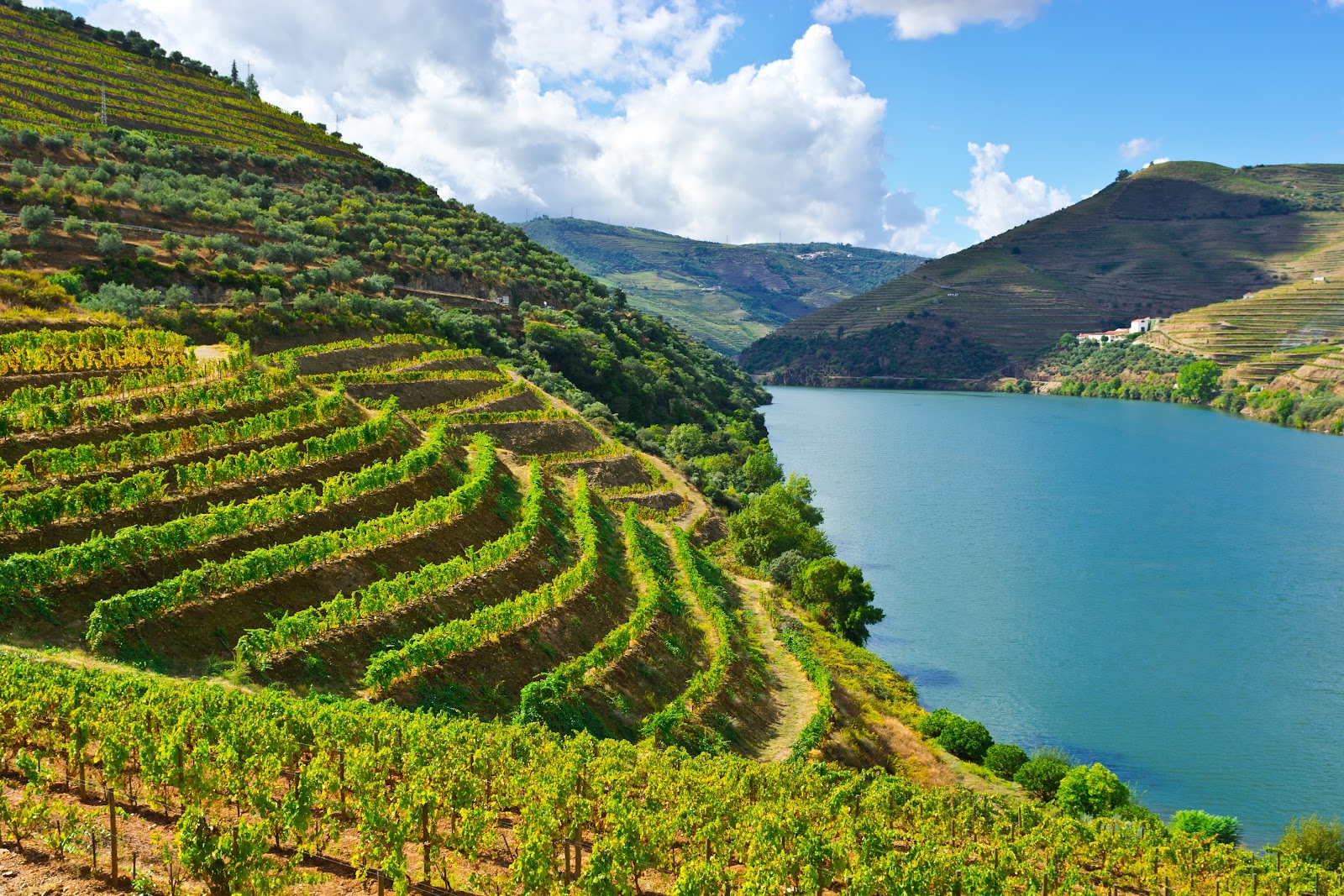
Travel into the Alto Douro, demarcated by the Marquis of Pombal in 1756. Begin with a private one-hour river cruise aboard a traditional vessel, surveying centuries of sculpted vineyard terraces from the water, followed by scenic drives overlooking Pinhao and Peso da Regua and a tasting at a historic family quinta.
- Private one-hour boat trip along the historic Douro River
- Panoramic viewpoints overlooking vineyard terraces near Pinhao
- Drive along the ancient river bends of the demarcated Douro Valley
- Time to explore the historic quinta grounds and vineyard scenery
Day 8 — Cradle of the Nation: Braga and Guimaraes
Trace the origins of the Portuguese kingdom in the historic Minho province. Visit Guimaraes, birth city of the first monarch, Afonso Henriques, before continuing to Braga, ancient Roman Bracara Augusta, to ascend the monumental 18th-century Baroque staircase of Bom Jesus do Monte.
- Walk through the medieval alleys and squares of UNESCO-listed Guimaraes
- Exterior view of medieval Guimaraes Castle and Palace of the Dukes
- Visit the monumental Baroque staircase of Bom Jesus do Monte
- Explore Braga's pedestrian centre and historic cathedral quarter
Day 9 — Private Transfer to Lisbon via Maritime Aveiro
Return toward Lisbon via the central coastal region, pausing in Aveiro to admire its maritime canals, painted moliceiro boats, and Belle Epoque Art Nouveau residences, followed by a visit to the traditional 19th-century striped beach huts of Costa Nova.
- Walk beside the historic canals and waterways of Aveiro
- Observe painted moliceiro boats and decorative Art Nouveau facades
- Taste traditional ovos moles conventual pastries in Aveiro
- Visit the traditional striped wooden cottages of Costa Nova
Day 10 — Departure from Historic Lisbon
Spend your final morning reflecting on Portugal's rich past at your own pace in Lisbon. At your appointed hour, your private driver provides direct transfer from your hotel to Lisbon International Airport, concluding an enriching survey of the nation's heritage.
- Leisurely breakfast and free morning in historic Lisbon
- Punctual private Mercedes-Benz transfer to Lisbon International Airport
- Luggage assistance and direct drop-off at your departure terminal
- Conclusion of an enriching ten-day historical journey across Portugal
Frequently asked questions
How is the travel paced between Lisbon and Porto on this ten-day itinerary?
The journey is structured to ensure comfortable travel without prolonged days on the highway. Rather than driving directly from Lisbon to Porto, your transfer day includes curated stops at the medieval walled town of Obidos and the Atlantic fishing enclave of Nazare. Stays are centered in Lisbon and Porto, allowing you to settle into each region without frequent hotel changes.
What level of walking and physical activity should we anticipate?
Moderate walking is required to explore historic centers, medieval fortifications, and palaces. Lisbon, Sintra, Evora, and Porto feature traditional cobblestones, uneven steps, and steep inclines. Your private driver provides drop-offs as close to site entrances as municipal regulations permit, and daily itineraries can be adjusted to match your preferred physical pace throughout the journey.
When is the best time of year to undertake this historical itinerary?
Spring, from April to June, and autumn, from September to October, offer ideal conditions. Temperatures during these periods remain mild for walking through archaeological sites in Evora and Sintra, while harvest season in late September brings vibrant activity and golden colors to the terraced vineyards of the Douro Valley. Summer remains feasible, though inland regions experience notable heat.
How is the history of the Douro Valley integrated into the northern route?
Designated the world's first officially demarcated wine region in 1756 by the Marquis of Pombal, the Douro Valley offers deep cultural history alongside scenic beauty. Your visit focuses on centuries-old viticultural traditions, the engineering of hand-built schist terraces, and the historic transport routes along the river that carried Port wine barrels downstream to the historic cellars of Vila Nova de Gaia.