The Blue Heart of Lisbon
Lisbon
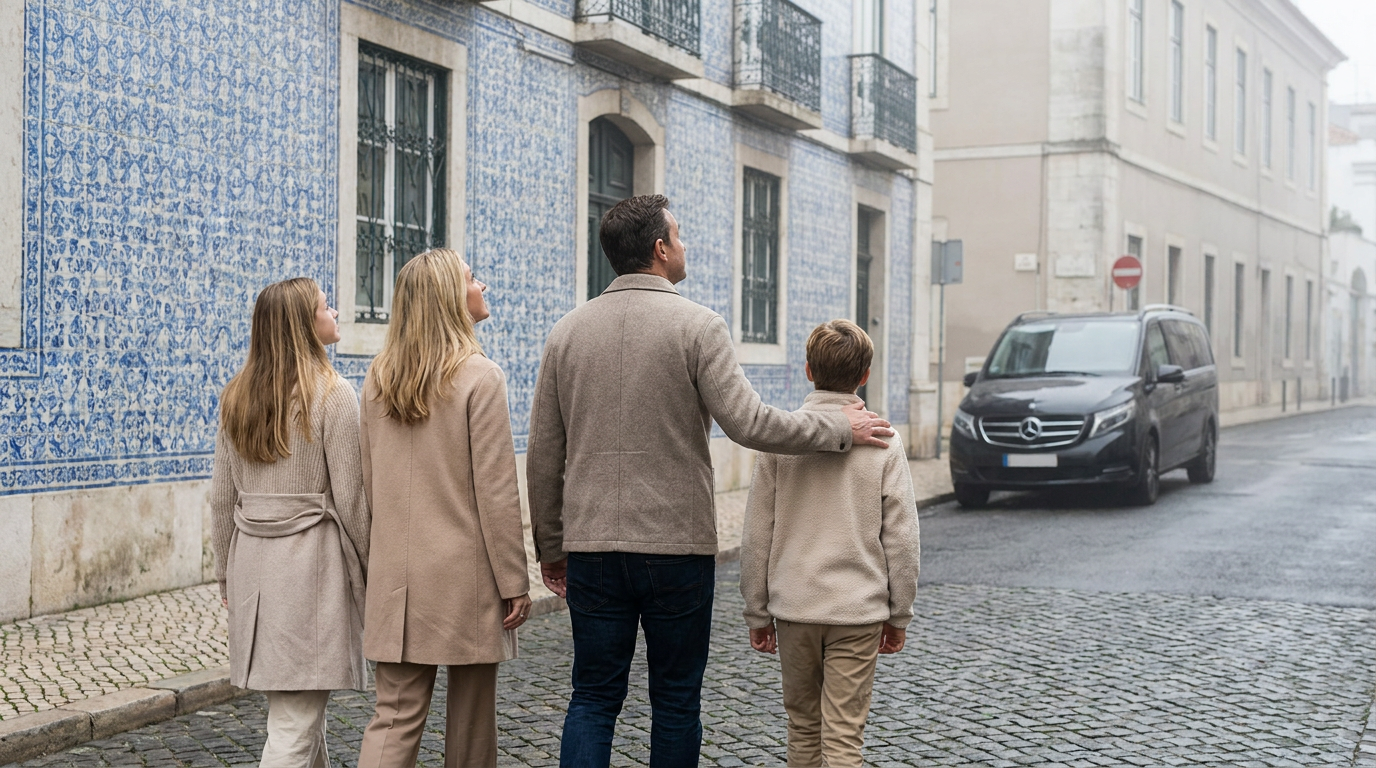
On a soft winter morning, as mist softened the edges of the city, a family from Chicago discovered that Lisbon’s greatest gallery is not found within four walls, but upon them.
A Different Kind of Treasure Hunt
For the Miller family, this was not their first visit to a European capital. But from the moment their private driver, André, guided their black Mercedes-Benz V-Class away from the well-trodden paths of Baixa, they sensed this trip would be different. The mission for the day, suggested by André, was a quiet one: to hunt for azulejos, the iconic painted tiles that are the very soul of the city.
Their search began not in a museum, but in the stately and silent streets of the Lapa district. Here, amidst grand embassies and private residences, entire buildings bloom with geometric patterns and narrative scenes. The air was cool and still, the city yet to find its full voice, and the only sounds were their own footsteps on the patterned calçada portuguesa and André’s soft-spoken commentary.
Where the Walls Have Stories
They moved slowly, an intentional pace set by a family rediscovering the art of looking. Leo, the youngest at fourteen, was the first to spot it: a facade of deep blue and yellow tiles depicting a winding floral motif, partially hidden behind a cascade of winter jasmine. They stepped out of the vehicle, the doors closing with a quiet, reassuring sound, and stood before it on the empty sidewalk.
The tiles were not perfect. Some were cracked, their glaze weathered by a century of salt air and sun, but this imperfection was their power. It was here that Eleanor Miller, the mother, felt the day’s purpose click into place. It was about finding beauty not in a pristine, curated state, but woven into the fabric of daily life.
[object Object]
The Estrela Pause
From Lapa, it was a short, seamless drive to the elegant neighborhood of Estrela. In the garden opposite the famous basilica, they paused. While Mark and Eleanor sipped coffees from a small kiosk, their daughter Chloe, sixteen, was captivated by the tile-adorned benches, each one a miniature masterpiece. She began photographing them with a focused intensity, cataloging the different styles, from the raised, carpet-like patterns of tapete tiles to simpler, repeating star shapes.
It was a simple, unscripted moment. There were no crowds, no queues, just the gentle hum of the city and the shared, quiet joy of discovery. This pause, suggested by their driver, was not about seeing another landmark. It was about absorbing the atmosphere, feeling the city’s pace, and letting the morning’s findings settle.
Connecting the Dots
The culmination of their hunt was the Museu Nacional do Azulejo, the National Tile Museum. Housed in the stunning, gold-leafed Madre de Deus Convent, the museum is the definitive library of the art form. Having spent the morning seeing the tiles in their natural habitat, the Millers walked through the cloisters and chapels with a newfound appreciation.
They saw the evolution from simple Moorish geometries to the grand, narrative blue and white panels that defined the Portuguese golden age. The highlight was the breathtaking panoramic panel showing Lisbon before the great earthquake of 1755. Stretched across an entire room, it connected all the pieces of their morning, placing the street-level details they had admired into a grand historical context.
[object Object]
The Art of the Everyday
As the Mercedes-Benz traced a path back toward their hotel in the late afternoon, the family was mostly quiet, each lost in their own reflections. It was then that André made one last, unplanned stop. He pulled over beside a modern building where a contemporary artist had created a vibrant, abstract mural from fragmented tiles.
It was a perfect bookend to the day. The azulejo was not just a relic of the past, but a living, breathing art form, still evolving, still telling the story of Lisbon. It was a final reminder that the most memorable travel experiences are rarely about ticking boxes, but about perspective.