Wild Masks and Clattering Bells: Podence and the Winter Caretos Tradition
By Portugal Magik · Published 2026-11-06
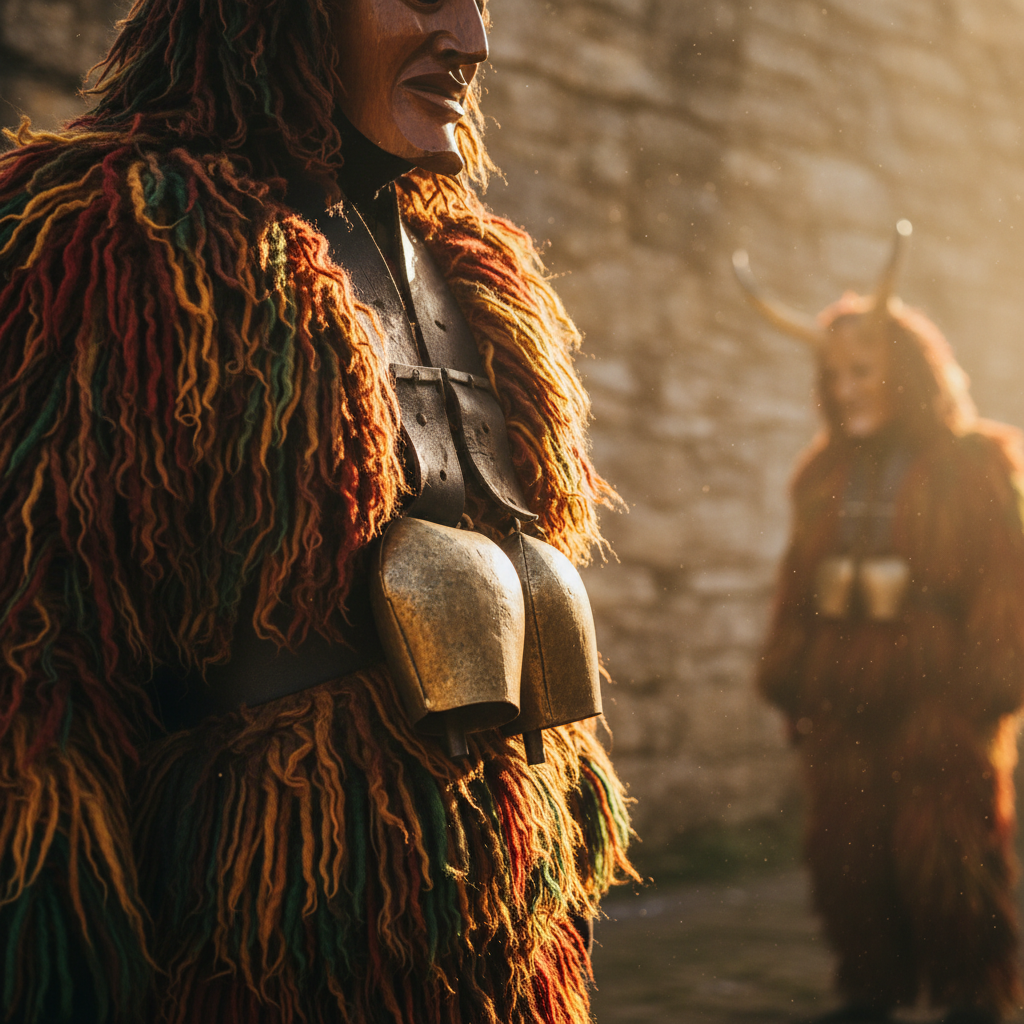
Discover the ancient, UNESCO-recognized Caretos tradition in Podence, where masked 'devils' and clattering cowbells bring the Portuguese winter to life.
The air in the remote village of Podence, located in the Tras-os-Montes region of Northeast Portugal, is usually silent, save for the distant chime of church bells or the rustle of wind through the olive groves. But as winter begins to fade and the Carnival season approaches, a frantic, rhythmic clattering begins to echo through the stone streets. It is the sound of dozens of cowbells, shaken by men dressed in shaggy, multi-colored wool suits and terrifying hand-painted masks. These are the Caretos, the "devils" of Podence, whose tradition is so unique it has been recognized by UNESCO as Intangible Cultural Heritage of Humanity.
Visiting this corner of Portugal during the Entrudo (the traditional Portuguese Carnival) feels like stepping back into a pre-Christian era. There are no neon lights or plastic beads here. Instead, you find a raw, energetic celebration of fertility, the arrival of spring, and the lighthearted subversion of social order. It is a spectacle of movement and sound that captures the wild heart of the Portuguese countryside.
## The Origins of the Caretos
The history of the Caretos is rooted in ancient rites of passage. Traditionally, the young men of the village would dress up in these elaborate disguises to represent the transition from adolescence to adulthood. In the past, they were the "masters of the village" for a few days, allowed to play pranks and disrupt the daily routine without consequence.
The costume itself is a masterpiece of folk art. It consists of a jumpsuit made of thick, fringed wool in bright reds, yellows, and greens. Across their shoulders and waists, they wear heavy leather belts laden with brass cowbells (chocalhos). The most striking feature is the mask, usually made of tin or leather, with a pointed nose and a mischievous or demonic expression. When a group of Caretos runs through the village, the combined weight and sound of the bells create a hypnotic, thunderous roar that vibrates in your chest.
## The Ritual of the Chocalhada
The primary mission of the Careto is to find "victims" among the crowd, specifically women, to perform the chocalhada. This involves the Careto jumping and dancing around a person, shaking their hips so that the cowbells rattle loudly against them. While it might sound intimidating, it is a playful, symbolic act of fertility that has been passed down through generations.
The village becomes a stage for high energy chases and laughter. You might see a Careto suddenly scale a stone wall or leap onto a balcony to surprise a spectator. The anonymity of the mask is key. Under the fringe and tin, the villager disappears, and the spirit of the "devil" takes over. It is a time for the community to let loose before the solemnity of Lent begins.
## Exploring Podence and the Region
Podence is a small, charming village characterized by its traditional architecture and warm hospitality. Even when it is not Carnival, the town celebrates its heritage through vibrant murals painted on the sides of houses, depicting the Caretos in various poses. A visit to the "Casa do Careto" is essential. This small museum serves as a cultural hub where you can see the costumes up close, learn about the artisans who make the tin masks, and view photographs of the festivities from decades past.
The surrounding region of Tras-os-Montes, which translates to "Behind the Mountains," is one of Portugal's most authentic and rugged landscapes. It is a place of deep valleys, ancient oak forests, and hearty gastronomy. After the excitement of the masks, many visitors find peace exploring the nearby Azibo Reservoir, a protected area with calm waters and walking trails that offer a beautiful contrast to the chaotic energy of the village.
## Traditional Flavors of the Northeast
The cold winter air of the northeast calls for food that warms the soul. In this part of Portugal, the cuisine is focused on high quality meats and locally sourced ingredients. You will often find "Posta Mirandesa" on the menu, a thick, tender steak from the local Mirandesa cattle, seasoned simply with sea salt and grilled over an open flame.
Another regional staple is "Alheira," a unique sausage made with bread and various meats. During the festivities in Podence, the smell of wood smoke and grilled meats wafts through the air as families open their doors to visitors. Sampling the local smoked ham (presunto) and the sheep cheeses from the neighboring mountains is a must for any food lover visiting the area.
## Practical Tips for Your Visit
Planning a trip to see the Caretos requires a bit of foresight, as the Entrudo dates change every year according to the lunar calendar. The main events typically happen between the Saturday and Tuesday before Ash Wednesday.
### Getting There and Around Podence is located near the town of Macedo de Cavaleiros. It is roughly a two hour drive from Porto, making it a perfect addition to a journey through Northern Portugal. Because public transportation in this rural region can be infrequent, traveling with a private driver is the most comfortable way to navigate the winding mountain roads and ensure you arrive in the heart of the village without the stress of parking in narrow streets.
### What to Wear The weather in February or March in Tras-os-Montes can be biting. It is common to have crisp, sunny days followed by very cold nights. Layering is essential. Wear sturdy walking shoes, as the village streets are often cobbled and uneven. If you are standing in the crowd, be prepared for a Careto to come your way. It is all part of the spirit of the event, so a sense of humor is your best accessory.
### Photography and Etiquette The Caretos are very photogenic and generally happy to pose for pictures between their chaotic runs. However, remember that this is a living tradition and a real village. Respect the residents' privacy and follow the flow of the crowd. The best photos are often captured in the late afternoon when the winter sun hits the bright yellow and red fringes of the costumes.
## Why This Tradition Matters
In a world that is becoming increasingly modernized, the Winter Caretos of Podence represent a rare link to the past. The fact that the younger generation in the village continues to embrace the tradition ensures its survival. It is not a performance put on for tourists; it is a vital part of who they are.
By visiting Podence, you are not just watching a parade. You are witnessing a communal act of storytelling that has survived for centuries. It is a reminder of the power of local identity and the beauty of Portugal's diverse cultural landscape. From the clash of the bells to the smell of the winter bonfires, it is an experience that stays with you long after you have left the mountains.
## Experience the Heart of Portugal
Exploring the hidden corners of the Tras-os-Montes region is a journey into the soul of the country. At Portugal Magik, we are dedicated to discerning international travelers seeking premium experiences. With over 14 years of experience, we provide seamless, private transport in our fleet of Mercedes-Benz E-Class, V-Class, and Sprinter vehicles.
Our professional English-speaking drivers handle the logistics, allowing you to focus on the sights, sounds, and flavors of the region. Whether you want to witness the wild masks of Podence or discover the quiet beauty of the northern mountains, we provide the flexibility and comfort required for a truly memorable trip.
Speak with our team and discover how to turn this experience into reality.