The Warrior Monks’ Legacy: A Private Connoisseur’s Guide to the Templar Strongholds and Sacred Geometry of Central Portugal
By Portugal Magik · Published 2026-09-19
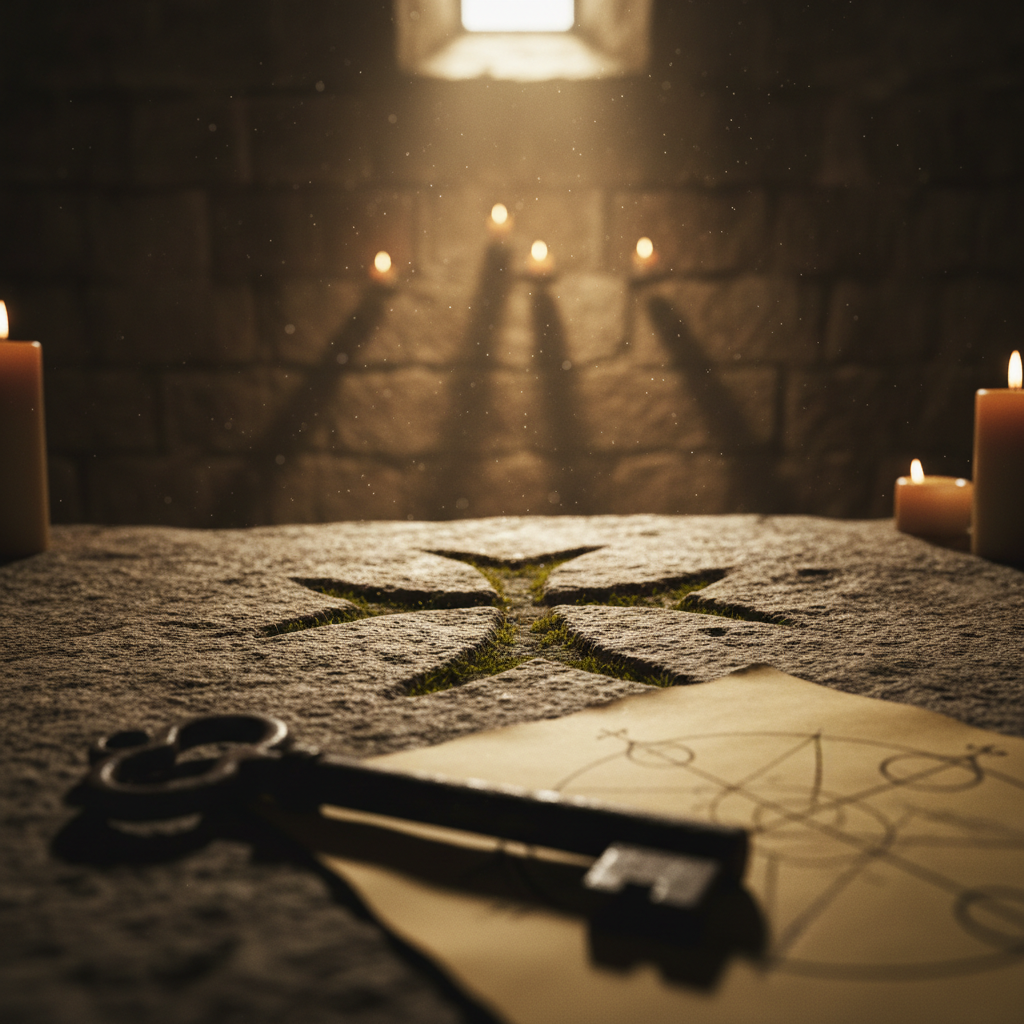
Discover the hidden history and sacred architecture of the Knights Templar in Central Portugal, from the mysterious Convent of Christ to the river fortress of Almourol.
The landscape of Central Portugal holds secrets that have endured for nearly a millennium, etched into the limestone of its fortresses and the precise alignments of its sacred architecture. For the discerning traveler, a journey through this region is not merely a sightseeing excursion but an exploration of the Order of the Knights Templar, the warrior monks who were instrumental in the birth of the Portuguese nation.
This guide explores the profound legacy of these enigmatic figures, focusing on the strongholds where history, mysticism, and architectural brilliance converge.
## The Convent of Christ: A Masterpiece of Sacred Geometry
The city of Tomar serves as the spiritual and administrative heart of the Templar presence in Portugal. Rising above the Nabão River, the Convent of Christ (Convento de Cristo) is a monumental complex that evolved over seven centuries, beginning with the construction of the Templar Castle in 1160.
### The Charola: The Mystic Rotunda
The true soul of Tomar lies within the Charola, the original Romanesque rotunda inspired by the Holy Sepulchre in Jerusalem. Its octagonal structure was designed to allow knights to attend mass on horseback, but its significance runs deeper. The sacred geometry employed here, with its emphasis on the number eight, symbolizes rebirth and the bridge between the earthly and the divine. The interior, adorned with late Gothic and Manueline paintings and sculptures, offers a quiet space for reflection on the profound spiritual devotion of the Order.
### The Manueline Window: Stone as Poetry
As the Order transitioned into the Order of Christ in the 14th century, the architectural style evolved into the uniquely Portuguese Manueline. The Chapter House window is perhaps the most famous example of this style in existence. It is a dense, symbolic tapestry of stone, featuring maritime motifs, coral, and the ropes of the great Age of Discovery, all anchored by the Cross of Christ. Observing this detail up close allows one to appreciate the transition from the austere military origins of the Templars to the global maritime ambitions they helped fund.
## Almourol: The Fortress in the River
Few sights in Portugal are as evocative as the Castle of Almourol. Perched on a small granite islet in the middle of the Tagus River, this fortress appears like a mirage, especially when the morning mist clings to the water.
Rebuilt by Gualdim Pais, the Grand Master of the Templars, in 1171, Almourol served as a vital link in the Tagus line of defense. The castle is a prime example of Templar military architecture, characterized by its high, slender walls and square keeps. Because it has remained largely unchanged since the medieval era, it offers a remarkably authentic glimpse into the strategic mind of the warrior monks. The approach by a small local boat adds a layer of quietude to the experience, allowing for a perspective of the walls that few other fortresses can provide.
## Dornes and the Pentagonal Tower
For those seeking a more secluded encounter with Templar history, the village of Dornes is an essential stop. Located on a peninsula within the Castelo do Bode reservoir, this picturesque settlement is home to a rare pentagonal tower.
Unlike the common square or round towers of the era, the five sided structure at Dornes was built using ancient Roman foundations and served as a defensive watchtower. The use of five sides is often linked to the symbolism of the pentagram, representing the five wounds of Christ or the five senses. The surrounding landscape, dominated by the tranquil expanse of the water and the scent of pine and eucalyptus, provides a serene backdrop for contemplating the more esoteric aspects of the Order.
## The Hidden Symbols of Santarém
Santarém, once known as the "Capital of Portuguese Gothic," was another critical node in the Templar network. The Church of Santa Maria da Graça and the Church of São João de Alporão offer subtle clues to the Order's influence.
Travelers with a keen eye for detail will find recurring symbols in the stonework, from the fleur-de-lis to specific geometric patterns that suggest a hidden language shared among the master masons of the time. These churches are less about grand scale and more about the refinement of space and light, reflecting the intellectual sophistication that the Templars cultivated alongside their military prowess.
## Practical Considerations for the Connoisseur
Exploring the Templar route requires a balance between historical immersion and physical comfort. The region of Central Portugal is characterized by rolling hills and historic towns where parking and navigation can be challenging for those unfamiliar with the local terrain.
### The Advantage of a Private Driver
To truly appreciate the nuances of these sites, many travelers opt for a private chauffeured experience. A dedicated driver ensures a seamless transition between locations, eliminating the logistical stress of navigating narrow medieval streets or finding remote river crossings.
Traveling in a high-end vehicle, such as a Mercedes-Benz E-Class or a spacious V-Class, provides a climate-controlled environment to reflect on the history between stops. This level of service allows for a flexible itinerary, where the pace is dictated by your interests rather than a rigid schedule. Whether you wish to spend an extra hour studying the carvings in Tomar or stop for a quiet lunch overlooking the Tagus, a private service accommodates those preferences.
### Timing and Seasonality
The interior of Portugal can experience significant temperature shifts. The spring (April to June) and autumn (September to October) offer the most pleasant climate for exploring stone fortresses and walking through historic centers. During these months, the light is particularly soft, perfect for capturing the intricate textures of the Manueline architecture.
## The Legacy Beyond the Stone
The dissolution of the Knights Templar in the 14th century did not mark the end of their influence in Portugal. By transforming into the Order of Christ, they preserved their wealth, their knowledge, and their mission. It was this continued legacy that provided the naval expertise and financial backing for the Portuguese voyages of discovery, effectively bridging the Middle Ages and the Renaissance.
When one stands before the Cross of Christ in Tomar, it is possible to see the thread that connects the crusaders of the 12th century to the navigators who charted the globe in the 15th. It is a story of resilience, secret wisdom, and an unwavering commitment to a higher purpose.
## Discover the Heart of Portugal
The Templar strongholds of Central Portugal are more than just ruins; they are a testament to a sophisticated organization that shaped the very identity of a nation. To walk these halls and climb these battlements is to touch the pulse of history.
Portugal Magik has spent over 14 years refining the art of the private journey. Our fleet of premium Mercedes-Benz vehicles and our professional, English-speaking drivers are dedicated to providing a sophisticated and seamless experience through the historic heart of the country. We understand that for the discerning traveler, the quality of the journey is just as important as the destination itself.
Speak with our team and discover how to turn this experience into reality. Request your personalized proposal today and begin your journey into the enigmatic world of the Templars.