The Warrior-Monk’s Horizon: A Private Connoisseur’s Guide to the Templar Citadels and Sacred Almedinas of the Nabão Valley
By Portugal Magik · Published 2026-06-19
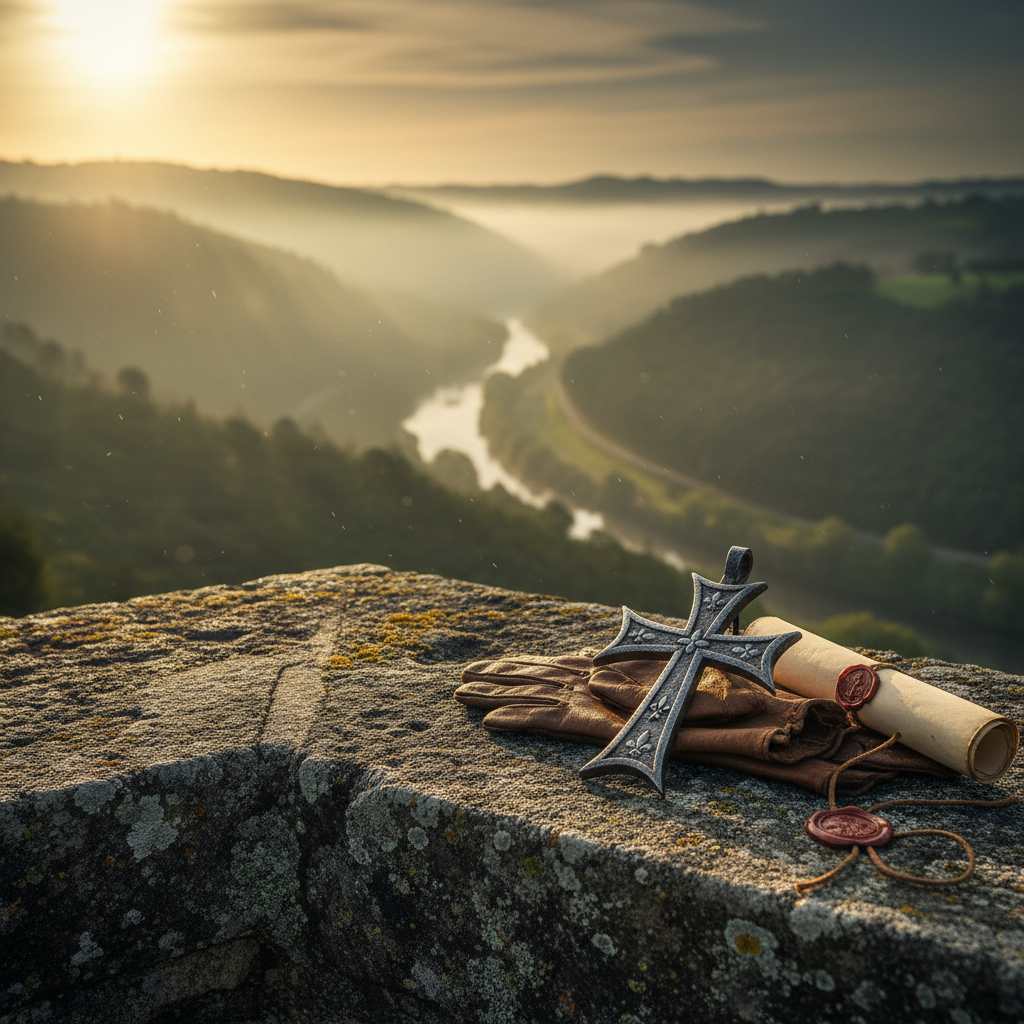
Explore the mystical world of the Knights Templar in the Nabão Valley, from the monumental Convent of Christ in Tomar to the river-bound fortress of Almourol.
The gentle curves of the Nabão River whisper secrets of an era when faith and steel forged the very foundations of the Portuguese nation. Moving north from Lisbon into the heart of the Ribatejo region, the landscape shifts from coastal brightness to a deep, contemplative green. This is the ancestral territory of the Poor Knights of Christ and of the Temple of Solomon, better known as the Knights Templar. Here, in the valley of the Nabão, the order did not merely build structures; they imprinted a celestial geometry upon the earth.
For the discerning traveler, a journey through these citadels is more than a historical excursion. It is a passage into a world of sophisticated architecture, esoteric symbolism, and the quiet dignity of a landscape that has remained largely untouched by the frantic pace of modern life. To explore this region is to walk where warrior-monks once meditated, charting the course of the Great Discoveries long before the first ship ever left the Tagus.
## The Convent of Christ: An Architectural Masterpiece
Dominating the skyline of Tomar is the Convent of Christ, a site so significant that it serves as a cornerstone of European heritage. Founded in 1160 by Gualdim Pais, the Grand Master of the Templars in Portugal, this fortress-convent is a living museum of the evolution of the Portuguese soul.
The Charola, or the Round Church, is the heart of the complex. Inspired by the Holy Sepulchre in Jerusalem, its octagonal structure allowed the knights to participate in religious services on horseback, a testament to their dual role as soldiers and monks. The interior is a breathtaking display of polychrome carvings, frescoes, and gilded details that catch the filtered sunlight in a way that feels nothing short of divine.
As one progresses through the cloisters, the transition from the stern Romanesque to the exuberant Manueline style becomes evident. The world-renowned Chapter House Window is the pinnacle of this artistic flair. Adorned with maritime motifs, coral, and ropes carved in stone, it represents the era when the Order of Christ (the successors to the Templars) funded the voyages that expanded the known world. It is a sight that demands time and quiet contemplation, best appreciated when the afternoon light heightens the three-dimensional depth of the stone.
## The Sacred Almedinas and the Medieval Heart of Tomar
Below the fortress lies the city of Tomar, laid out in a cross-shaped pattern aligned with the cardinal points. This deliberate town planning reflects the Templar preoccupation with sacred geometry and order. The historic center, or the old Almedina area, is a labyrinth of narrow cobblestone streets where whitewashed houses are draped in purple bougainvillea.
The Church of São João Baptista, located in the main square, offers a stunning example of flamboyant Gothic and Manueline design. Across the cobblestones, the Synagogue of Tomar stands as a rare and poignant reminder of the cultural plurality of the 15th century. It is the best-preserved medieval synagogue in Portugal, featuring a sophisticated acoustic system involving clay jars embedded in the upper corners of the walls. Walking through these streets, one senses a deep layer of history where different faiths and philosophies once converged under the protection of the Order.
## The Riverine Silence: The Nabão and the Seven Hills
The Nabão River does more than provide water to the valley; it provides a soul. The Mouchão Park, an island created by the river’s fork, features a traditional wooden waterwheel that continues to turn, offering a rhythmic, calming soundtrack to the afternoon.
Discerning visitors often find solace in the Mata dos Sete Montes (the Forest of the Seven Hills). This lush park was once the private enclosure of the Convent, used by the monks for meditation and cultivation. The "Charolinha," a miniature secret temple tucked away within the foliage, served as a private retreat for the friars. This area provides a perfect counterpoint to the monumental scale of the castle, offering a more intimate connection with the natural beauty of the valley.
## Almourol: The Sentinel of the Tagus
A short distance from the Nabão Valley, where the Nabão meets the Zêzere and eventually the Tagus, stands the Castle of Almourol. Rising from a jagged outcropping of granite in the middle of the river, it is perhaps the most evocative image of the Templar legacy in the country.
Accessing the island involves a brief boat crossing, as the castle occupies the entire landmass. At sunset, the golden light reflects off the water, illuminating the high keep and the crenelated walls that have stood since 1171. From the top of the tower, the view encompasses the river’s strategic curves, revealing why this site was chosen to guard the approach to the nascent kingdom’s capital. It is a place of profound silence, save for the movement of the water against the stones.
## The Connoisseur’s Approach to Northern Ribatejo
Traveling through this region requires an appreciation for the subtle details. It is not a place for rushed itineraries or crowded buses. The beauty of the Nabão Valley lies in the transitions: the change in the scent of the air as you move from the pine forests to the riverbanks, the textural contrast of weathered stone against silk-smooth azulejo tiles, and the exceptional quality of the local culinary traditions.
The region is famous for its intricate sweets, particularly those made with egg yolks and sugar, such as "Fatias de Tomar." The local wine production, though less internationally famous than the Douro, offers sophisticated reds and crisp whites that pair perfectly with the hearty, earth-driven flavors of the Ribatejo countryside. Many travelers find that the most memorable moments are those spent at a small table in a quiet square, enjoying a regional glass of wine while the shadows of the Templar walls lengthen across the ground.
## Premium Travel in the Heartland
To truly absorb the weight of history in Tomar and its surroundings, the method of travel is paramount. Navigating the winding roads of the valley and the steep approaches to the hilltop citadels is best experienced with the comfort of a high-end vehicle and the insight of a professional who understands the nuances of the terrain.
Choosing a private experience allows for a fluid schedule. If the light is particularly beautiful at the Convent’s cloisters, one can linger. If the river mist at Almourol invites a longer walk along the banks, there is no ticking clock. This flexibility transforms a simple visit into a profound exploration of heritage.
### Essential Considerations for Discerning Travelers
* **Timing:** The months of May, June, September, and October offer a balanced climate, perfect for exploring both the stone monuments and the outdoor sites. * **Attire:** While the atmosphere is sophisticated, the historical sites involve uneven medieval stonework. Elegant yet comfortable footwear is highly recommended. * **Perspective:** To fully appreciate the Templar influence, consider looking for the "Cross of Christ" symbol, which appears in various forms across the region, from floor tiles to window carvings.
## Discovering the Hidden Portugal
The Nabão Valley and its Templar citadels represent a side of Portugal that is deeply authentic and intellectually stimulating. It is a region for those who find beauty in the intersection of myth and history, and who appreciate the craftsmanship of a bygone era.
Exploring this landscape is a journey into the very DNA of the country. From the formidable walls of the Convent of Christ to the ethereal presence of Almourol, the path of the warrior-monks offers a rare opportunity to step back in time without sacrificing the comforts of the modern world.
For those ready to delve into the mysteries of the Templar horizon, the journey begins with a commitment to excellence. Whether you are a history enthusiast, an architecture aficionado, or a seeker of serene landscapes, these sacred spaces remain ready to reveal their secrets.
Speak with our team and discover how to turn this experience into reality.