The Ultimate Guide to Portuguese Pastéis de Nata
By Portugal Magik · Published 2026-05-02
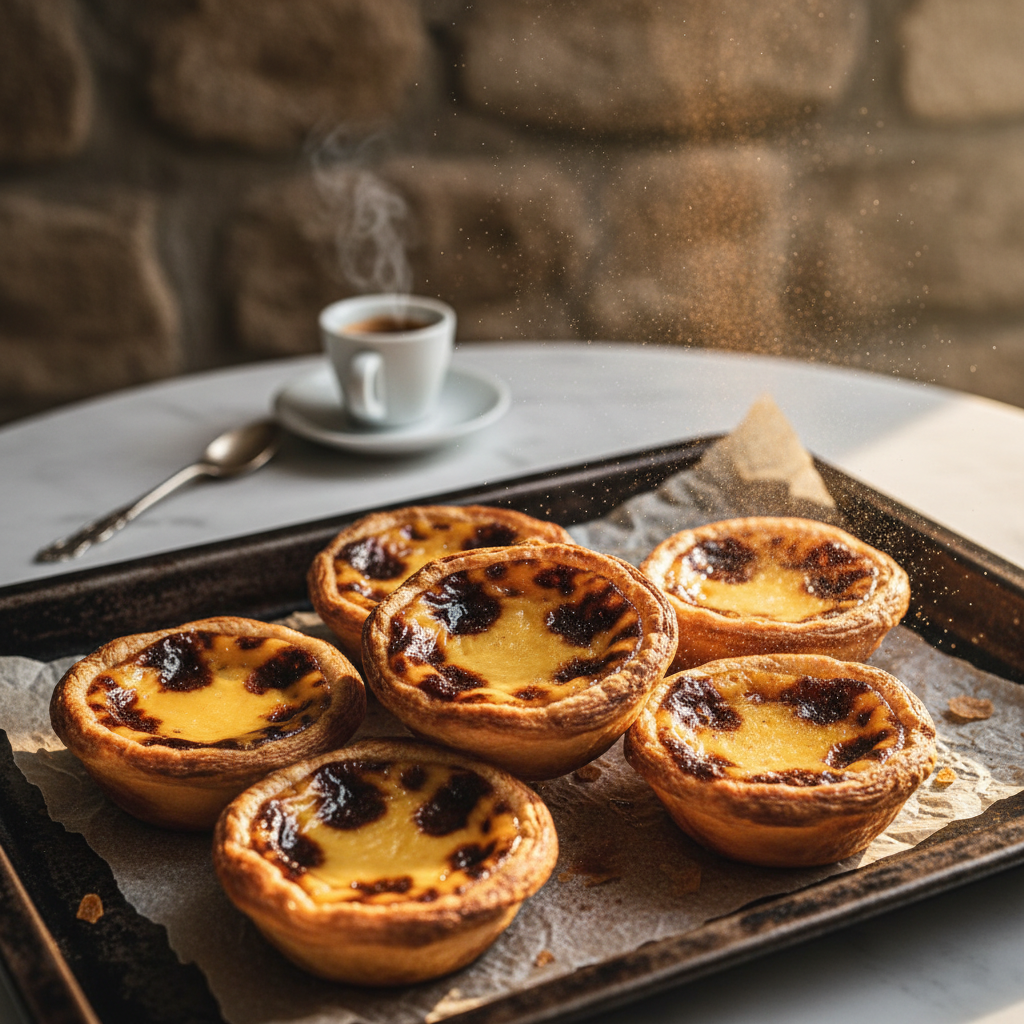
Discover the rich history, craftsmanship, and the best places to enjoy the iconic Portuguese custard tart in this sophisticated guide.
The story of the Pastel de Nata is not merely a tale of a sweet treat. It is a narrative that intertwines the history of Portuguese monastic life, the rise of the Age of Discovery, and the enduring passion for craftsmanship that defines the nation today. For those seeking to understand the soul of Portugal, tasting this iconic custard tart is a vital, sensory rite of passage.
The aesthetic of the tart is unmistakable: a flaky, golden-brown puff pastry crust that shatters with a delicate crunch, cradling a creamy, scorched custard center. While it has found its way to high-end bakeries in London, New York, and Tokyo, nothing compares to the experience of sampling it in the very neighborhoods where its recipe was forged centuries ago.
## The Monastic Origins of a National Icon
To appreciate the Pastel de Nata, one must look back to the 18th century and the Jerónimos Monastery in Belém, located just outside the center of Lisbon. At the time, monasteries and convents used vast quantities of egg whites to starch religious habits and clarify wines. This left an abundance of egg yolks, which the resourceful monks and nuns transformed into a variety of sweet confections, known today as *doçaria conventual* (conventual sweets).
When the Liberal Revolution of 1820 led to the closure of many religious institutions, the monks began selling these custard tarts to a small sugar refinery next door to generate income. By 1837, the refinery owners opened the Fábrica de Pastéis de Belém. The original recipe, known only to a few master bakers, remains a closely guarded secret, kept under lock and key and prepared in a "secret room" to this day. While every other bakery in Portugal produces a "Pastel de Nata," only those from this historic site can legally be called "Pastéis de Belém."
## The Anatomy of the Perfect Tart
While the ingredients seem simple (flour, butter, milk, sugar, and egg yolks), the execution of a premium Pastel de Nata requires technical mastery. Discerning travelers will notice several hallmarks of a truly exceptional tart:
### The Laminated Crust The base should be a spiral of puff pastry, never shortcrust. It must be exceptionally thin and crisp, providing a structural contrast to the soft filling. When you bite into it, the pastry should sound like a quiet crackle.
### The Custard Filling The cream should be smooth and rich but never overly sweet or cloying. An authentic tart is baked at extremely high temperatures (often above 300°C or 570°F), which creates the characteristic dark brown or blackened spots on the surface. These caramelized patches are essential, adding a hint of bitterness that balances the sweetness of the custard.
### The Finishing Touches In Portugal, it is customary to serve the tarts warm, accompanied by small shakers of powdered sugar and cinnamon. Many aficionados prefer a light dusting of both, though some purists argue that a well-made tart needs no further embellishment.
## Where to Find the Best Pastéis in Lisbon and Beyond
While the historic factory in Belém is the most famous destination, several other establishments have earned the respect of connoisseurs for their commitment to quality and heritage.
### Manteigaria (Lisbon & Porto) Many locals consider Manteigaria to be the gold standard in the modern era. With several locations, including one in the Time Out Market and another in the Chiado district, they focus exclusively on the Pastel de Nata. Travelers can often watch the pastry chefs through glass windows as they hand-fold the dough and fill the pans.
### Pasteleria Aloma (Lisbon) Located in the quiet, residential neighborhood of Campo de Ourique, Aloma has won numerous awards for its tarts. It offers an authentic atmosphere away from the primary tourist hotspots, making it a favorite for those seeking a more local experience.
### Confeitaria do Bolhão (Porto) For those traveling north to the city of Porto, this historic establishment offers a glimpse into the grand café culture of the early 20th century. Their tarts are a testament to the fact that while the recipe originated in the south, the mastery of the craft has spread across the entire country.
## Cultural Etiquette: The Bica and the Tart
To enjoy a Pastel de Nata like a true Portuguese local, one must pair it with a *bica* (a strong, short espresso). The bitterness of the coffee cuts through the richness of the egg custard, cleansing the palate between bites.
In Lisbon, the midday break for a coffee and a tart is more than a snack; it is a moment of reflection and social connection. Whether standing at a polished marble counter in a bustling downtown café or sitting under the shade of a jacaranda tree in a picturesque plaza, this ritual is a cornerstone of the Portuguese lifestyle.
## Beyond the Classic: Variations and Pairings
While the classic version reigns supreme, some modern pastry shops have experimented with subtle variations. You may find tarts infused with lemon zest or vanilla, though these are often frowned upon by traditionalists.
In terms of liquid pairings beyond coffee, a chilled glass of Port wine (specifically a 10 year old Tawny) or a glass of Ginjinha (cherry liqueur) can be a sophisticated way to transition the Pastel de Nata from a morning treat to an afternoon indulgence.
## Exploring the History with Ease
Navigating the hilly streets of Lisbon or the winding roads of the Douro Valley in search of these culinary treasures requires more than just a map. It requires a sense of timing and a knowledge of the local landscape. Understanding when to visit certain bakeries to avoid the heaviest crowds, or knowing which neighborhood gems remain hidden from the typical guidebook, is what elevates a simple trip into a refined journey.
For the international traveler, the most comfortable way to traverse these historic districts is through professional transport. Having a dedicated driver who understands the nuances of the city allows you to focus entirely on the sights, sounds, and flavors of Portugal. Instead of navigating traffic or searching for parking in historic zones, you can be dropped at the doorstep of a centuries-old pastry shop, ready to enjoy your tart while it is still warm from the oven.
## A Legacy of Taste
The Pastel de Nata is more than a pastry; it is a symbol of Portuguese resilience and creativity. It survived the upheaval of the 19th century to become a global ambassador for the country’s gastronomy. For those who appreciate the finer things in life, the journey to find the perfect tart is a rewarding exploration of culture, history, and craftsmanship.
When you find yourself standing before a golden, caramelized pastry in a historic Portuguese square, you aren't just tasting a dessert. You are tasting centuries of tradition, meticulously preserved and offered to the world one bite at a time.
## Discover the Flavors of Portugal with Professional Guidance
Exploring the culinary heritage of Portugal is a journey best taken at your own pace, with the comfort and flexibility that only a private service can provide. At Portugal Magik, we have spent 14 years dedicated to discerning international travelers seeking premium experiences. Our fleet of Mercedes-Benz vehicles, including E-Class and V-Class models, ensures that your travels between the monuments of Belém and the hidden bakeries of Lisbon are as seamless as they are sophisticated.
Our professional English-speaking drivers serve as your insightful companions, offering the logistical expertise needed to navigate Portugal’s most iconic destinations. Whether you wish to spend an afternoon admiring the architecture of the Jerónimos Monastery or embarking on a scenic drive to the northern reaches of the country, we provide the elegant transport solution that allows you to savor every moment.
Request your personalized proposal today and discover how to turn your vision of a Portuguese culinary adventure into a reality.