The Stillness of Alentejo
By Portugal Magik · Published 2026-05-02
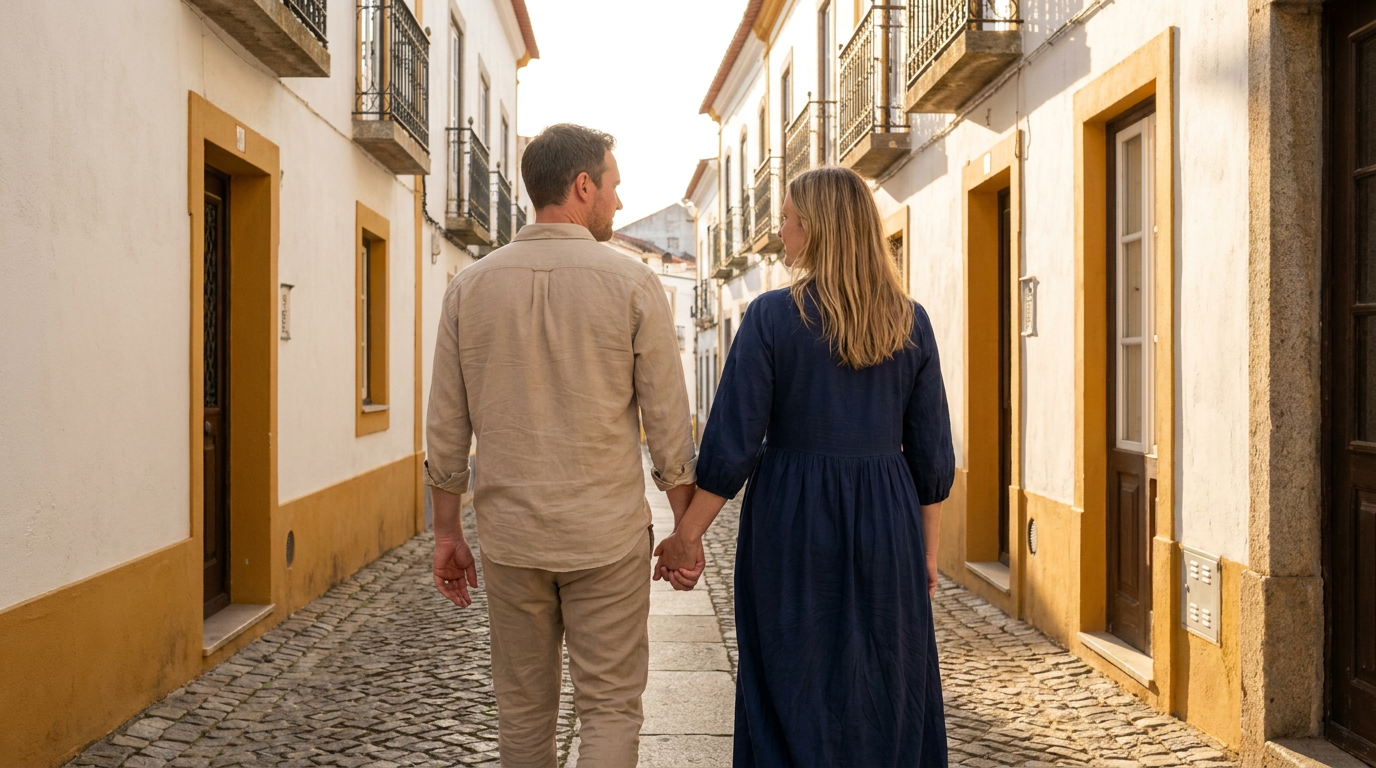
For a Chicago couple accustomed to the rhythm of a bustling city, the Alentejo offered a different kind of richness, one measured in light, space, and the deep quiet of history.
For a Chicago couple accustomed to the rhythm of a bustling city, the Alentejo offered a different kind of richness, one measured in light, space, and the deep quiet of history.
## An Ancient Welcome
The morning began with the quiet hum of their Mercedes-Benz V-Class gliding away from the vibrant energy of Lisbon. For Mark and Eleanor, the transition was palpable. The urban density softened, replaced by a vast, undulating landscape of soft golds and muted greens under a wide-open sky. Their private driver, a calm and knowledgeable presence, navigated the route not just as a path on a map, but as a story unfolding.
Passing through the ancient walls of Évora felt like entering another time. The city, a UNESCO World Heritage site, revealed itself slowly. There were no grand pronouncements, just a subtle shift in the air. The labyrinth of narrow lanes, the sun-bleached facades, and the sudden, tranquil squares invited a slower pace, a more observant state of mind.
> "Our driver, Miguel, was wonderful. He didn't just drive, he curated the day's rhythm. He understood we weren't looking for a checklist of sights, but a feeling. He let the region speak for itself."
> Eleanor, Chicago
## Whispers of Bone and Stone
Their first stop inside the city was the Capela dos Ossos, the Chapel of Bones. It is a place that commands silence. Standing inside the small chapel, its walls and pillars meticulously lined with human bones, was a profound experience. It was not morbid, but deeply contemplative, a sixteenth-century Franciscan meditation on the transient nature of life, spelled out in stark, elegant detail.
Later, emerging into the bright afternoon sun, they found themselves before the columns of the Roman Temple. The contrast was striking. The temple stands as a testament to endurance, its Corinthian columns stark against the blue sky, an echo of an empire that shaped the western world. It felt less like a monument and more like a quiet conversationalist, sharing tales of two millennia.
> "You feel like you're standing in several centuries at once. The layers of history are so present, so tangible, from the Romans to the present day."
> Mark, Chicago
 ## The Living Forest
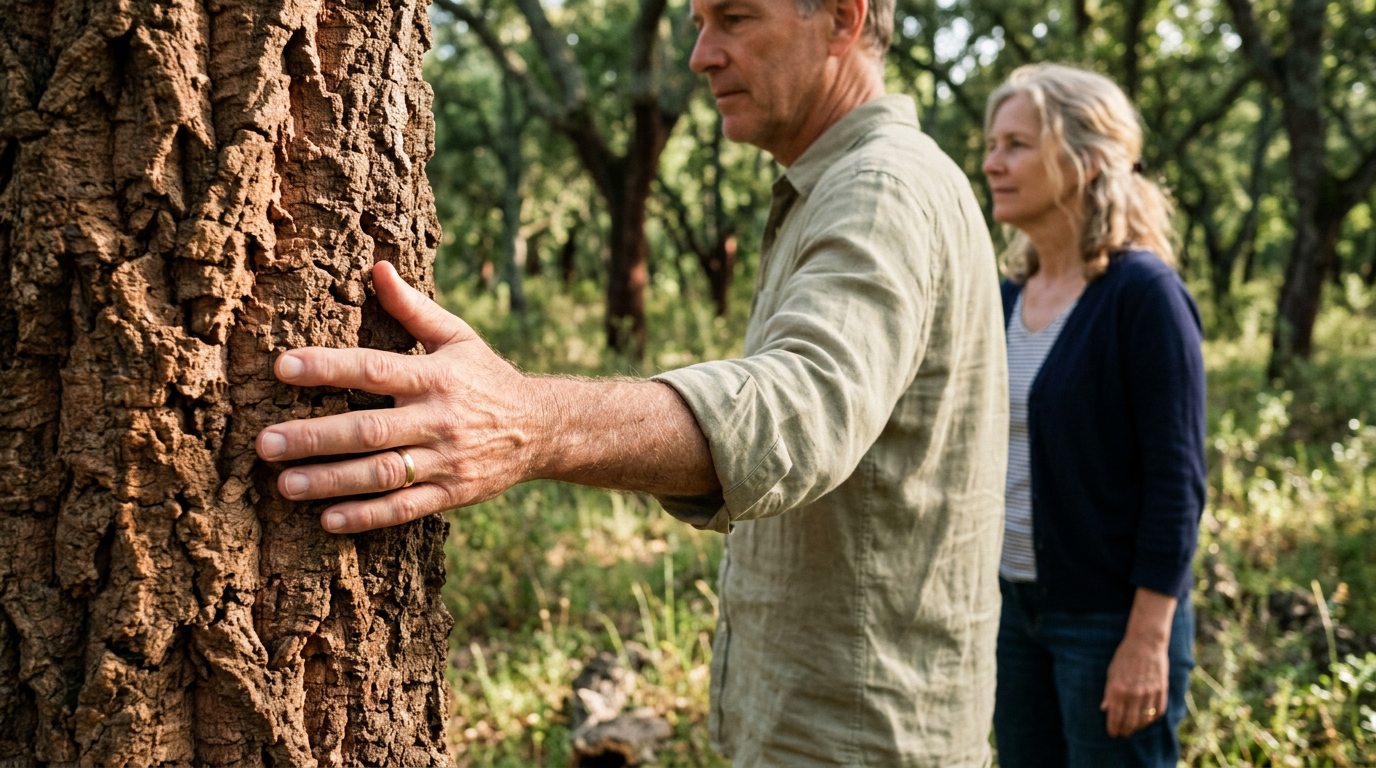
At their request for something uniquely of the region, their driver steered them away from the city and into the heart of the Alentejano countryside. They entered the montado, the ancient forest of cork oaks that defines the landscape. Mark, an architect, was fascinated by the gnarled, sculptural trees.
The driver pulled over, allowing them to walk among the oaks. He explained the sustainable cycle of the cork harvest, a tradition of patience where a tree is only harvested once a decade. They felt the unique texture of the bark, a living material that breathes with the seasons. It was a connection to an economy and ecology that is slow, mindful, and deeply intertwined with the land itself.
## A Taste of the Land
Lunch was not in a grand dining room, but a small, family-run restaurant tucked away on a quiet street, a suggestion from their driver. Here, the taste of the Alentejo came to life. They shared a platter of 'porco preto', the famed black pork, slow-cooked until impossibly tender. Alongside it came migas, a savory bread-based dish, and a simple salad glistening with local olive oil.
It was a meal of profound honesty. Every element spoke of its origin, a direct line from the earth to the plate. There were no complex sauces or culinary tricks, just perfectly prepared ingredients that embodied the soul of the region's cuisine.
## The Living Forest
At their request for something uniquely of the region, their driver steered them away from the city and into the heart of the Alentejano countryside. They entered the montado, the ancient forest of cork oaks that defines the landscape. Mark, an architect, was fascinated by the gnarled, sculptural trees.
The driver pulled over, allowing them to walk among the oaks. He explained the sustainable cycle of the cork harvest, a tradition of patience where a tree is only harvested once a decade. They felt the unique texture of the bark, a living material that breathes with the seasons. It was a connection to an economy and ecology that is slow, mindful, and deeply intertwined with the land itself.
## A Taste of the Land
Lunch was not in a grand dining room, but a small, family-run restaurant tucked away on a quiet street, a suggestion from their driver. Here, the taste of the Alentejo came to life. They shared a platter of 'porco preto', the famed black pork, slow-cooked until impossibly tender. Alongside it came migas, a savory bread-based dish, and a simple salad glistening with local olive oil.
It was a meal of profound honesty. Every element spoke of its origin, a direct line from the earth to the plate. There were no complex sauces or culinary tricks, just perfectly prepared ingredients that embodied the soul of the region's cuisine.
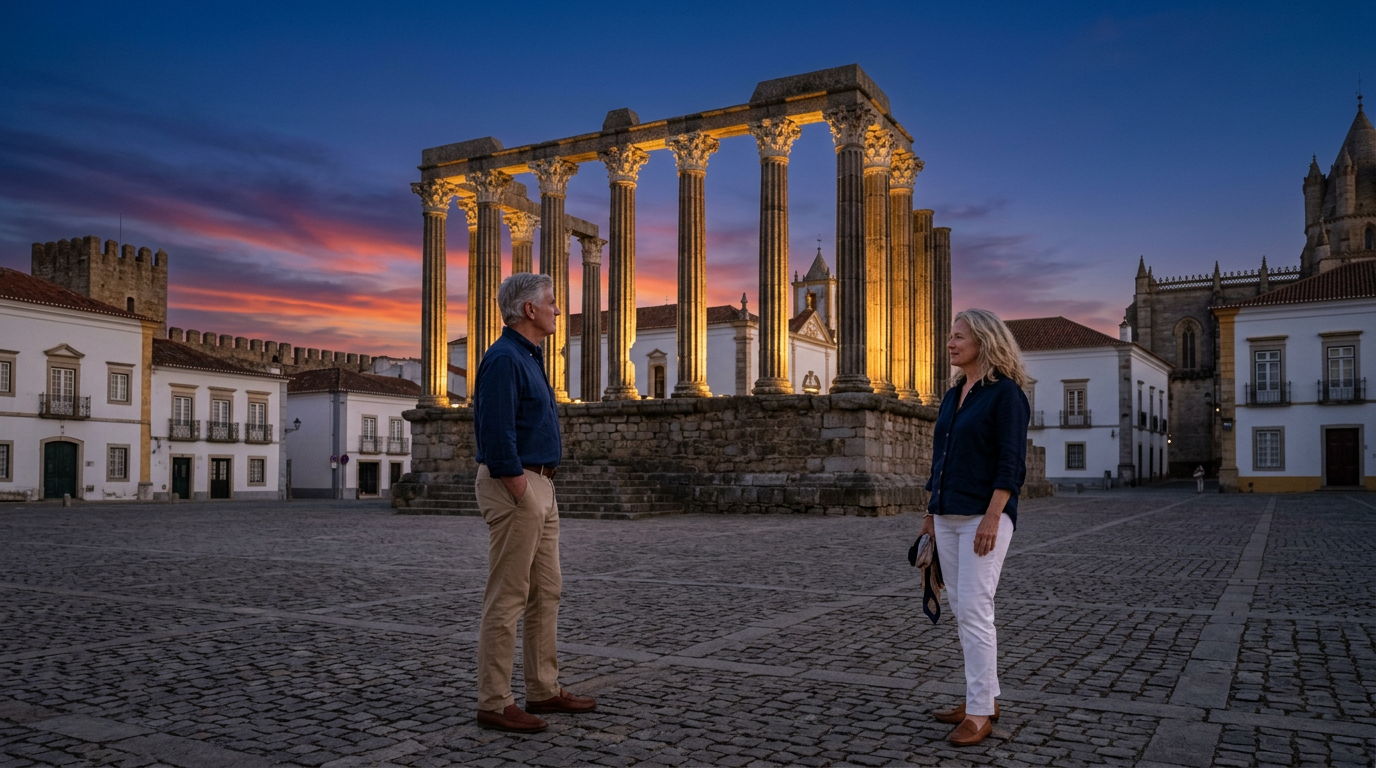 Driving back toward the distant lights of Lisbon, they carried the silence of the plains with them, a quiet counterpoint to the day's profound and grounding discoveries.
## The Living Forest
At their request for something uniquely of the region, their driver steered them away from the city and into the heart of the Alentejano countryside. They entered the montado, the ancient forest of cork oaks that defines the landscape. Mark, an architect, was fascinated by the gnarled, sculptural trees.
The driver pulled over, allowing them to walk among the oaks. He explained the sustainable cycle of the cork harvest, a tradition of patience where a tree is only harvested once a decade. They felt the unique texture of the bark, a living material that breathes with the seasons. It was a connection to an economy and ecology that is slow, mindful, and deeply intertwined with the land itself.
## A Taste of the Land
Lunch was not in a grand dining room, but a small, family-run restaurant tucked away on a quiet street, a suggestion from their driver. Here, the taste of the Alentejo came to life. They shared a platter of 'porco preto', the famed black pork, slow-cooked until impossibly tender. Alongside it came migas, a savory bread-based dish, and a simple salad glistening with local olive oil.
It was a meal of profound honesty. Every element spoke of its origin, a direct line from the earth to the plate. There were no complex sauces or culinary tricks, just perfectly prepared ingredients that embodied the soul of the region's cuisine.
Driving back toward the distant lights of Lisbon, they carried the silence of the plains with them, a quiet counterpoint to the day's profound and grounding discoveries.