The Quiet Rhythm of Comporta
By Portugal Magik · Published 2026-05-02
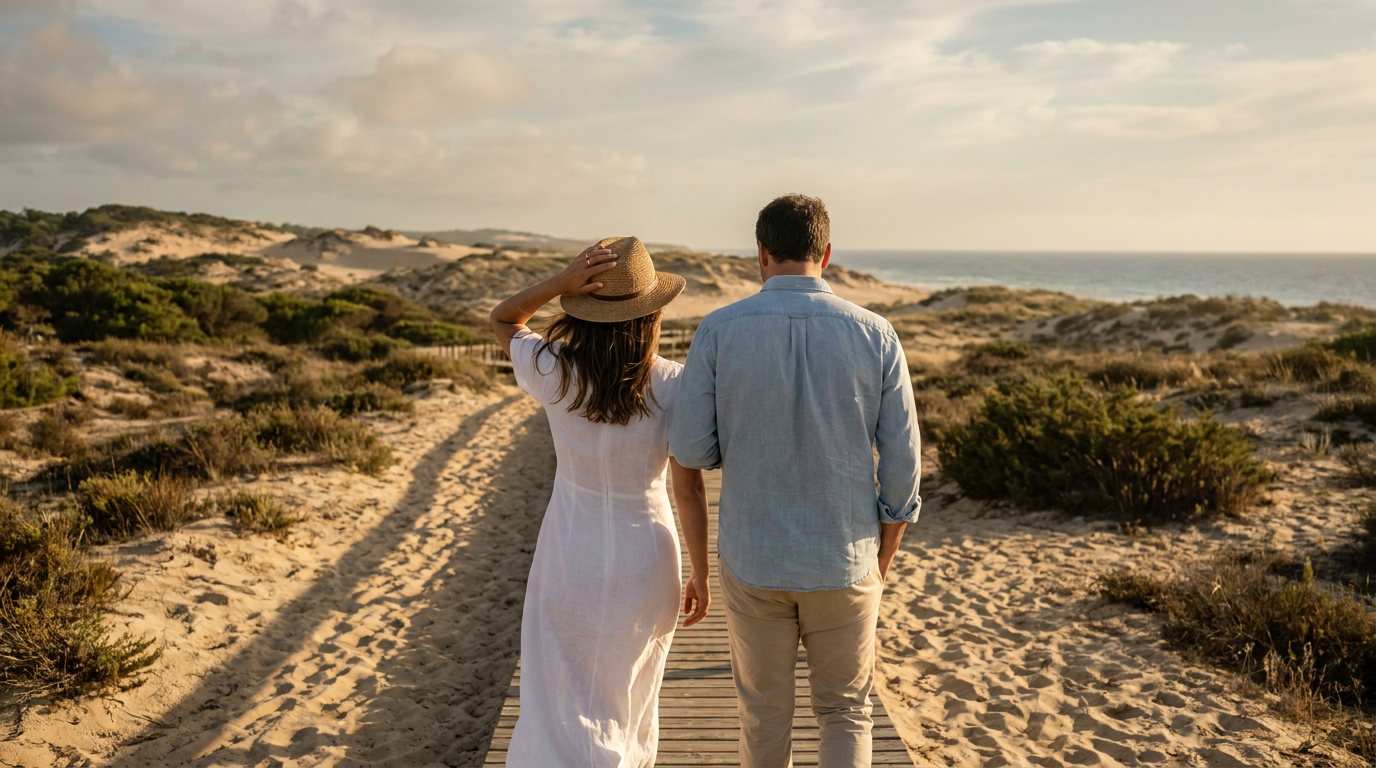
For those seeking an escape beyond the expected, there is a stretch of the Alentejo coast where time itself seems to slow, a place defined not by grand monuments, but by the elemental beauty of sand, sea, and serene rice fields.
For those seeking an escape beyond the expected, there is a stretch of the Alentejo coast where time itself seems to slow, a place defined not by grand monuments, but by the elemental beauty of sand, sea, and serene rice fields.
## South from the Tagus
The morning began in Lisbon, the city’s familiar energy humming around them. But as their private driver guided the black Mercedes-Benz sedan south across the bridge, a quiet transformation began. The urban landscape gave way to stands of umbrella pines and sprawling cork estates, the air itself seeming to soften, tinged with the scent of salt and dry earth.
Chloe and Ben had read about Comporta. They had seen the pictures of its impossibly chic, minimalist beach houses. Yet, arriving was a sensory experience that no image could capture. It was a feeling of decompression, of shedding the pace of the city for a slower, more deliberate rhythm. Their driver, a man with a deep knowledge of the region, navigated the sandy roads with an easy confidence, pointing out landmarks that were not on any tourist map.
> "The journey itself felt like part of the experience. We didn’t have to think about a single turn or map. We could just watch the landscape change, and suddenly, we were there. It was seamless."
> Chloe, San Francisco
## A Landscape Painted in Green and Gold
Before heading to the coast, their first immersion was in the region's agricultural heart: the vibrant green of the irrigated rice paddies. Stretching for miles, the fields were a startling patch of emerald, a geometric sea of green dissected by canals and earthy tracks. The sight of storks nesting on repurposed pylons added a touch of wild, prehistoric elegance.
It was a world away from the golden cliffs of the Algarve or the terraced hills of the Douro. This was something else entirely, a place of profound stillness. They paused for a moment, the only sound the breeze rustling through the stalks of rice and the distant call of a bird.
 ## The Art of the Unhurried Lunch
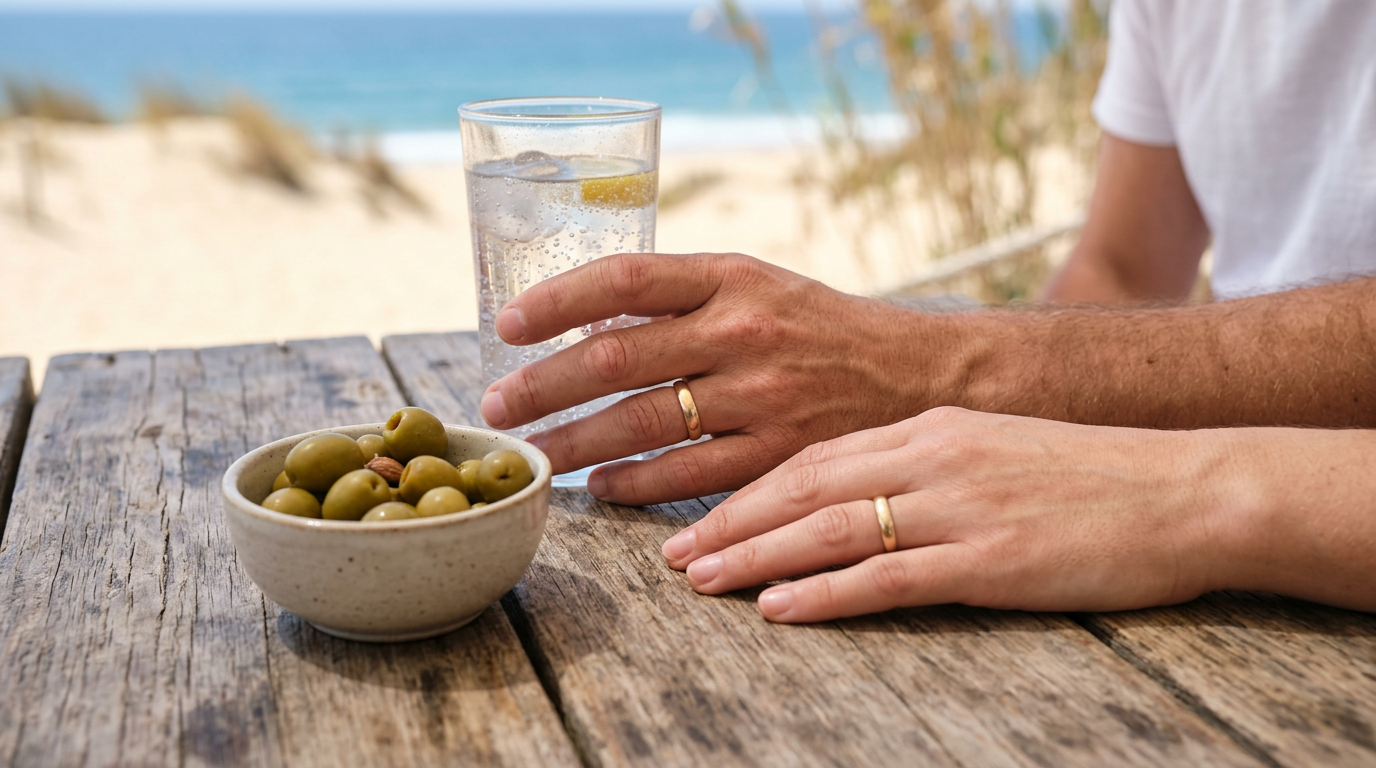
Lunch was in one of the small, whitewashed villages that dot the area. There were no grand restaurants, only understated eateries where the menu was dictated by the morning’s catch. They settled at a simple wooden table, sharing grilled sea bass, fresh salads, and local bread, the flavors clean and honest.
Afterward, they browsed a small boutique filled with locally made ceramics, handwoven textiles, and the area’s signature wicker baskets. It was here, in these small moments, that the soul of Comporta revealed itself. It was not about acquiring things, but about appreciating the beauty of simplicity and authentic craftsmanship.
> "Our driver knew this incredible little spot for lunch that we would never have found. That’s the difference. You feel less like a tourist and more like you’re being shown a secret only the locals know."
> Ben, San Francisco
## Where the Dunes Meet the Atlantic
The afternoon was for the ocean. They chose Praia do Pego, a vast expanse of white sand backed by protected dunes. A long wooden boardwalk guided them over the fragile ecosystem, the roar of the Atlantic growing louder with each step until, finally, the horizon opened up before them.
The sheer scale of the beach was breathtaking. It was wild, untamed, and sparsely populated, even in the height of the season. They walked for an hour along the water’s edge, the waves washing over their bare feet, feeling a profound sense of space and freedom. It was the perfect counterpoint to the serene stillness of the rice fields, a reminder of the raw power of nature.
## The Art of the Unhurried Lunch
Lunch was in one of the small, whitewashed villages that dot the area. There were no grand restaurants, only understated eateries where the menu was dictated by the morning’s catch. They settled at a simple wooden table, sharing grilled sea bass, fresh salads, and local bread, the flavors clean and honest.
Afterward, they browsed a small boutique filled with locally made ceramics, handwoven textiles, and the area’s signature wicker baskets. It was here, in these small moments, that the soul of Comporta revealed itself. It was not about acquiring things, but about appreciating the beauty of simplicity and authentic craftsmanship.
> "Our driver knew this incredible little spot for lunch that we would never have found. That’s the difference. You feel less like a tourist and more like you’re being shown a secret only the locals know."
> Ben, San Francisco
## Where the Dunes Meet the Atlantic
The afternoon was for the ocean. They chose Praia do Pego, a vast expanse of white sand backed by protected dunes. A long wooden boardwalk guided them over the fragile ecosystem, the roar of the Atlantic growing louder with each step until, finally, the horizon opened up before them.
The sheer scale of the beach was breathtaking. It was wild, untamed, and sparsely populated, even in the height of the season. They walked for an hour along the water’s edge, the waves washing over their bare feet, feeling a profound sense of space and freedom. It was the perfect counterpoint to the serene stillness of the rice fields, a reminder of the raw power of nature.
 ## The Last Light at Carrasqueira
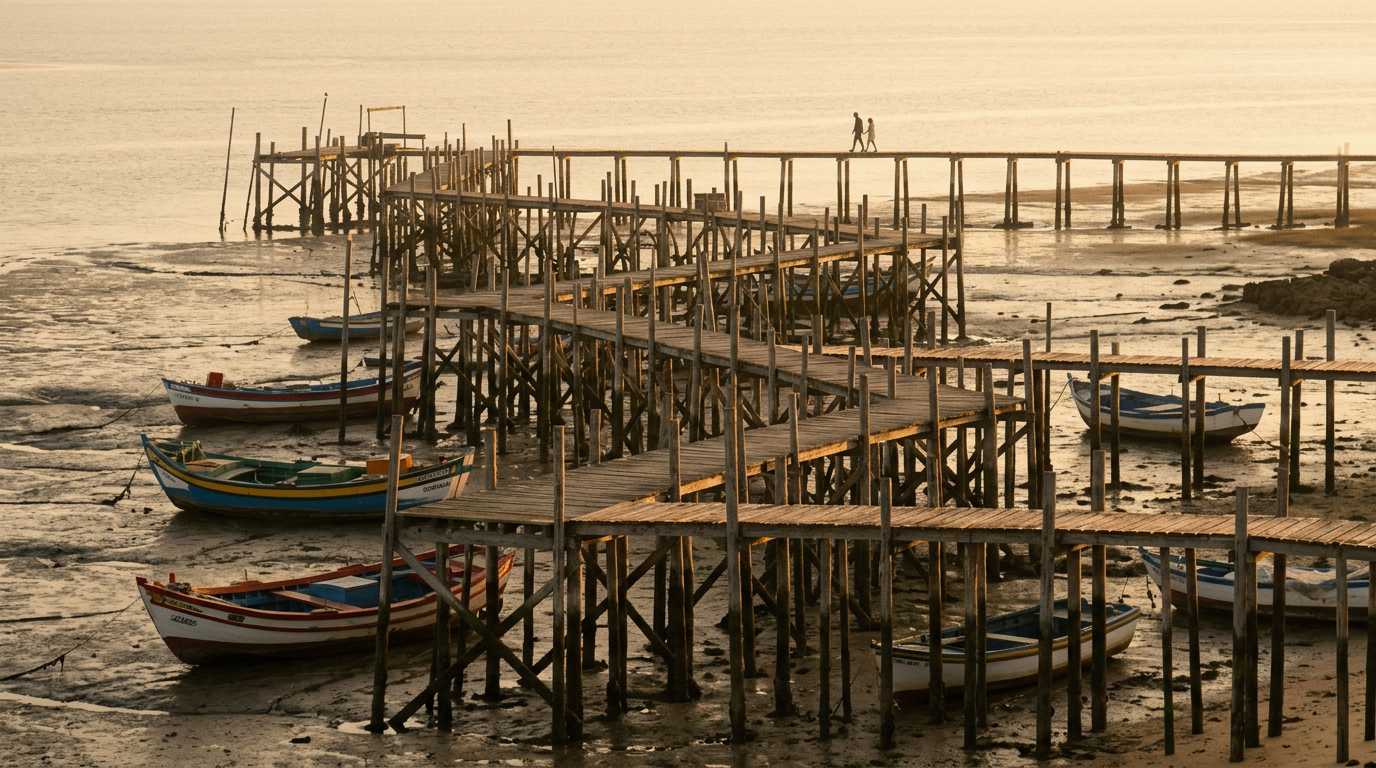
As the afternoon light began to fade, their driver suggested one final stop, a place that encapsulates the timeless spirit of the region. The Cais Palafítico da Carrasqueira is a curious, almost chaotic fishing pier built on a network of weathered stilts and wooden planks, zigzagging over the mudflats of the Sado Estuary.
They walked out onto the rickety structure, a piece of folk architecture built by local fishermen over decades. The setting sun cast a golden, syrupy light over the calm waters, illuminating the small fishing boats resting on the mud. It was a moment of pure, uncurated beauty, a quiet end to a day spent exploring the authentic heart of Portugal's most understated coast.
They drove back to Lisbon under a canopy of stars, carrying with them not just photographs, but the lingering feeling of Comporta’s quiet, elemental pulse.
## The Last Light at Carrasqueira
As the afternoon light began to fade, their driver suggested one final stop, a place that encapsulates the timeless spirit of the region. The Cais Palafítico da Carrasqueira is a curious, almost chaotic fishing pier built on a network of weathered stilts and wooden planks, zigzagging over the mudflats of the Sado Estuary.
They walked out onto the rickety structure, a piece of folk architecture built by local fishermen over decades. The setting sun cast a golden, syrupy light over the calm waters, illuminating the small fishing boats resting on the mud. It was a moment of pure, uncurated beauty, a quiet end to a day spent exploring the authentic heart of Portugal's most understated coast.
They drove back to Lisbon under a canopy of stars, carrying with them not just photographs, but the lingering feeling of Comporta’s quiet, elemental pulse.
## The Art of the Unhurried Lunch
Lunch was in one of the small, whitewashed villages that dot the area. There were no grand restaurants, only understated eateries where the menu was dictated by the morning’s catch. They settled at a simple wooden table, sharing grilled sea bass, fresh salads, and local bread, the flavors clean and honest.
Afterward, they browsed a small boutique filled with locally made ceramics, handwoven textiles, and the area’s signature wicker baskets. It was here, in these small moments, that the soul of Comporta revealed itself. It was not about acquiring things, but about appreciating the beauty of simplicity and authentic craftsmanship.
> "Our driver knew this incredible little spot for lunch that we would never have found. That’s the difference. You feel less like a tourist and more like you’re being shown a secret only the locals know."
> Ben, San Francisco
## Where the Dunes Meet the Atlantic
The afternoon was for the ocean. They chose Praia do Pego, a vast expanse of white sand backed by protected dunes. A long wooden boardwalk guided them over the fragile ecosystem, the roar of the Atlantic growing louder with each step until, finally, the horizon opened up before them.
The sheer scale of the beach was breathtaking. It was wild, untamed, and sparsely populated, even in the height of the season. They walked for an hour along the water’s edge, the waves washing over their bare feet, feeling a profound sense of space and freedom. It was the perfect counterpoint to the serene stillness of the rice fields, a reminder of the raw power of nature.
## The Last Light at Carrasqueira
As the afternoon light began to fade, their driver suggested one final stop, a place that encapsulates the timeless spirit of the region. The Cais Palafítico da Carrasqueira is a curious, almost chaotic fishing pier built on a network of weathered stilts and wooden planks, zigzagging over the mudflats of the Sado Estuary.
They walked out onto the rickety structure, a piece of folk architecture built by local fishermen over decades. The setting sun cast a golden, syrupy light over the calm waters, illuminating the small fishing boats resting on the mud. It was a moment of pure, uncurated beauty, a quiet end to a day spent exploring the authentic heart of Portugal's most understated coast.
They drove back to Lisbon under a canopy of stars, carrying with them not just photographs, but the lingering feeling of Comporta’s quiet, elemental pulse.