The Sound of Bobbins by the Sea: Peniche’s Living Lace Tradition
By Portugal Magik · Published 2026-09-26
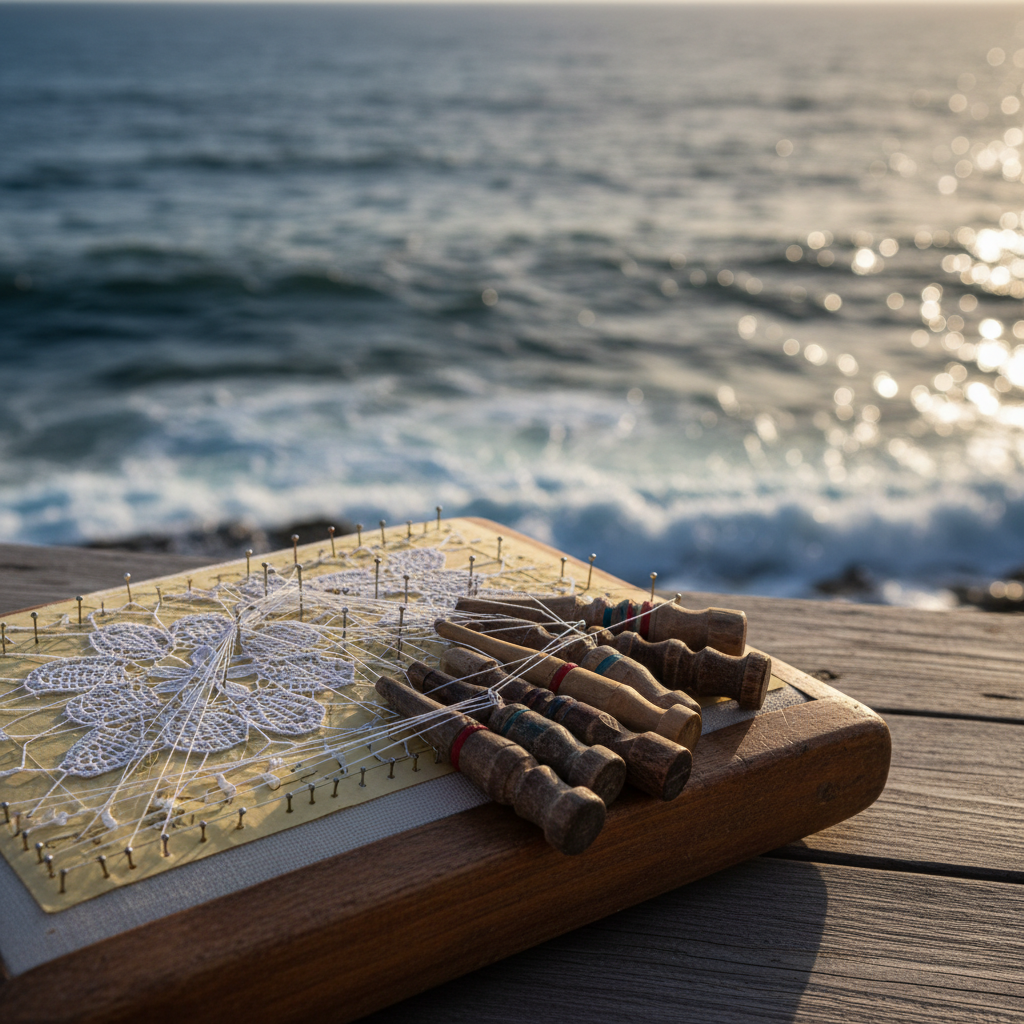
Discover the intricate art of Peniche’s bobbin lace, a four-hundred-year-old tradition where maritime history meets delicate craftsmanship on Portugal's Silver Coast.
Along the rugged, salt-sprayed coastline of the Silver Coast, the town of Peniche sits perched on a rocky peninsula, forever defined by its relationship with the Atlantic. While the world often recognizes this destination for its thunderous waves and world-class surfing competitions, a quieter, more delicate rhythm pulses through its narrow streets. It is the rhythmic, rhythmic clicking of wooden bobbins, a sound that has echoed through Peniche for over four centuries.
This is the art of *Renda de Bilros*, or bobbin lace, a tradition that represents the soul of the local community. It is a craft born of necessity and elevated to high art, where the dexterity of the lace-maker rivals the strength of the fisherman. For the discerning traveler, discovering the lace of Peniche offers a window into a side of Portugal that is both fragile and enduring, a stark contrast to the wild power of the ocean just steps away.
## A Legacy Woven from the Sea
The origins of bobbin lace in Peniche are deeply intertwined with the town’s maritime history. During the sixteenth and seventeenth centuries, while the men were away at sea for months at a time, the women of Peniche developed this intricate craft to supplement the family income. It was more than just a pastime, it was a vital economic pillar and a communal bond.
Unlike needle lace, which is built upon a fabric base, bobbin lace is created by braiding and twisting lengths of thread, which are wound onto small wooden bobbins. The patterns are pinned to a cylindrical cushion, known as a *almofada*, often covered in heavy, dark fabric to make the white threads more visible. As the lace-maker works, her hands move with a speed and precision that is mesmerizing to behold, creating complex geometric patterns and floral motifs that seem to emerge from nothingness.
### The Symbolic Patterns of the Coast
The designs of Peniche lace are not merely decorative. They are deeply symbolic, often reflecting the surroundings of the artisans. One might notice motifs that resemble waves, shells, or the stylized shapes of fish. The most famous patterns, such as the *Oito* (Eight) or the *Traçado* (Trace), have been passed down through generations of families, often taught by mothers to daughters in the late afternoon sun.
In the past, these pieces were essential components of dowries, used to adorn altars in local churches, or sold to the Portuguese aristocracy. Today, while the scale of production has changed, the commitment to quality remains absolute. A single small piece of lace can take dozens of hours to complete, a testament to the patience and dedication required by this premium craft.
## The Lace Museum: A Sanctuary of Skill
To truly appreciate the evolution of this art form, a visit to the *Museu da Renda de Bilros de Peniche* is essential. Located in the heart of the town, this dedicated space serves as both a gallery and a workshop. The museum houses an impressive collection of historical pieces, some dating back hundreds of years, showcasing the incredible variety of techniques and styles that have emerged from this small coastal enclave.
Inside, the atmosphere is one of quiet reverence. Visitors can observe the transition from traditional utilitarian pieces to contemporary artistic interpretations of lace. The museum also functions as a school, ensuring that the younger generation has the opportunity to learn the craft from master lace-makers, thus preventing the tradition from fading into history.
### Meeting the Artisans
Perhaps the most enchanting aspect of visiting Peniche is the opportunity to see the lace-makers at work. Often, in the warmer months, you might find women sitting in their doorways or in the public squares, their cushions resting on their laps. The sound of the bobbins clicking together is a distinctive acoustic signature of the town.
There is a profound sense of pride in these women. They are not merely creating a product, they are maintaining a lineage. Engaging with them, even through a simple nod of appreciation, reveals the human element behind the intricate webs of thread. It is a reminder that in an age of mass production, there is still immense value in things made slowly and by hand.
## Beyond the Bobbins: The Allure of Peniche
While the lace is a significant draw for those seeking cultural depth, Peniche offers a wealth of other experiences that complement a day of discovery. The town is home to the formidable Peniche Fortress, a sixteenth-century structure that has served as a defense against pirates and, more recently, a political prison during the twentieth century. Today, it stands as a monument to liberty and a stunning vantage point for viewing the Atlantic.
For those who appreciate natural beauty, the cliffs of *Cabo Carvoeiro* offer some of the most dramatic coastal scenery in Portugal. The limestone formations, carved by millennia of wind and salt, create a lunar landscape that is particularly striking at sunset. From here, one can see the Berlengas Islands on the horizon, a protected biosphere reserve that remains one of the most pristine environments in the country.
### Gastronomy of the Atlantic
A visit to Peniche would be incomplete without indulging in its culinary offerings. Given its position, the town is renowned for its fresh seafood. Local restaurants along the harbor serve everything from *Caldeirada de Peixe* (a rich fish stew) to grilled sardines that are widely considered some of the best in the region. The simplicity of the preparation allows the quality of the ingredients to shine, mirroring the honest and authentic nature of the town itself.
## Practical Information for the Discerning Traveler
Peniche is located approximately 90 minutes north of Lisbon, making it an ideal destination for a sophisticated day trip or a stop on a longer journey through the Silver Coast.
* **Best Time to Visit:** While Peniche is a year-round destination, the months of May through September offer the best weather for exploring the coastal cliffs and seeing the lace-makers working outdoors. * **The Lace Museum:** The museum is typically open Tuesday through Sunday. It is advisable to check local holiday hours before visiting. * **Attire:** The Atlantic breeze can be cool even on sunny days, so a light wrap or jacket is recommended. Comfortable footwear is essential for navigating the cobbled streets and coastal paths.
## A Journey into the Heart of Portuguese Craft
Discovering the bobbin lace of Peniche is more than a cultural excursion, it is an invitation to slow down and appreciate the meticulous beauty of a fading world. In the intricate knots and delicate patterns, one finds the history of a people who have always lived in harmony with the sea. It is a premium experience that touches the soul, offering a connection to the past that feels remarkably vibrant in the present.
For those who wish to explore the Silver Coast in absolute comfort, traveling with a professional service is the preferred choice. Avoiding the stresses of navigation and parking allows you to fully immerse yourself in the landscape and the culture. A private journey ensures that your time is spent focused on the experiences that matter most, guided by those who understand the nuances of the region.
The beauty of Peniche lies in its contrasts, the roar of the ocean and the whisper of the bobbins, the rugged stone of the fortress and the delicate silk of the lace. It is a place that rewards the curious and the patient, offering a glimpse into the enduring spirit of Portugal.
Speak with our team and discover how to turn this experience into reality. Request your personalized proposal today.