The Silent Sentinels of the Border: A Private Connoisseur’s Guide to the Noble Fortresses of Marvão and Castelo de Vide
By Portugal Magik · Published 2026-06-10
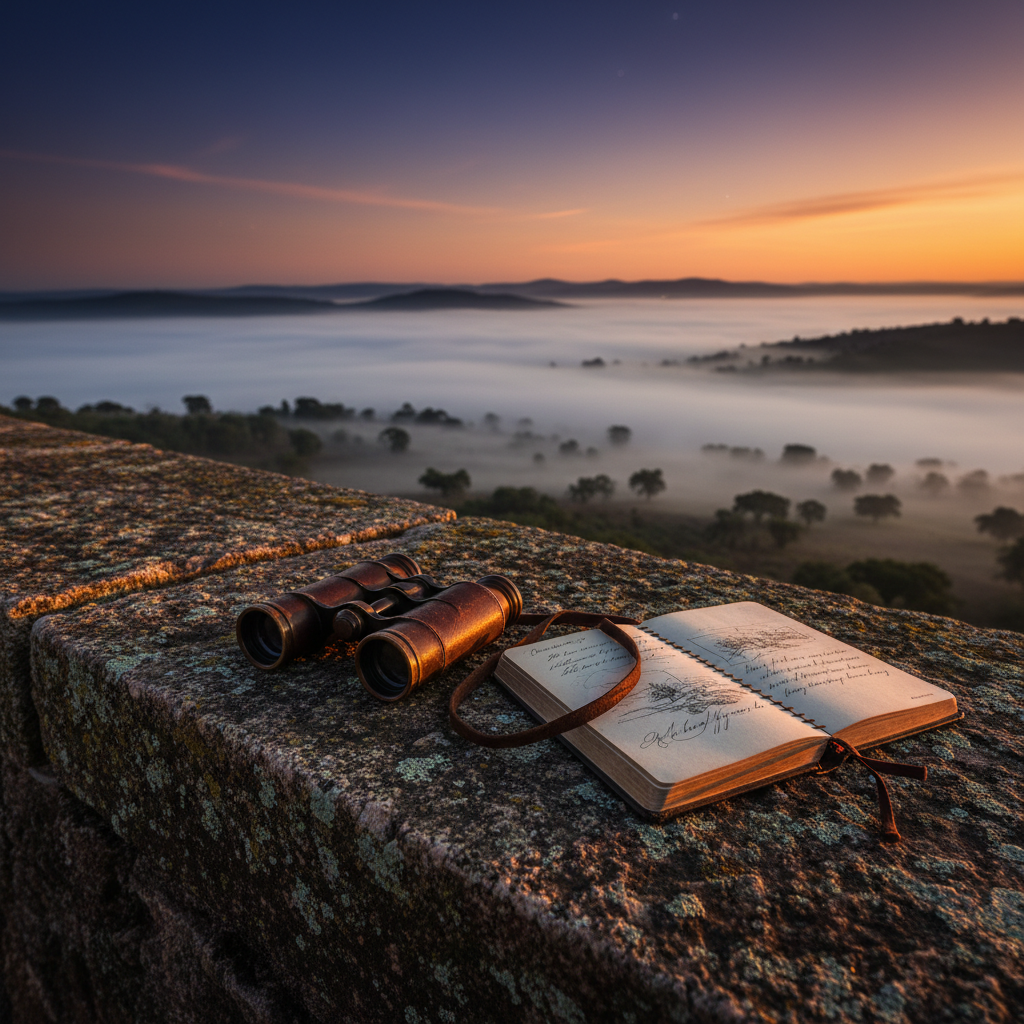
Explore the majestic mountain fortresses of Marvão and Castelo de Vide in the Alentejo. A guide to the history, landscapes, and premium travel experiences of the Serra de São Mamede.
In the rugged, windswept high country of the Alentejo, where the granite peaks of the Serra de São Mamede brush against the sky, time moves with a different cadence. It is here that history is etched into every stone, where the landscape is guarded by the "Silent Sentinels of the Border." These are not merely ruins or monuments; they are the noble fortresses of Marvão and Castelo de Vide, ancient guardians that have stood watch over the Portuguese-Spanish frontier for centuries.
For the discerning traveler, these fortifications offer more than a glimpse into medieval warfare. They provide a profound sense of connection to the past, framed by some of the most dramatic vistas on the Iberian Peninsula. Traveling through this region requires an appreciation for the subtle, the authentic, and the quiet dignity of a land that has remained largely untouched by the frenetic pace of modern life.
## The Eagle’s Nest at the Edge of the World
Marvão is often described as the "Eagle’s Nest," and the moniker is well deserved. Perched atop a sheer quartzite ridge at an altitude of nearly 900 meters, it is a village that seems to grow directly out of the mountain itself. As one approaches through the winding, tree-lined roads of the Alentejo, the silhouette of the castle walls against the horizon is nothing short of breathtaking.
The fortress of Marvão was once considered an invincible stronghold. The legendary writer José Saramago famously remarked that "from Marvão, one can see the whole world." Looking out from the ramparts, with the vast plains stretching toward Spain in the east and the undulating hills of the Alentejo to the west, it is difficult to disagree. The design of the castle, with its multi-layered defenses and formidable cistern, speaks to the strategic importance of this site throughout the Reconquista and the subsequent centuries of border disputes.
Walking through the narrow, cobbled streets of Marvão is an exercise in serenity. The houses are whitewashed, their doorways framed in granite, often adorned with pots of bright geraniums. There is a tangible stillness here, broken only by the sound of the wind or the distant tolling of a church bell. It is a place for contemplation, where the history of kings and conquerors feels remarkably present.
## Castelo de Vide: The Sintra of the Alentejo
Only a short distance away, yet distinct in character, lies the elegant town of Castelo de Vide. Often referred to as the "Sintra of the Alentejo" due to its lush micro-climate and architectural beauty, this town offers a softer, more verdant contrast to the austere grandeur of Marvão.
The town is crowned by its own castle, which overlooks a cascade of white houses tumbling down the hillside. However, the true soul of Castelo de Vide is found in its Judiaria, or Jewish Quarter. This is one of the best-preserved medieval Jewish quarters in Portugal, a labyrinth of steep, narrow alleys and stone-arched doorways that date back centuries.
The presence of the Jewish community, particularly after the expulsion from Spain in 1492, left an indelible mark on the town’s identity. The small synagogue, now a museum, stands as a testament to this heritage. Exploring these streets reveals a wealth of Gothic architecture and traditional "fontes" (fountains), such as the Fonte da Vila, where the pure mountain water continues to flow, sustaining the town as it has for generations.
## The Art of Slow Discovery
To truly appreciate the Serra de São Mamede and its fortresses, one must adopt a philosophy of slow discovery. This region does not yield its secrets to those in a hurry. It is about stopping to notice the texture of the lichen-covered stone, the scent of wild rosemary in the air, or the way the golden hour light illuminates the ancient olive groves.
The surrounding Natural Park offers a sanctuary for those who appreciate natural beauty. The landscape is a patchwork of cork oaks, chestnut trees, and jagged rock formations. It is a terrain that invites quiet exploration, far removed from the crowded coastal destinations. Here, the experience is defined by exclusivity through isolation, a premium commodity in today’s interconnected world.
### The Culinary Heritage of the High Alentejo
The gastronomy of this region is deeply rooted in the land. While the coastal areas of Portugal are famed for seafood, the Alentejo interior celebrates the bounty of the earth and the forest. Discerning palates will find much to admire in the sophisticated simplicity of the local fare.
Chestnuts, which grow in abundance on the slopes of the Serra, are a staple of the local diet, particularly in the autumn. Regional dishes often feature acorn-fed black pork, wild mushrooms, and artisanal cheeses that have been crafted using traditional methods for centuries. The olive oil produced here, derived from ancient groves, is exceptionally high in quality, characterized by its golden hue and complex flavor profile. Sampling these flavors in a quiet courtyard or a stone-built eatery is an essential part of the cultural immersion.
## The Advantage of a Private Perspective
Reaching these high-altitude treasures requires more than just a map. The roads that navigate the Serra de São Mamede are beautiful but demanding. For those who wish to focus entirely on the scenery and the historical narrative, the presence of a dedicated professional is invaluable.
Traveling with a professional English-speaking driver, such as those provided by Portugal Magik, ensures that the journey is as seamless as the destination is inspiring. With over 14 years of experience dedicated to discerning international travelers seeking premium experiences, Portugal Magik understands that the true value of a private tour lies in flexibility and expertise.
Instead of navigating unfamiliar mountain passes or searching for parking in medieval villages, guests are transported in the quiet comfort of a modern Mercedes-Benz fleet. Whether in an E-Class sedan, a spacious V-Class, or a well-appointed Sprinter, the focus remains on the traveler’s comfort and the unfolding landscape outside the window. This allows for a deeper engagement with the history of the "Silent Sentinels," as the driver provides context and local insight that no guidebook can replicate.
## Practical Considerations for the Discerning Traveler
When planning a visit to Marvão and Castelo de Vide, timing and preparation are key to a refined experience.
* **Best Time to Visit:** The region is beautiful year-round, but spring and autumn are particularly magical. In spring, the Natural Park is a carpet of wildflowers, while autumn brings the chestnut harvest and spectacular foliage. * **The Climate:** Due to the altitude, it can be significantly cooler here than in the Alentejo plains or in Lisbon. Even in summer, a light breeze often sweeps through the ramparts of Marvão. * **Terrain:** Both towns involve steep climbs and uneven cobblestones. Comfortable, sturdy footwear is essential for exploring the castle walls and the Jewish Quarter. * **The Route:** The drive from Lisbon takes approximately two and a half to three hours. A private day trip is possible, but many travelers find that a multi-day exploration of the Alentejo allows for a more relaxed and immersive experience.
## A Legacy Preserved in Granite
The noble fortresses of Marvão and Castelo de Vide are more than just historical sites; they are custodians of the Portuguese spirit. They represent a time when the border was a place of high drama and higher stakes, yet today they offer a sanctuary of peace and reflection.
For those who seek the exceptional, these mountain strongholds provide a rare opportunity to step back in time without sacrificing the modern standards of comfort and service. It is a journey into the heart of the Alentejo, where the air is thinner, the views are wider, and the history is written in the very stones beneath your feet.
As the sun sets over the Spanish border, casting long shadows across the granite peaks, there is a profound sense of having encountered something truly special. The Silent Sentinels continue their watch, just as they have for a millennium, waiting for the next traveler to discover their story.
To begin planning your journey into the heart of the Alentejo, speak with our team and discover how to turn this experience into reality. Request your personalized proposal today and let us guide you through the majestic landscapes of Portugal.