Pastel de Nata: The Story Behind Portugal's Iconic Pastry
By Portugal Magik · Published 2026-03-12
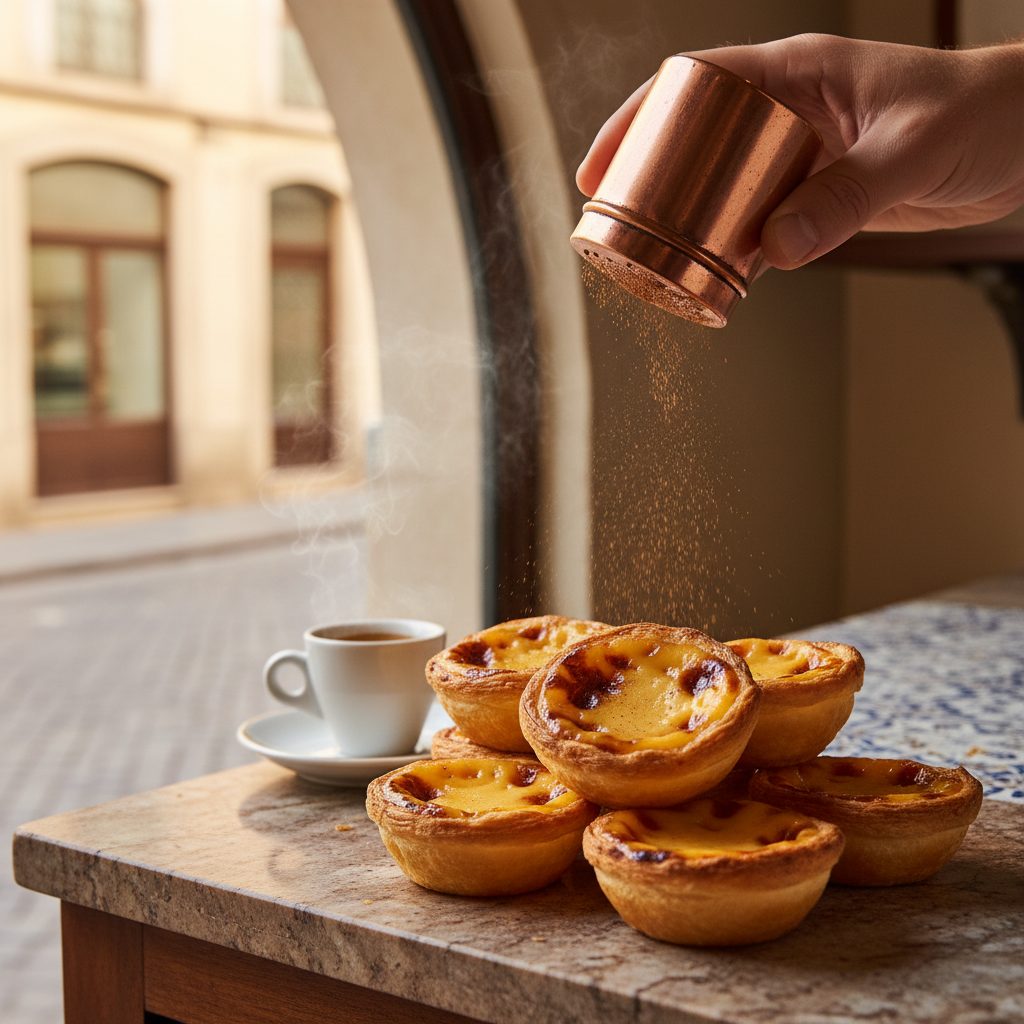
Discover the rich history and culinary secrets of the Pastel de Nata, from its 18th-century monastic origins to its status as a global icon of Portuguese gastronomy.
There is a specific, poetic sound that defines the mid-morning ritual in Lisbon: the delicate shatter of thousands of layers of puff pastry, followed by the soft murmur of satisfaction. This is the symphony of the *Pastel de Nata*, a pastry that has transcended its humble monastic origins to become a global ambassador for Portuguese culture.
For the discerning traveler, the Pastel de Nata is more than a mere confection; it is a gateway into the soul of Portugal. It represents a history of discovery, religious devotion, and an unwavering commitment to culinary excellence that has remained unchanged for nearly two centuries.
## The Alchemical Beginnings: Jerónimos Monastery The story of the Pastel de Nata begins in the civil parish of Belém, at the majestic Mosteiro dos Jerónimos. During the 18th century, monks used substantial quantities of egg whites to starch their habits and clear wines. This left an abundance of leftover yolks, prompting the clerics to refine their pastry-making skills to avoid waste.
In the kitchens of this Manueline masterpiece, now a UNESCO World Heritage site, the recipe for the *Pastéiz de Belém* was perfected. It was an alchemy of simple ingredients: flour, butter, milk, sugar, and those precious egg yolks, resulting in a custard that was silky, rich, and encased in a crust so crisp it shattered upon the first touch.
## From Cloister to Commerce: The 1820 Revolution The trajectory of the Pastel de Nat changed forever in 1820 following the Liberal Revolution. As religious orders faced extinction and convents were closed, the monks at Jerónimos needed a means of survival. They began selling their custard tarts at a small general store adjacent to a sugar refinery nearby.
By 1837, the production was formalized in the very location that remains iconic today: *Antiga Confeitaria de Belém*. The original recipe, known as the "Secret Recipe," is guarded within a "Secret Room" (*Oficina do Segredo*) and is known only to a handful of master pastry chefs who have sworn an oath of silence. While thousands of establishments across Portugal produce *Pastéis de Nata*, only those produced at this specific site can legally bear the name *Pastéis de Belém*.
## The Anatomy of Perfection What distinguishes a truly premium Pastel de Nata from its counterparts? It is a delicate balance of textures and temperatures.
### The Pastry (The Crust) The base must be a spiral of laminated dough, a labor-intensive process of folding cold butter into flour. When baked at high temperatures (often exceeding 400°C), the water in the butter evaporates, lifting the layers to create a signature "nest" that is light, salty, and incredibly crunchy. It should never be doughy or soft.
### The Custard (The Filling) The filling should be a cream, not a jelly. It must possess a subtle sweetness with a hint of lemon and cinnamon, though the precise proportions remain the subject of intense debate. The hallmark of an authentic tart is the "burnt" spots on top, the caramelization of sugars that provides a slightly bitter counterpoint to the rich custard.
### The Ritual Indulging in a Pastel de Nata is a ceremonial affair. It is traditionally served warm, straight from the oven. Before the first bite, a light dusting of powdered sugar and a generous sprinkle of cinnamon are applied. It is almost always accompanied by a *bica*, a strong, concentrated Portuguese espresso, whose acidity cuts through the richness of the pastry.
## Beyond Belém: Exploring Lisbon’s Finest While the pilgrimage to Belém is essential for any cultural enthusiast, the evolution of the Pastel de Nata has seen several artisanal workshops in Lisbon rise to prominence, offering their own refined interpretations.
* **Manteigaria:** Often cited by locals as the gold standard in central Lisbon, their shops (particularly the one in Chiado) allow guests to watch the artisans hand-fold the dough behind glass partitions. The sound of the bell ringing signifies a fresh batch has left the oven. * **Pastelaria Aloma:** A historic establishment in the Campo de Ourique neighborhood, Aloma has won numerous awards for the "Best Pastel de Nata" in Lisbon. Their version is noted for a particularly delicate crust and a custard that is exceptionally smooth. * **Fábrica da Nata:** Located on the elegant Rua Augusta and in the Praça dos Restauradores, this establishment offers a sophisticated atmosphere where the focus is on the transparency of the baking process.
## A Global Icon of Portuguese Identity In recent years, the Pastel de Nata has traveled far beyond the borders of Lusitania. From high-end boutiques in London and Paris to artisanal bakeries in Tokyo and New York, the world has fallen in love with this Portuguese treasure. However, as any connoisseur will attest, the flavor is never quite the same as when enjoyed on a sun-drenched terrace in Lisbon, with the scent of the Tagus River lingering in the air.
For the international traveler, the pastry serves as an entry point into the broader world of *Doçaria Conventual* (conventual sweets), a rich tradition of desserts born in the monasteries of Portugal, characterized by the intensive use of egg yolks and sugar.
## Practical Information for the Discerning Traveler
If you are planning to experience the authentic Pastel de Nata in its birthplace, consider these refined tips:
* **Timing is Everything:** To avoid the most significant crowds at Belém, aim for a mid-week visit or arrive in the early morning. * **The Sit-Down Experience:** Do not be deterred by the long queues outside the *Antiga Confeitaria de Belém*. These are typically for take-away. The interior of the building is a labyrinth of beautiful blue-and-white tiled rooms (*azulejos*) where table service is available and often much faster. * **The Temperature Test:** Always ask for yours *quente* (warm). A cold Pastel de Nata loses the essential contrast between the crisp pastry and the creamy center.
## Creating Your Own Culinary Narrative While a pastry may seem a simple thing, in Portugal, it is a testament to resilience, tradition, and the art of living well. To truly understand the Pastel de Nata is to understand the history of Lisbon itself, from the Age of Discovery to the modern gastronomic renaissance.
Navigating the historic streets of Belém and the hidden corners of Chiado requires an insider's perspective. Experiencing these culinary milestones without the stress of logistics allows for a deeper connection with the heritage of the land.
With 14 years of expertise in curating bespoke journeys across Portugal, our team is dedicated to discerning international travelers seeking premium experiences. We invite you to explore the flavors of Lisbon from the comfort of our exclusive Mercedes-Benz fleet, accompanied by professional English-speaking drivers who understand the nuances of Portuguese culture.
Whether you wish to visit the "Secret Room" in Belém or discover an undiscovered artisanal bakery in the heart of the city, we ensure your journey is as seamless as it is delicious.
Speak with our team and discover how to turn this experience into reality.