The Kingdom of the North: Exploring the Wild Elegance of Trás-os-Montes
By Portugal Magik · Published 2026-03-21
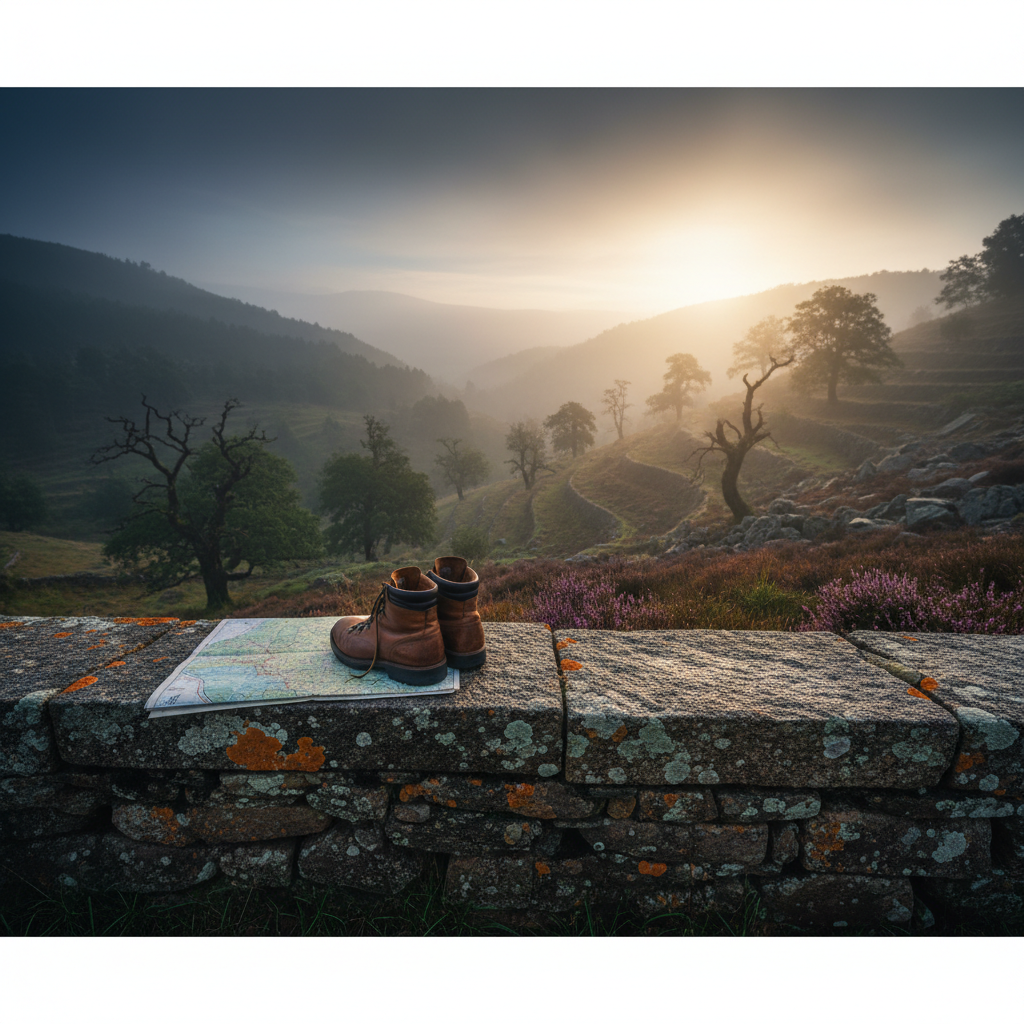
Discover Trás-os-Montes, Portugal's 'Kingdom of the North.' Explore a land of wild elegance, granite villages, and ancient traditions in this ultimate guide to the high north.
Beyond the mist-shrouded peaks of the Marão and Alvão ranges lies a realm that feels separate from the rest of the Iberian Peninsula. Its name, Trás-os-Montes, literally translates to "Behind the Mountains," and for centuries, this geographical isolation has preserved a culture of raw beauty, ancient traditions, and a stoic elegance that remains largely untouched by the frenetic pace of modern life.
For the discerning international traveler seeking premium experiences, this northern sanctuary offers something increasingly rare: authenticity in its purest form. It is a land where granite villages cling to rugged hillsides, where the air is scented with wild rockrose and woodsmoke, and where the hospitality is as profound as the landscape is vast.
## The Soul of the High North
Trás-os-Montes is a region of stark contrasts. In the winter, it is a world of frost-dusted plateaus and roaring hearths; in the summer, the sun blazes over golden grain fields and deep river canyons. This is the kingdom of the *Terra Fria* (Cold Land) and the *Terra Quente* (Hot Land), each offering a distinct palette of colors and sensations.
The "wild elegance" of the region is perhaps best expressed through its architecture and heritage. Unlike the coastal cities, where stone is often whitewashed, the northern interior embraces the dark, enduring nature of granite and schist. From the medieval keeps to the solar-houses (noble manors) of the local aristocracy, there is a sense of permanence and dignity that commands respect.
## Bragança: The Citadel of History
The journey often finds its focal point in Bragança, a city that sits proudly near the Spanish border. Its most iconic landmark, the Citadel, is one of the best-preserved medieval structures in Portugal. Encircled by formidable walls, the old town within is a labyrinth of cobblestone streets where time seems to have halted.
Within these walls stands the *Domus Municipalis*, a unique pentagonal Romanesque building that served as a civic meeting place, a rare example of secular Romanesque architecture in Europe. Standing atop the castle keep, one looks out over the Montesinho Natural Park, a sprawling expanse of biodiversity where the Iberian wolf still roams and the golden eagle soars.
### The Mysteries of Montesinho
To truly experience Trás-os-Montes, one must venture into the heart of Montesinho. This is not a manicured park, but a living landscape. The villages of Rio de Onor and Guadramil are particularly noteworthy. Rio de Onor is a "community village," bisected by the international border with Spain, yet unified by a shared dialect and ancient communal laws. It is a place of slate roofs and communal ovens, offering a silent, powerful connection to a disappearing way of life.
## The Gastronomy of the Hills: A Refined Harvest
The culinary tradition of Trás-os-Montes is a testament to the region’s "high-end" rusticity. It is a cuisine born of necessity but elevated by the exceptional quality of its ingredients. Discerning palates will find much to admire in the simplicity of flavors that are bold, honest, and deeply satisfying.
The region is famous for its *Posta Mirandesa*, a thick, tender steak sourced from the indigenous Miranda cattle, seasoned only with coarse sea salt and grilled over embers. Then there is the *Alheira*, a delicate sausage with a complex history dating back to the Jewish communities of the 15th century, now considered a national delicacy.
Olive oil from the Douro Superior and Trás-os-Montes is frequently ranked among the world’s finest, liquid gold with a peppery finish that speaks of the rugged soil. To accompany a meal, one looks to the robust red wines of the region or the nearby Douro Valley, ensuring a gastronomic experience that is both grounded and sophisticated.
## The Cultural Tapestry: Caretos and Celtic Roots
Trás-os-Montes is home to some of the most enigmatic traditions in Europe. The most famous of these is the Carnival of Podence, featuring the *Caretos*, men dressed in multi-layered, brightly colored wool suits, wearing brass masks and cowbells. These figures represent ancient fertility rites and the transition from winter to spring.
For the traveler, witnessing these rituals is not merely a tourist attraction; it is an immersion into a living pagan past that has been seamlessly woven into the Christian calendar. The sound of the *gaita de foles* (transmontane bagpipes) echoing through a granite valley is a haunting reminder of the region’s Celtic heritage, distinguishing this northern corner from any other part of Portugal.
## Mirando do Douro and the Grand Canyon of Iberia
On the eastern edge of the region lies Miranda do Douro, perched above the dramatic cliffs of the International Douro Natural Park. Here, the river serves as a deep, blue ribbon separating Portugal and Spain, flanked by monumental walls of stone.
Traveling through this area requires a pace that respects the environment. A private boat excursion along the river offers a perspective of the sheer cliffs that is otherwise impossible to achieve. This is also the home of *Mirandês*, Portugal’s second official language, a Romance language that still thrives in the local schools and homes, further cementing the region's status as a "Kingdom" unto itself.
## Planning Your Northern Sojourn
To explore Trás-os-Montes is to embrace a slower, more intentional style of travel. While the distances can be significant, the rewards for those who venture "behind the mountains" are unparalleled.
### When to Go The region is beautiful year-round, but spring and early autumn offer the most temperate climate for exploring the natural parks. The almond trees in blossom (late February/early March) are a sight of ethereal beauty, while the autumn harvest brings a rich palette of copper and gold to the vineyards and chestnut groves.
### Accommodations While the region is wild, the accommodations are anything but primitive. Several high-end boutique hotels are housed in converted monasteries, noble estates, and modern architectural gems that prioritize floor-to-ceiling views of the landscape. These properties offer the perfect balance of seclusion and premium comfort.
### Transportation Given the rugged terrain and the hidden nature of the most charming villages, navigating Trás-os-Montes requires expertise. The winding roads through the Marão and the narrow lanes of the historic villages are best navigated by professional drivers who understand the local geography and can unveil secrets not found in guidebooks.
## Embark on a Journey of Discovery
Trás-os-Montes is not a destination for the casual tourist; it is a pilgrimage for the traveler who values depth, history, and the quiet elegance of the natural world. It is a place where the grandeur of the landscape is matched only by the warmth of its people.
With 14 years of experience dedicated to discerning international travelers seeking premium experiences, Portugal Magik is uniquely positioned to curate your expedition into the Kingdom of the North. Our exclusive fleet of Mercedes-Benz vehicles, including E-Class and V-Class models, ensures that your journey through these rugged mountains is defined by comfort and sophistication.
From the medieval walls of Bragança to the hidden communal villages of the Montesinho Park, our professional English-speaking drivers act as your local ambassadors, ensuring every detail of your itinerary is executed with precision.
Speak with our team and discover how to turn this experience into reality.