The Kiln and the Canvas: A Private Masterclass in Portugal’s Ancestral Tile-Making Traditions
By Portugal Magik · Published 2026-04-11
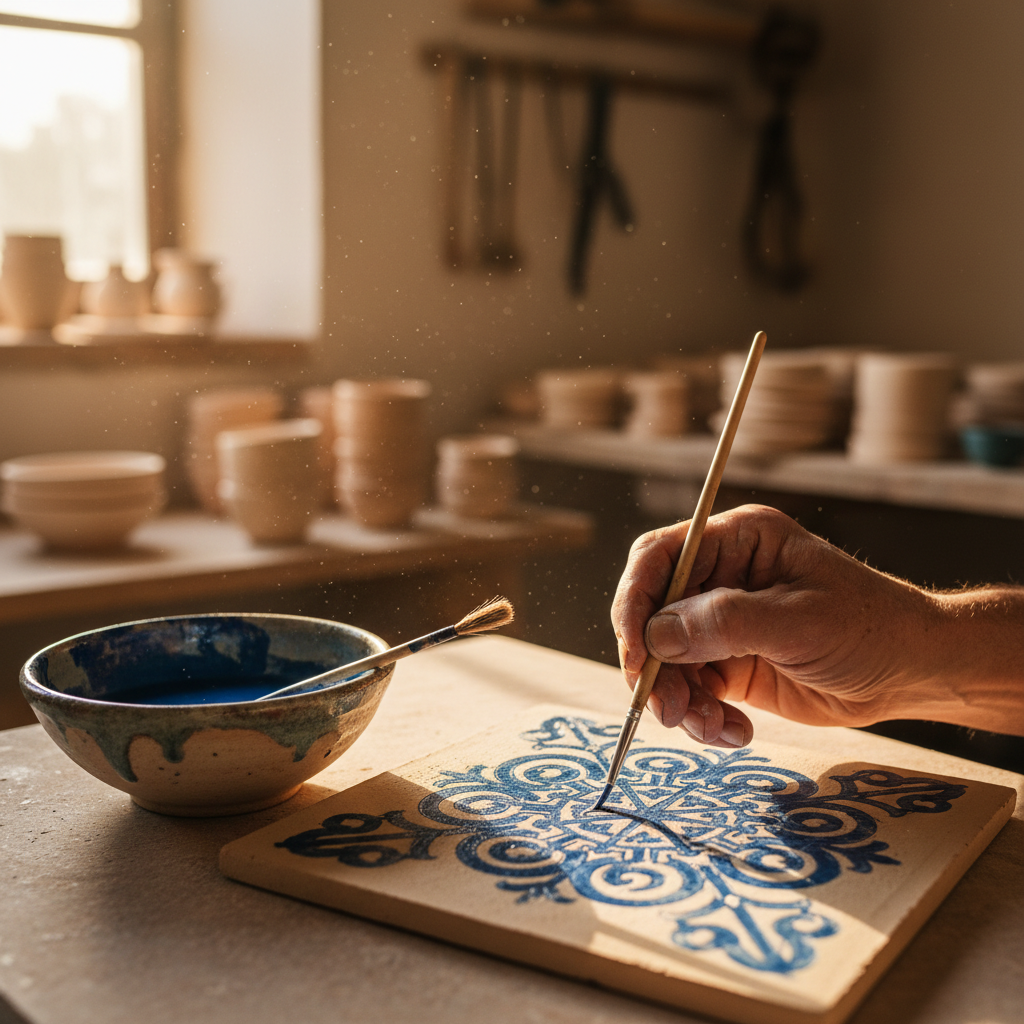
Explore the 500-year-old art of Portuguese Azulejos through a private, high-end masterclass. Learn ancestral techniques from master artisans and create your own ceramic legacy.
In the quiet, sun-drenched ateliers of Alentejo and the historic neighborhoods of Lisbon, a rhythmic tapping of wood against clay has echoed for five centuries. This is the heartbeat of Portugal’s *Azulejo* tradition, a legacy that transformed functional building materials into a national art form. For the refined traveler, observing these tiles on the facades of palaces is merely the first chapter. To truly understand the soul of the country, one must step behind the kiln and onto the canvas.
A private masterclass in ancestral tile-making is more than a craft lesson; it is an immersion into the history of an empire, guided by the steady hands of master artisans who keep a dying medium alive.
## The Alchemical Heritage of the Azulejo
The word *azulejo* derives from the Arabic *al-zulaich* (polished stone), a nod to the Moorish influence that first brought geometric tiling to the Iberian Peninsula. However, it was the Portuguese who evolved this art, moving from simple repetitive patterns to expansive, narrative-driven panels known as *historiados*.
Entering a traditional workshop is an olfactory journey, the earthy scent of damp clay, the metallic tang of mineral pigments, and the faint heat radiating from a cooling kiln. Here, the process remains stubbornly, beautifully manual. In an era of mass production, these spaces are sanctuaries of slow artisanship.
### The Clay’s Journey: From Earth to Canvas
The foundation of every premium tile is the *biscoito* (biscuit). During a private masterclass, guests witness the transformation of raw terracotta into a smooth, receptive surface. This involves traditional molding techniques where the clay is hand-pressed into wooden frames. The tactile nature of the material requires a delicate balance; it must be firm enough to hold its shape yet receptive enough to absorb the intricate glazes that follow.
## Two Paths of Artistry: Majolica and Corda-Seca
Depending on the region and the specific heritage of the workshop, guests may explore two distinct traditional techniques that have defined Portuguese aesthetics.
### The Majesty of Majolica Introduced in the 16th century, the Majolica technique allowed for a painterly freedom previously unseen. The artisan applies an opaque white tin glaze over the fired clay, creating a wet, powdery canvas. The painter must then execute their design with mineral oxides, most famously the iconic cobalt blue, directly onto the raw glaze.
There is no room for error; the glaze absorbs the pigment instantly, much like a fresco. Watching a master painter execute a floral scroll or a mythological scene with a single, fluid stroke is a testament to decades of disciplined practice. In your private session, you are invited to take up the brush, learning the weight of the stroke and the secret of "charging" the bristles to ensure a consistent hue after firing.
### The Precision of Corda-Seca For those drawn to the geometric rigor of the Mudéjar style, the *Corda-Seca* (dry cord) technique offers a fascinating technical challenge. This method involves using a mixture of manganese and oil to draw boundaries on the clay. These lines act as "dams," preventing different colored glazes from bleeding into one another during the firing process. The result is a vibrant, textured mosaic of color that feels raised to the touch, a hallmark of the palaces of Sintra.
## The Private Workshop Experience: A Refined Immersion
Dedicated to discerning international travelers seeking premium experiences, these masterclasses are curated to provide an intimate connection with the artisan. This is not a classroom setting; it is a private conversation between the creator and the guest.
Under the guidance of a master who likely comes from a lineage of ceramicists, you will learn to mix your own pigments. You will understand why certain blues turn deep navy while others remain a bright cerulean when subjected to 1,000-degree heat. You will discover the "hidden colors", paints that appear dull gray or earthy brown on the palette but emerge from the kiln as vibrant greens and rich yellows.
### Beyond the Brush: The Collector’s Perspective A significant portion of the experience involves learning to differentiate between authentic hand-painted treasures and modern industrial imitations. Your host will point out the subtle "crazing" of the glaze and the slight irregularities in the hand-cut edges that signify a piece of high-end craftsmanship. For the enthusiast looking to commission custom work for their own estate, this knowledge is invaluable.
## Curating Your Cultural Journey
To engage with Portugal’s tile-making heritage requires more than just an afternoon in a studio; it requires a seamless journey through the landscapes that inspired these designs.
### The Logistics of Excellence The most prestigious workshops are often tucked away in remote villages or historic estates (quintas). Navigating these locations requires a level of comfort and exclusivity that matches the experience itself. Travelers can expect to be transported in a fleet of high-end Mercedes-Benz vehicles, ensuring that the transition from a metropolitan hotel to a rural sanctuary is as sophisticated as the masterclass itself.
Whether you are staying in the heart of Lisbon’s Chiado district or an estate in the Alentejo, the journey becomes part of the narrative. A professional driver-guide provides context, pointing out the 18th-century *standard* tiles in neighborhood chapels or the Art Nouveau masterpieces that adorn the capital’s boulevards.
## Practical Information for the Discerning Traveler
* **Duration:** A comprehensive masterclass typically spans 3 to 4 hours, though full-day immersions including a private lunch with the artisan can be arranged. * **The Firing Process:** Please note that tiles must be fired in the kiln for several hours and then cooled slowly to prevent cracking. Your finished pieces are typically shipped to your home address internationally, professionally packed to ensure they arrive as a lasting memento of your journey. * **Best Locations:** While Lisbon is the historical hub, the region of Azeitão (near Setúbal) and the Alentejo plains offer some of the most authentic and serene workshop environments. * **Attire:** While aprons are provided, we recommend comfortable clothing suitable for a creative studio environment.
## The Lasting Legacy of the Kiln
The true value of a private tile-making masterclass lies in the shift of perspective. After spending hours focused on a single 15x15 centimeter square of clay, you will never look at the tiled facades of Porto or the grand halls of the National Tile Museum in the same way. You begin to see the human hand behind every shimmer of glaze and every curve of a painted vine.
In an increasingly digitized world, the opportunity to create something tangible using techniques that have remained unchanged for half a millennium is a rare privilege. It is a celebration of the "slow movement", an homage to patience, precision, and the enduring beauty of Portuguese culture.
With 14 years of experience crafting bespoke itineraries across the peninsula, we pride ourselves on connecting our guests with the true guardians of Portuguese heritage. Our professional English-speaking guides and exclusive Mercedes-Benz fleet are at your disposal to ensure your cultural exploration is executed with the highest standards of discretion and elegance.
Speak with our team and discover how to turn this experience into reality.