The Golden Plains' Liquid Gold: An Exclusive Guide to Alentejo’s Amphora Wine Heritage
By Portugal Magik · Published 2026-03-19
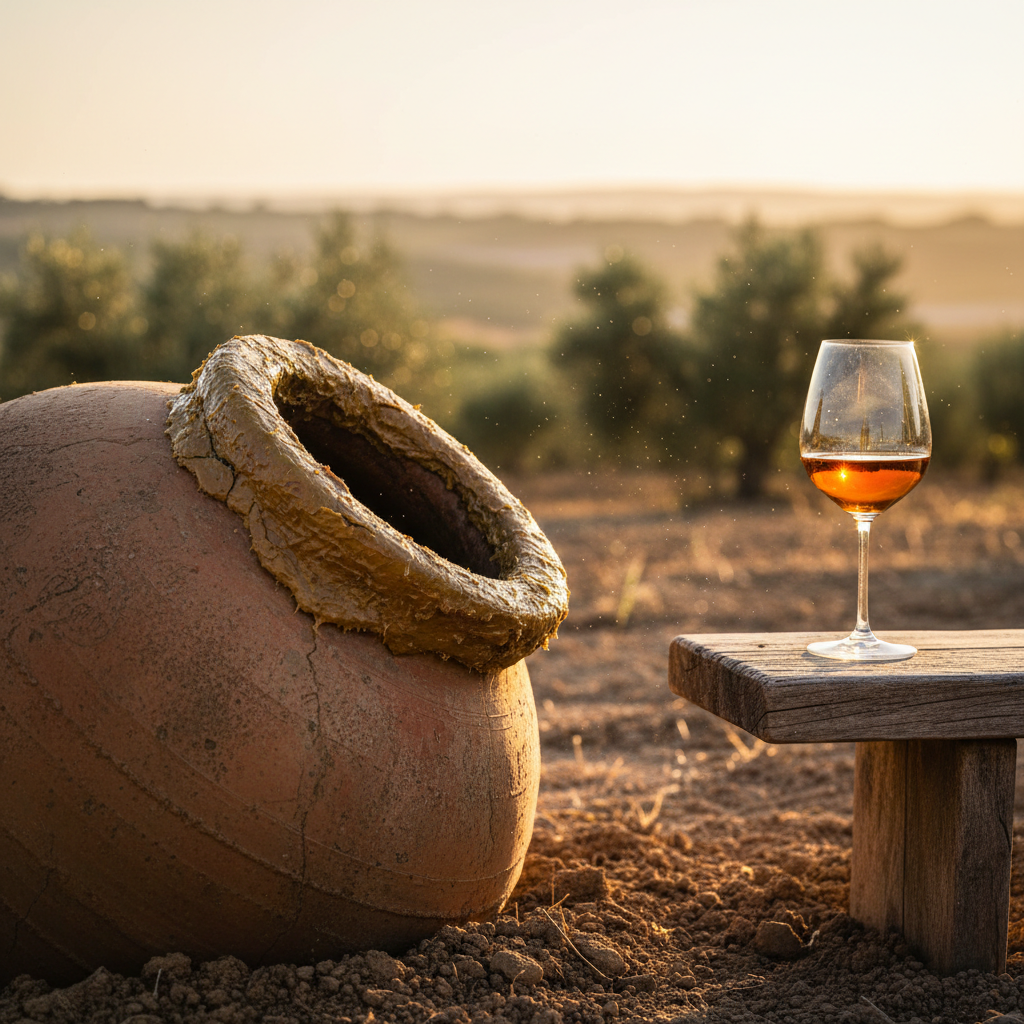
Explore the 2,000-year-old tradition of Vinho de Talha in Portugal's Alentejo region, where ancient Roman clay amphorae produce some of the world's most unique premium wines.
The Alentejo region, often described as the "soul of Portugal," is a vast landscape of undulating wheat fields, ancient cork forests, and silver-green olive groves. Yet, beneath this serene surface lies a tradition so deep and resilient that it has survived for over two millennia: the production of *Vinho de Talha*.
While the world often looks to Bordeaux or Tuscany for viticultural excellence, the discerning traveler knows that the true essence of winemaking is found in the clay. In the Alentejo, "Liquid Gold" isn't just a poetic descriptor; it represents a cultural heritage that traces its lineage back to the Romans. Today, this ancestral method is experiencing a sophisticated revival, offering a sensory journey unlike any other in the world of high-end oenology.
## The Legacy of the Talha: A Roman Inheritance
The story of Alentejo’s wine is inseparable from the *talha*, the large clay amphora used for fermenting and storing wine. Brought to the Iberian Peninsula by the Romans, this technique has remained largely unchanged for 2,000 years, particularly in the micro-regions of Vidigueira, Vila de Frades, and Cuba.
Unlike modern viticulture, which often relies on stainless steel tanks and temperature-controlled environments, *Vinho de Talha* is a testament to raw, natural elegance. The grapes are harvested, crushed, and placed directly into the clay vessels. The porous nature of the clay allows the wine to breathe, while the lining of the jars, typically a natural resin called *pez*, imparts subtle notes of pine and earth that are impossible to replicate in oak or steel.
## The Art of the Craft: From Earth to Glass
To witness the opening of a *talha* is to participate in a ritual. Traditionally, on St. Martin’s Day (November 11th), the "tap" is driven into the base of the amphora, and the year’s labor begins to flow.
### The Meticulous Process The production of premium amphora wine requires a master’s touch. The grapes are often destemmed manually using a *mesa de desengaçar* (a traditional wooden table), ensuring that only the finest fruit enters the vessel. For white wines, the contact with skins and stalks during fermentation creates a deep amber hue, often referred to as "orange wine" in the modern lexicon, resulting in a glass that is structurally complex, tannic, and profoundly aromatic.
### The Role of Terroir The Alentejo’s climate, marked by scorching summers and crisp winters, plays a vital role. The clay amphorae act as a natural thermal regulator, protecting the must from the intense heat of the golden plains. This synergy between the earth (clay) and the climate (heat) produces wines that are high in character, reflecting the very soil from which they sprung.
## Exclusive Estates: Where Tradition Meets Sophistication
For those seeking an immersive experience, several estates in the Alentejo have elevated the production of *Vinho de Talha* to a fine art, blending ancestral methods with premium hospitality.
### Herdade do Esporão Perhaps one of the most prestigious names in Portuguese wine, Esporão has dedicated a specific wing of its operation to the *talha*. Their amphora wines are a study in precision, showcasing how ancient techniques can produce world-class, high-end results that grace the tables of Michelin-starred restaurants globally.
### Adega José de Sousa Located in Reguengos de Monsaraz, this estate boasts one of the most impressive collections of amphorae in the world. Walking through their "Cathedral of Wine" is a transcendental experience; the cool, hushed atmosphere and rows of massive clay jars evoke a sense of timelessness. Their premium labels are essential for any serious collector.
### The Boutique Producers of Vidigueira Beyond the larger estates, the true heart of the movement lies in small, family-owned properties. Here, production is limited, and the focus is on uncompromising quality. These visits offer an intimate look at the winemaking process, often hosted by the owners themselves, providing a narrative that transcends the bottle.
## Navigating the Golden Plains in Style
The Alentejo is vast, and its most precious secrets are often tucked away at the end of long, dusty tracks lined with cork oaks. To truly appreciate this region, one must embrace the slow pace of life that defines it, without sacrificing comfort.
A journey through the Alentejo is best undertaken with a professional who understands the nuances of the terrain. The transition from the historic streets of Évora, a UNESCO World Heritage site, to the remote vineyards requires a seamless logistics plan. Traveling in a premium vehicle allows you to absorb the landscape’s poetic beauty while reflecting on the tastings of the day.
### Gastronomic Pairings A glass of *Vinho de Talha* demands a culinary companion of equal stature. The Alentejo is Portugal’s gastronomic powerhouse. From the rich, nutty flavors of *Porco Preto* (Iberian black pig) to the sophisticated simplicity of local olive oils and artisanal sheep cheeses, the regional flavors are designed to complement the bold structure of amphora wines.
## Practical Information for the Discerning Traveler
* **Best Time to Visit:** While the harvest season (September) is vibrant, the traditional opening of the *talhas* in November offers a unique cultural immersion. Spring (April to June) provides a lush, floral backdrop to the golden plains. * **What to Look For:** When purchasing, ensure the bottle carries the official "Vinho de Talha" seal, which guarantees the wine was produced according to traditional regulations. * **Where to Stay:** Consider the high-end *herdades* (farm estates) transformed into boutique hotels, where the floor-to-ceiling windows offer uninterrupted views of the star-studded Alentejo sky, some of the clearest in Europe.
## The Allure of Authenticity
In an era of mass production, the "Liquid Gold" of the Alentejo stands as a beacon of authenticity. These are wines with a soul, crafted by hand and aged by the earth. They do not follow trends; they honor history. For the international traveler seeking a deep connection to a destination, the amphora wine heritage of Portugal is a discovery that lingers long after the final sip.
Portugal Magik has spent 14 years refining the art of the private journey. Dedicated to discerning international travelers seeking premium experiences, we pair our deep local knowledge with an exclusive fleet of Mercedes-Benz vehicles. Our professional English-speaking drivers are more than just guides; they are your gateway to the hidden corners of the Alentejo.
Whether you wish to spend an afternoon in a private tasting with a master winemaker or explore the Roman ruins that birthed this viticultural tradition, your itinerary is crafted with the utmost attention to detail.
Speak with our team and discover how to turn this experience into reality.