The Giants of the Wind: A Private Connoisseur’s Guide to the Ancestral Milling Heritage and Rural Nobility of the Montejunto Highlands
By Portugal Magik · Published 2026-08-15
Explore the Montejunto Highlands, a region of ancestral windmills, royal ice factories, and noble estates. Discover the sophisticated heritage of Portugal's hidden mountain sanctuary.
The silhouette of the Montejunto mountain range rises like a limestone spine from the rolling plains of the Estremadura region, just an hour north of Lisbon. While the coastal crowds gravitate toward the Atlantic surf and the urban elite seeks the cosmopolitan pulse of the capital, the Montejunto Highlands remain a sanctuary of silence, traditional craftsmanship, and ancestral nobility. This is a landscape where the wind dictates the rhythm of life, and where a unique milling heritage still stands as a testament to human ingenuity.
For the discerning traveler, a journey into these highlands is not merely a geographic transition, but a temporal one. It is an exploration of a rural Portugal that feels both eternal and deeply sophisticated in its simplicity. Here, the white sails of traditional windmills catch the Atlantic breeze, and the ruins of grand estates whisper stories of a time when this region was the preferred retreat for the Portuguese court and religious orders.
## The Architecture of the Wind: The Windmills of Montejunto
The most iconic features of this landscape are undoubtedly the traditional windmills. Unlike the metal structures found elsewhere in Europe, the Portuguese *moinhos de vento* are charming, circular stone towers capped with conical wooden roofs. What distinguishes the Montejunto variety is the use of clay pots, known as *buzios*, attached to the rigging. When the wind blows, these pots sing a haunting, melodic whistle that informs the miller of the wind's direction and speed.
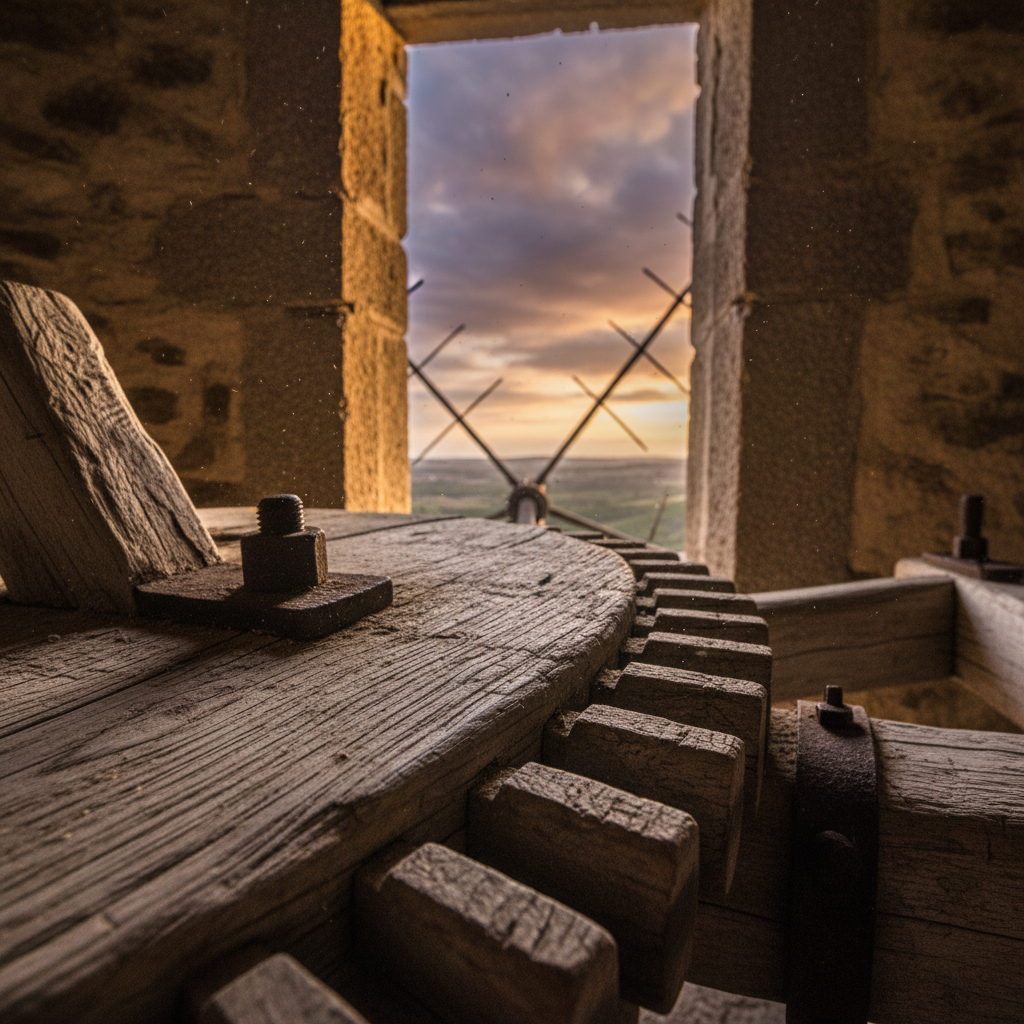
Visiting these sites offers a profound appreciation for pre-industrial technology. The interior of a functioning windmill is a masterclass in carpentry and physics. The heavy grinding stones, the intricate wooden cogs, and the aromatic dust of freshly ground grain create a sensory experience that is increasingly rare in the modern world. Many of these structures have been meticulously restored by local families who maintain the milling tradition, not out of necessity, but as a commitment to cultural preservation. The view from these high ridges, looking out toward the Berlengas Islands on a clear day, is one of the most expansive and rewarding in the country.
## The Royal Ice Factory: A Marvel of 18th Century Engineering
Deep within the protected landscape of Montejunto lies one of the most curious archaeological sites in the Iberian Peninsula: the *Real Fábrica do Gelo* (Royal Ice Factory). Established in the 18th century by the Dominican friars, this facility was once the primary source of ice for the royal court in Lisbon and the prestigious cafés of the Rossio district.
The process was an extraordinary feat of logistics. During the winter months, water was collected in shallow stone tanks. On the coldest nights, when the temperature dropped, the water froze. The ice was then harvested before sunrise, compacted into deep underground silos, and insulated with straw. In the summer, the ice was transported by donkey and then by boat down the Tagus River to the capital, ensuring that the nobility could enjoy chilled beverages and sorbets during the sweltering heat. Walking through the ruins of these stone tanks and silos today provides a fascinating glimpse into the historical heights of engineering and the lengths to which the elite went to secure comfort.
## The Rural Nobility and the Quintas of Alenquer
The foothills surrounding the Montejunto range are dotted with elegant *quintas* (estates) and manor houses that have belonged to the same families for generations. This area, often referred to as the "Crib of the Portuguese Nobility," boasts a microclimate that is particularly favorable for viticulture and agriculture.
The architecture here is characterized by the Baroque and Neoclassical influences of the 18th and 19th centuries. Tall, wrought-iron gates open onto long avenues of cypress trees, leading to stately homes with private chapels and ornate tile work (*azulejos*). While many of these estates remain private residences, their presence defines the character of the region. The landscape is a patchwork of neatly tended vineyards, olive groves, and orchards, reflecting a refined agrarian lifestyle that has remained largely unchanged for centuries.
## The Spiritual Heights: The Convent of Our Lady of the Snows
Perched near the highest point of the mountain range are the evocative ruins of the *Convento de Nossa Senhora das Neves*. Founded in the 13th century, this was the first Dominican monastery in Portugal. Its location was chosen for its isolation and its proximity to the heavens, providing a space for contemplation far above the complexities of secular life.
The stone walls, weathered by centuries of Atlantic winds, frame views that stretch across the Ribatejo plains to the east and the ocean to the west. The site possesses a quiet majesty that invites reflection. For the traveler who appreciates history through the lens of architectural decay, the convent is a poignant reminder of the enduring spiritual legacy that has shaped the Portuguese identity.
## A Landscape for the Senses: Flora and Fauna
The Montejunto Highlands are a protected landscape, home to a diverse array of Mediterranean flora and fauna. The limestone soil supports rare orchids and aromatic herbs like wild thyme and rosemary, which perfume the air as you walk the ridgelines. Birdwatchers may spot Bonelli's eagles or peregrine falcons soaring on the thermals, while the dense oak forests on the northern slopes provide a cool refuge for local wildlife.
The region is also famous for its local delicacies. The bread, baked in traditional wood-fired ovens using the flour ground by the very windmills you see on the horizon, is exceptional. It is often paired with the robust red wines and crisp whites produced by the surrounding estates, which have gained international acclaim for their balance and character.
## Practical Considerations for the Discerning Traveler
Exploring the Montejunto Highlands requires an appreciation for slow travel. The roads are winding and narrow, designed for a pace that allows one to absorb the scenery rather than rush through it.
### Seasonality and Climate The best times to visit are during the spring (March to May) when the wildflowers are in full bloom, or during the autumn (September to November) when the vineyards turn golden and the air is crisp. Summer can be quite warm, though the mountain breeze often provides a pleasant respite from the heat of the plains.
### Cultural Etiquette This is a region that values its privacy and its traditions. When visiting the windmills or small villages, a respectful and understated approach is always appreciated. Engaging with local artisans and millers often reveals stories that are not found in any guidebook.
### Premium Accessibility While the highlands feel remote, they are easily accessible for a day excursion from Lisbon or as a scenic detour when traveling toward the northern regions of Coimbra and Porto. The contrast between the urban sophistication of the capital and the rugged, noble beauty of Montejunto is one of the most compelling aspects of a journey through central Portugal.
## Discovering the Heart of the Highlands
A journey through the Montejunto Highlands is an invitation to witness the harmony between man and nature. It is a place where the wind is a resource, the mountains are a sanctuary, and history is etched into every stone and sail. Whether you are standing at the base of a whistling windmill or exploring the cold stone corridors of the Royal Ice Factory, you are participating in a story that has been unfolding for centuries.
For those who seek to delve deeper into the authentic soul of Portugal, these highlands offer a rare combination of historical depth, architectural beauty, and natural splendor. It is a destination that does not demand attention but rewards it profoundly, offering a sophisticated perspective on the rural traditions that continue to define the nation.
To experience the Montejunto Highlands with the comfort and expertise this region deserves, consider the benefits of a dedicated private service. With a decade and a half of expertise, Portugal Magik offers the ultimate way to navigate these winding mountain roads. Our fleet of high-end Mercedes-Benz vehicles, driven by professional English-speaking experts, ensures that your focus remains entirely on the breathtaking views and the rich history of the land.
Request your personalized proposal today and let us curate a seamless journey into the ancestral heart of Portugal.