Asking the Wind for News: Coimbra and the Poetry of Resistance in Trova do Vento que Passa
By Portugal Magik · Published 2026-10-02
Explore the intellectual and revolutionary heart of Coimbra through the lens of Manuel Alegre's famous poem, Trova do Vento que Passa, a symbol of Portuguese resistance.
Coimbra is a city where history is not merely recorded in books but etched into the very limestone of its steep streets and the melancholic strings of its guitars. Known as the City of Knowledge, it stands as a sentinel over the Mondego River, home to one of the oldest universities in the world. Yet, beyond the academic robes and the Romanesque arches lies a deeper, more resonant narrative. It is a story of defiance, whispered through the lyrics of the Coimbra Fado and solidified in the cultural consciousness by one specific masterpiece: *Trova do Vento que Passa*.
The poem, written by Manuel Alegre and famously set to music by Adriano Correia de Oliveira, became the unofficial anthem of the student resistance during the mid-twentieth century. To walk through Coimbra today is to walk through the echoes of this song, a melody that asked the wind for news of a free Portugal when silence was the only official response.
## The University as a Bastion of Thought
The journey into the soul of Coimbra begins at the top of the hill, within the walls of the University of Coimbra, a UNESCO World Heritage site. Established in 1290, this institution has long been the intellectual heart of the nation. The Joanina Library, a baroque masterpiece of gilded wood and exotic hardwoods, houses thousands of volumes that represent the evolution of European thought.
However, the university was not just a place for quiet study. During the years of the Estado Novo dictatorship, the campus became a crucible for political dissent. The students, clad in their traditional black capes (the *traje académico*), transformed the academic space into a theater of quiet rebellion. *Trova do Vento que Passa* emerged from this environment, capturing the restless spirit of a generation that felt the weight of censorship and the longing for a different future.
### The Architecture of Knowledge
As you wander through the Paço das Escolas, the central courtyard of the university, the grandeur of the architecture serves as a backdrop to this history. The Via Latina, the colonnaded walkway where students once gathered, is a reminder of the city's Roman roots and its long standing commitment to the humanities. From this vantage point, looking out over the red-tiled roofs toward the river, one can almost hear the verses: *"Perguntei ao vento que passa / notícias do meu país"* (I asked the wind that passes / for news of my country).
## The Haunting Melodies of Coimbra Fado
To understand the poetry of resistance, one must distinguish Coimbra Fado from its Lisbon counterpart. While the Fado of Lisbon is often associated with the sea and the longing of the tavern, the Fado of Coimbra is intrinsically linked to the university and is sung exclusively by men. It is a genre defined by its scholarly roots, its serenades beneath the windows of beloveds, and, most importantly, its capacity for political commentary.
The performance of *Trova do Vento que Passa* transformed the traditional Fado into a vehicle for social change. The song uses the metaphor of the wind as a messenger of truth in a time of darkness. It does not shout; it mourns and it hopes. Many visitors find that hearing these melodies performed in the intimate settings of the city’s historic center offers a profound connection to the Portuguese identity that goes far beyond simple sightseeing.
### The Monuments to the Muse
In the Largo da Sé Velha, the square fronting the Old Cathedral, the acoustics of the stone walls have amplified the voices of student singers for centuries. The cathedral itself, a fortress-like structure from the 12th century, stands as a witness to the evolution of the city. The transition from the sacred to the secular, and from the academic to the revolutionary, is palpable here.
## Exploring the Streets of Resistance
Descending from the university heights toward the Baixa (the lower town), the narrow alleys and "quebra-costas" (back-breakers) stairways offer a more intimate look at Coimbra. These streets were the veins of the city, where students and locals mingled, and where the "wind" of Alegre’s poem carried its messages.
### The Arco de Almedina
Passing through the Arco de Almedina, the main gate of the medieval city walls, travelers enter a realm where time seems to slow down. The stone gateway once served as the entrance to the fortified city, but today it marks the threshold between the grand academic traditions and the vibrant daily life of the Coimbra residents. It is in these hidden corners that the spirit of the *Trova* feels most present, in the graffiti that still speaks of freedom and the quiet pride of the shopkeepers who have seen generations of students come and go.
### The Monastery of Santa Cruz
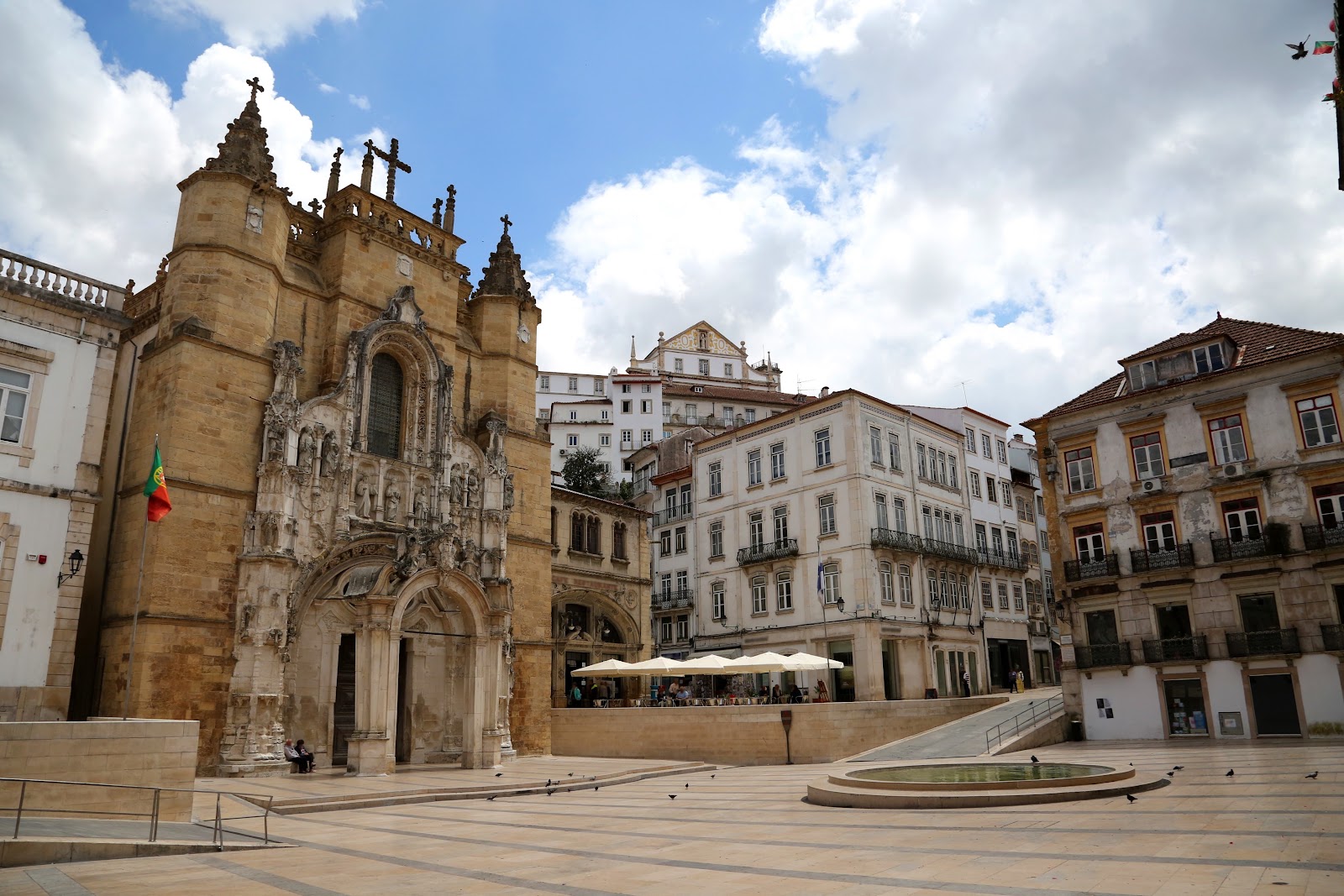
At the base of the hill lies the Monastery of Santa Cruz, a National Pantheon where the first two kings of Portugal are buried. The Manueline architecture, with its intricate stone carvings, reflects the wealth and power of the Age of Discovery. Yet, even here, the narrative of resistance finds a place. The monastery was a site of significant intellectual activity, contributing to the city's reputation as a place where the pen was often considered as powerful as the sword.
## The Mondego: The River of Poets
The Mondego River, the only major river that begins and ends its journey within Portuguese borders, is the lifeblood of Coimbra. It has been immortalized by poets for centuries, often referred to as the "River of Forgetfulness" or the "River of Tears."
Walking along the riverbanks, particularly at sunset, provides a moment of reflection. The reflection of the university on the water’s surface creates a twin city, shimmering and ephemeral. It was across these waters that the "wind that passes" blew, carrying the hopes of those who dreamed of a modernized, democratic nation. The Quinta das Lágrimas, located on the opposite bank, tells the tragic tale of Pedro and Inês, a story of love and loss that mirrors the bittersweet tone of the Coimbra Fado.
## Planning Your Visit to the City of Students
Coimbra is conveniently located between Lisbon and Porto, making it an essential stop for those wishing to understand the cultural and intellectual history of Portugal.
### Best Times to Experience the Atmosphere
While Coimbra is captivating year-round, the month of May is particularly evocative. This is when the *Queima das Fitas* (Burning of the Ribbons) occurs, a week-long celebration marking the end of the academic year. The city is filled with the traditional music and the energy of thousands of students in their black capes. For a quieter, more contemplative visit, the autumn months offer misty mornings that perfectly suit the city’s melancholic beauty.
### Local Traditions
Discerning travelers often enjoy discovering the local crafts, such as the delicate Coimbra pottery, characterized by its 17th-century patterns and cobalt blue hues. The local gastronomy, including the famous *Pastéis de Santa Clara*, provides a sweet insight into the conventual traditions that have shaped the region's culinary landscape.
## The Legacy of the Trova
Today, *Trova do Vento que Passa* is no longer a clandestine protest song but a cherished piece of Portuguese heritage. It serves as a reminder that Coimbra is not just a museum of the past, but a living entity where the values of knowledge and freedom are continuously celebrated. The "wind" no longer carries news of oppression, but rather the invitations of a city that remains steadfast in its beauty and its intellect.
For the international traveler, Coimbra offers a sophisticated blend of monumental architecture and profound human stories. It is a place where every stone has a name and every melody has a history. To visit is to engage with the very heart of the Portuguese spirit.
## Discover Coimbra with a Dedicated Perspective
Exploring the steep hills and historic narratives of Coimbra requires a seamless experience that allows for total immersion in the city's atmosphere. Navigating the transition from the modern lower town to the ancient university heights is best achieved with the comfort of a professional service.
Portugal Magik, with fourteen years of experience in curating exceptional journeys, provides an ideal way to discover this storied city. Our exclusive fleet of Mercedes-Benz vehicles, including E-Class and V-Class models, ensures that your journey from Lisbon or Porto is as refined as the destination itself. Our professional English-speaking drivers are dedicated to discerning international travelers, offering the flexibility and local insight necessary to truly appreciate the nuances of Coimbra’s history and the poetry of its streets.
Whether you wish to spend an afternoon contemplating the Manueline details of Santa Cruz or watching the sun set over the Mondego, our private driver service allows you to dictate the pace of your discovery. We provide the comfort and logistics, leaving you free to listen for the echoes of the *Trova* in the wind.
Speak with our team and discover how to turn this experience into reality.