8 Easy Day Trips in Portugal for Palace Gardens, Roman Temples and Medieval Lanes
By Portugal Magik · Published 2026-11-27
Explore the most enchanting day trips in Portugal, from the Roman ruins of Evora to the fairytale gardens of Sintra and the medieval walls of Obidos.
Imagine stepping out of a sleek Mercedes-Benz and into a world where the air smells of blooming jasmine and damp stone. The morning sun catches the golden highlights of a Manueline facade, and the only sound is the rhythmic clip-clop of a distant horse-drawn carriage or the gentle bubbling of a Moorish fountain. This is the magic of the Portuguese countryside, where a short drive from the main cities reveals layers of history that span two millennia.
Portugal is a compact treasure chest. You do not need to pack and unpack your bags every day to see the country's most iconic sights. By basing yourself in a central hub like Lisbon or Porto, you can set off each morning to explore Roman ruins, fairytale forests, and walled villages that look exactly as they did in the 14th century. Here are eight exceptional day trips that offer a deep dive into the heritage and beauty of this sun-drenched land.
## 1. Sintra and the Romanticist Park of Pena Sintra feels like a dreamscape caught between the mountains and the sea. The town is famous for the Pena Palace, a vivid yellow and red castle that sits atop the highest peak of the Serra de Sintra. Beyond the palace walls lies the Park of Pena, a sprawling green labyrinth filled with exotic trees from every corner of the former Portuguese Empire. Walking through these gardens, you will find hidden lakes, fern-filled valleys, and mossy stone benches that invite quiet reflection.
The atmosphere here is often misty and cool, providing a refreshing contrast to the warmth of the coast. The town center itself is a cluster of narrow, winding streets where the scent of warm travesseiros (flaky almond pastries) wafts from local bakeries. It is a place of deep romance and architectural whimsy that captures the imagination of every traveler.
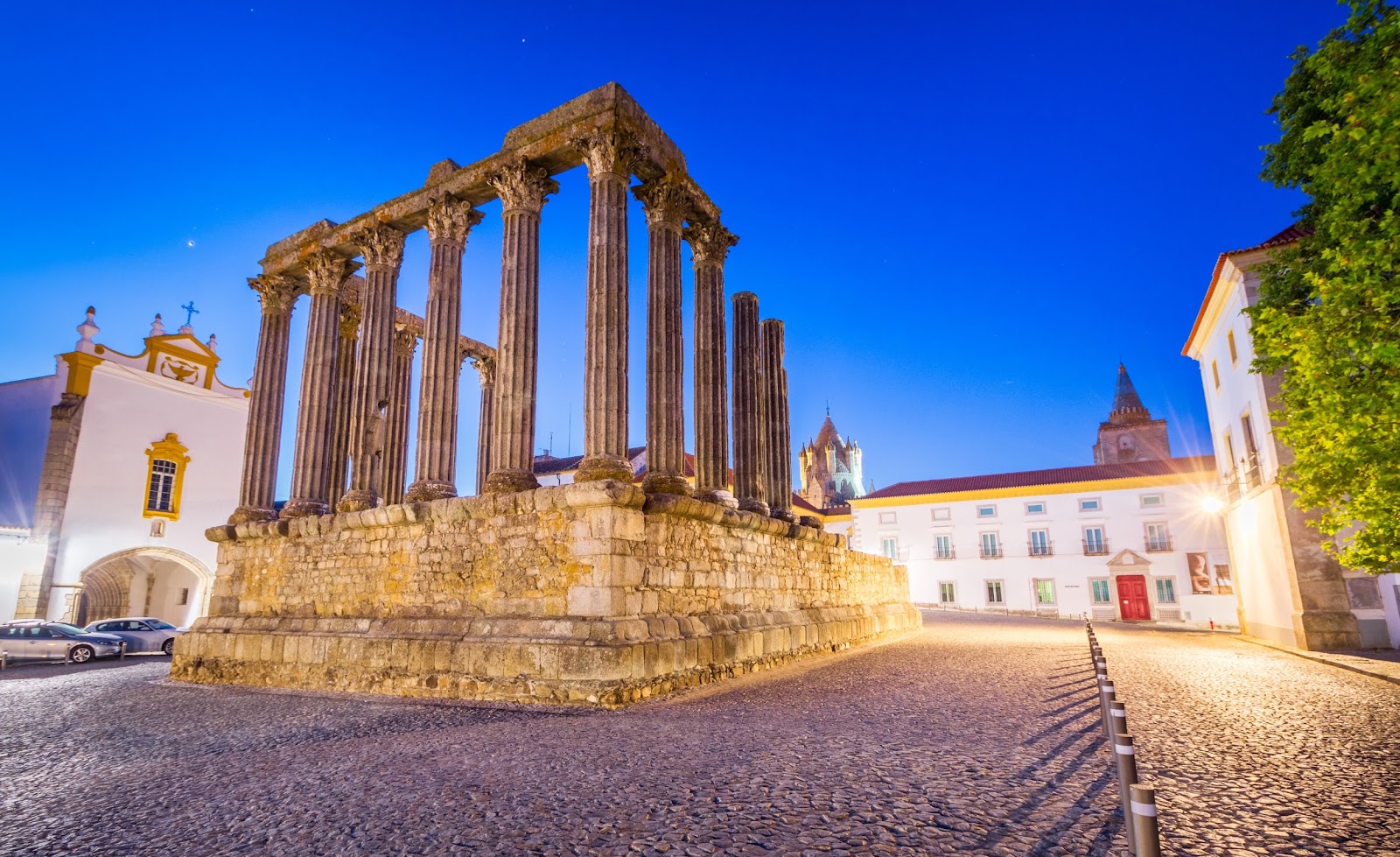
## 2. Evora and the Roman Temple Deep in the heart of the Alentejo region, Evora is a city that wears its history on its sleeve. The crown jewel is the Roman Temple of Evora, often called the Temple of Diana, which stands with remarkable grace in the center of the old town. Its granite columns have survived two thousand years of history, providing a stark, beautiful silhouette against the bright blue Alentejo sky.
Walking through Evora is like visiting an open-air museum. The medieval lanes are lined with whitewashed houses trimmed in yellow, and the sound of bells from the massive Gothic cathedral often fills the air. It is a city of slow paces and incredible light, where you can feel the weight of centuries as you wander through the Romanesque and Gothic cloisters.
## 3. Obidos and the Medieval Walled Town Obidos is perhaps the most perfectly preserved medieval village in the country. It is entirely encircled by high stone walls that visitors can still walk upon, offering views over terracotta rooftops and the surrounding rolling plains. The main street is a vibrant corridor of white houses draped in purple bougainvillea and blue hydrangeas.
Inside the walls, the cobblestone paths lead to small squares and hidden chapels. The air is often filled with the sweet aroma of Ginjinha, the local sour cherry liqueur served in tiny chocolate cups. It is a sensory delight where the rough texture of ancient stone meets the delicate beauty of traditional tile work, making it a must-visit for anyone who loves old-world charm.
## 4. Queluz and the Royal Palace Gardens Often referred to as the Portuguese Versailles, the National Palace of Queluz is a masterpiece of Rococo architecture. While the palace itself is grand, the formal gardens are the true highlight. They are a symphony of manicured hedges, ornate statues, and fountains decorated with intricate blue and white azulejo tiles. The canal, lined entirely with these painted tiles, is a breathtaking sight when the sun reflects off the water.
The atmosphere at Queluz is one of refined elegance. As you stroll through the gardens, you can almost hear the echoes of 18th-century courtly life. The scent of citrus trees and the sound of splashing water create a peaceful sanctuary just a short distance from the bustle of Lisbon. It is a perfect example of how the Portuguese royals blended grand European styles with their own unique artistic traditions.
## 5. Tomar and the Convent of Christ Tomar is a town inextricably linked to the mysterious Knights Templar. High above the Nabao River sits the Convent of Christ, a vast complex that served as the headquarters for the Order. The highlight is the Round Church, an octagonal structure modeled after the Holy Sepulchre in Jerusalem, where the knights would supposedly enter on horseback to hear mass.
The complex features some of the most famous Manueline carvings in existence, including the celebrated Chapter House Window, which is adorned with stone ropes, corals, and maritime motifs. The surrounding gardens and the long, arched aqueduct provide a sense of scale and power. Walking through the silent cloisters, you feel a profound sense of mystery and historical significance that few other sites can match.
## 6. Guimaraes and the Birthplace of the Nation Known as the cradle of Portugal, Guimaraes is where the country's first king was born. The medieval center is a UNESCO World Heritage site, characterized by narrow lanes and beautiful plazas like the Largo da Oliveira. The town is overlooked by a sturdy 10th-century castle with crenelated walls that look like something out of a storybook.
The Palace of the Dukes of Braganza stands nearby, featuring unusual cylindrical chimneys and a somber, regal atmosphere. Walking through the town feels like stepping back into the 12th century, with granite houses and wooden balconies hanging over the streets. It is a place of deep national pride, yet it remains intimate and welcoming, with a quiet energy that is perfect for a day of exploration.
## 7. Batalha and the Gothic Masterpiece The Monastery of Batalha was built to commemorate a pivotal military victory, and its grandeur reflects that importance. It is one of the finest examples of Late Gothic and Manueline architecture in the world. The Unfinished Chapels are a particular highlight, where the roof was never completed, leaving the intricately carved stone pillars open to the changing light of the sky.
The scale of Batalha is humbling. The golden-hued limestone glows in the afternoon sun, and the delicate stone tracery looks like lace against the horizon. Inside, the Founder’s Chapel houses the tombs of significant royals under a magnificent star-shaped vault. It is a place of silence and artistic brilliance, where every corner reveals a new, carefully carved detail.
## 8. Coimbra and the Royal University Coimbra was once the capital of Portugal and remains its intellectual heart. The University of Coimbra sits atop a hill overlooking the Mondego River, occupying what was once a royal palace. The Joanina Library is the undisputed star here, a baroque masterpiece filled with gold leaf and thousands of ancient books, where the air smells of old parchment and beeswax.
The steep, narrow streets of the old town descend from the university toward the river, filled with the haunting sounds of Fado de Coimbra, which is traditionally sung by male students in black capes. The Botanical Garden, established in the 18th century, offers a lush escape with its neoclassical fountains and diverse plant life. It is a city that feels both ancient and youthful, vibrating with a unique energy born from centuries of academic tradition.
## Planning Your Journey When organizing these day trips, it is important to consider the logistics of travel. While many of these locations are accessible by public transport, the most efficient and comfortable way to experience them is through a private driving service. Having a dedicated vehicle allows you to bypass the constraints of train schedules and enjoy the scenery of the Portuguese countryside at your own pace.
A private driver can navigate the narrow, winding roads of Sintra or the vast plains of the Alentejo, dropping you off directly at the entrance of a monument and meeting you when you are ready to move on. This flexibility is especially valuable in places like Batalha or Tomar, where being able to combine two sites in one day can significantly enhance your experience.
Portugal is a country that rewards those who take the time to look beyond the main city centers. Whether you are touching the weathered stones of a Roman temple or wandering through the fragrant gardens of a royal palace, these day trips offer a window into the soul of the nation. The beauty of these places lies not just in their history, but in the way they are preserved for modern travelers to enjoy in peace and comfort.
Speak with our team and discover how to turn this experience into reality. Request your personalized proposal today.