8 Beautiful Villages in Portugal Worth a Detour on Your Holiday
By Portugal Magik · Published 2026-10-06
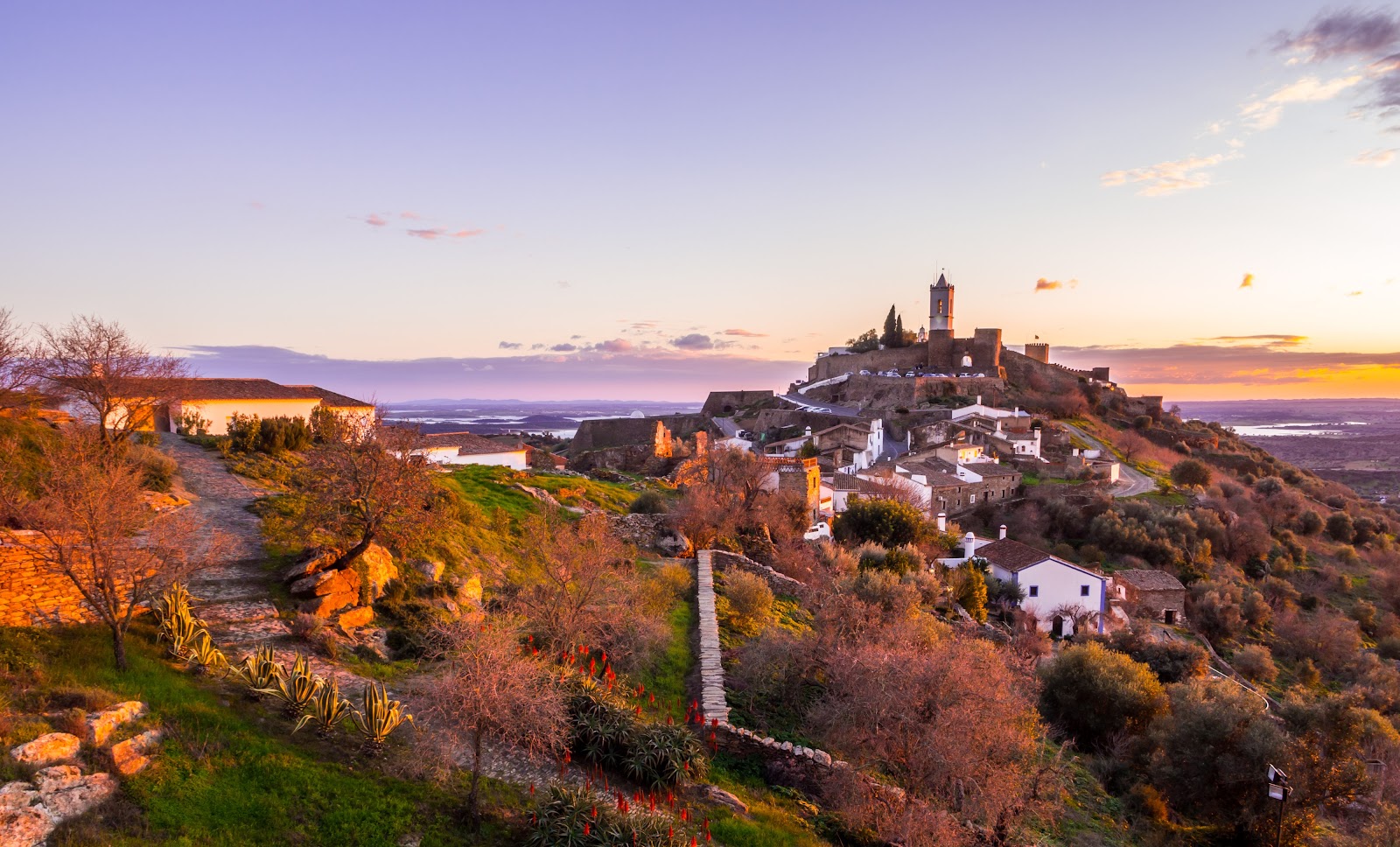
Discover 8 of Portugal's most enchanting villages, from the boulder-integrated houses of Monsanto to the striped coastal charm of Costa Nova.
When you think of a holiday in Portugal, the vibrant streets of Lisbon or the riverfront charm of Porto usually come to mind first. While the cities are spectacular, the true soul of the country often hides in the quiet corners, tucked away in the mountains or perched on dramatic cliffs overlooking the Atlantic.
Beyond the main highways, there are tiny hamlets and ancient settlements where time seems to have slowed down. These villages offer a glimpse into a traditional way of life, featuring stone houses, narrow cobblestone alleys, and breathtaking views. If you are looking to escape the crowds and see a more authentic side of the country, these eight locations are well worth a detour.
## 1. Monsaraz (Alentejo)
Rising above the plains of the Alentejo region, Monsaraz is one of the oldest and most beautiful settlements in Portugal. This medieval village is entirely contained within its ancient stone walls. Because it sits on a high hill near the Spanish border, the views from the ramparts are endless, overlooking the vast Alqueva reservoir.
The village is made of white-washed houses and shale streets. It feels like an open air museum, but it is very much alive. There is a small castle at one end where you can walk the walls and look out over the olive groves below. At night, the area is part of a protected "Dark Sky Reserve," making it one of the best places in Europe to see the stars clearly without light pollution.
## 2. Piodao (Central Portugal)
Deep in the Serra do Acor mountains, Piodao is often called the "Schist Village." It is famous for its unique architecture, where almost every building is constructed from dark schist stone with roofs made of slate. The only splash of color comes from the bright blue doors and window frames, a tradition that locals say started because blue was the only paint color available in the village store many years ago.
The village is built into a steep hillside, with houses stacked on top of one another. The parish church, standing out in stark white against the dark stone, is a striking landmark. It is a remote location, which has helped preserve its historic character. The drive there involves winding mountain roads, but the sight of the village glowing at sunset is a memory you will keep forever.
## 3. Marvao (Alentejo)
If Monsaraz is the balcony of the Alentejo, Marvao is its highest peak. Perched on a dramatic crag in the Serra de Sao Mamede Natural Park, Marvao is close to the border with Spain. In fact, it was once a vital strategic point for defending the kingdom.
The village is impeccably maintained, with bright white houses decorated with colorful flower pots and granite doorways. The 13th-century castle is the main attraction, offering 360-degree views of the surrounding mountains and plains. Walking through the quiet, narrow streets, you can feel the layers of history, from the Romans to the Moors who once occupied this high ground.
## 4. Monsanto (Central Portugal)
Monsanto is frequently voted the "most Portuguese village in Portugal." What makes it so unique is how the residents have built their homes around, under, and even inside massive granite boulders. In some places, a single giant rock serves as the roof or a wall for a house.
Located in the Castelo Branco district, the village climbs up a steep hill toward a ruined Templar castle. It is a place that rewards those who like to explore on foot. Every turn reveals a new curiosity, like a tiny garden squeezed between boulders or an ancient stone oven. The effort of the climb is rewarded by the sheer uniqueness of the landscape.
## 5. Obidos (Central Coast)
Obidos is perhaps the most famous village on this list, and for good reason. It was historically the "wedding present" given by Portuguese kings to their queens. Surrounded by tall medieval walls, the entire village is a pedestrian zone filled with bougainvillea, bookstores, and small shops.
While many visitors come for the famous cherry liqueur served in chocolate cups, the real magic is found in the backstreets away from the main gate. You can walk the entire perimeter of the village on top of the walls, which provides a great perspective of the terracotta roofs and the surrounding vineyards. It is located about an hour north of Lisbon, making it an easy and rewarding detour.
## 6. Sortelha (Beira Alta)
Sortelha is one of the oldest and best preserved of Portugal's "Historical Villages." Entering through its Gothic gates feels like stepping directly into the 12th century. The village is built entirely of granite, blending seamlessly into the rocky landscape that surrounds it.
Unlike some of the more famous spots, Sortelha remains very quiet and rugged. The castle ruins and the old pillory in the main square are centerpiece features. It is a place of silence and stone, where you can wander through the "Rua Direita" and imagine what life was like for the medieval soldiers who once guarded this frontier.
## 7. Azenhas do Mar (Sintra Coast)
Not all beautiful villages are in the mountains. Azenhas do Mar is a stunning seaside hamlet perched on a cliff just north of Sintra. The white houses seem to spill down the side of the cliff toward the Atlantic Ocean.
At the base of the cliff, there is a natural swimming pool carved into the rock that fills with seawater at high tide. It is a favorite spot for photographers, especially at golden hour when the sun sets over the ocean. While the village itself is small, its dramatic location makes it one of the most iconic sights on the Portuguese coastline.
## 8. Costa Nova (Central Coast)
Located near the city of Aveiro, Costa Nova is famous for its "Haystacks" (Palheiros). These are traditional wooden houses painted with bright vertical and horizontal stripes, usually in red, blue, or green against a white background. Originally, these were built by fishermen to store their gear, but they eventually became holiday homes.
The village sits on a strip of land between the Atlantic Ocean and the Aveiro lagoon. It is a flat, breezy place perfect for a stroll along the wooden walkways. The contrast between the colorful houses and the sandy dunes creates a cheerful, unique atmosphere that is different from any other village in the country.
## Planning Your Visit
These villages are beautiful, but many are located in remote areas where public transport is limited or non-existent. To truly enjoy the scenery without the stress of navigating narrow mountain roads or finding parking in ancient centers, many travelers prefer the convenience of a private driver.
### When to Go Spring and autumn are the ideal times to explore these inland villages. The weather is mild, which is perfect for walking on cobblestones, and the landscapes are either lush and green or filled with the warm colors of harvest. Summer can be very hot, especially in the Alentejo region (Monsaraz and Marvao), while winter can be misty and cold in the mountains.
### Practical Tips * **Footwear:** Wear sturdy, comfortable shoes. Most of these villages have steep, uneven stone streets that can be slippery when wet. * **Photography:** The light in the Alentejo and the central mountains is exceptional. Early morning or late afternoon provides the best conditions for capturing the stone textures and white-washed walls. * **Accessibility:** Due to their historic nature and hillside locations, many of these villages have limited accessibility for those with mobility challenges.
## Exploring Portugal with Ease
Visiting these hidden gems requires time and a reliable way to get around. While the main cities are well connected, the real heart of Portugal lies down the country roads that lead to places like Piodao or Sortelha.
At Portugal Magik, we have spent 14 years helping international travelers discover these authentic locations. Our team provides high-end private tours using a premium fleet of Mercedes-Benz E-Class, V-Class, and Sprinter vehicles. With a professional English-speaking driver to handle the navigation and logistics, you are free to sit back, enjoy the views, and focus on the history and beauty of the landscape.
Whether you want to spend a day exploring the medieval walls of Obidos or take a deeper journey into the schist villages of the interior, we provide a comfortable and flexible way to travel.
Speak with our team and discover how to turn this experience into reality.