6 Easy Day Trips in Portugal by Train from Lisbon, Porto and Faro
By Portugal Magik · Published 2026-10-11
Discover 6 easy and beautiful day trips from Lisbon, Porto, and Faro using Portugal's reliable rail network. From royal palaces to coastal escapes, learn how to explore the country by train.
Getting around Portugal is a joy, especially when you can sit back and watch the scenery roll by through a train window. The rail network connects major hubs to some of the most beautiful historic towns and coastal escapes in the country. While many visitors choose the convenience of a private driver for longer journeys or complex itineraries, the train offers a charming way to see specific nearby highlights from the three main gateway cities: Lisbon, Porto, and Faro.
Whether you are looking for royal history, medieval streets, or golden beaches, these day trips are straightforward and rewarding. Here are six excellent options for exploring Portugal by rail.
## From Lisbon: Royal Retreats and Seaside Charm
Lisbon is the primary rail hub of the country, making it incredibly easy to reach both the lush hills to the west and the sun-drenched coast to the south.
### 1. Sintra: A Fairytale in the Hills Sintra is perhaps the most famous day trip from the capital, and for good reason. Located just a short ride from Rossio Station in central Lisbon, this town feels like a different world. The air is cooler, the vegetation is dense, and the skyline is dotted with palaces.
Once you arrive at the Sintra train station, you are at the gateway to a UNESCO World Heritage site. The town center is walkable, filled with shops selling traditional *travesseiros* (almond cream pastries). Higher up the mountain, you will find the colorful Pena Palace and the ancient Moorish Castle. Because the hills are steep and the sites are spread out, many visitors choose to use local buses or taxis once they depart the train to reach the higher monuments.
### 2. Cascais: The Portuguese Riviera If you prefer the sea breeze to mountain mist, the train from Cais do Sodré station in Lisbon takes you directly to Cascais. The journey itself is a highlight, as the tracks run right alongside the Tagus River and eventually the Atlantic Ocean.
Cascais was once a tiny fishing village that became a summer retreat for the Portuguese royal family in the 19th century. Today, it is a sophisticated coastal town with elegant architecture, small sandy coves, and a vibrant marina. It is a perfect place for a long lunch by the water or a stroll through the Marechal Carmona Park. The walk from Cascais to the neighboring town of Estoril along the seaside promenade is flat, easy, and offers wonderful views of the old forts guarding the coast.
## From Porto: Rivers and Ancient Roots
Porto is the gateway to the north, a region defined by granite mountains, deep valleys, and some of the oldest history in the nation. The Sao Bento Station in Porto, famous for its magnificent blue and white tile panels, is your starting point for these adventures.
### 3. Guimarães: The Birthplace of a Nation Guimarães is often called the "Cradle of Portugal" because it is where the country’s first king, Afonso Henriques, was born. The train ride from Porto takes about an hour and fifteen minutes, dropping you within walking distance of one of the best preserved medieval centers in Europe.
The city is dominated by the Guimarães Castle and the Palace of the Dukes of Braganza. Walking through the Largo da Oliveira square feels like stepping back into the 10th century. The narrow streets are lined with traditional houses featuring wooden balconies. For a panoramic view of the entire region, there is a cable car nearby that ascends to Monte da Penha, though the historical core itself is the main draw for a day trip.
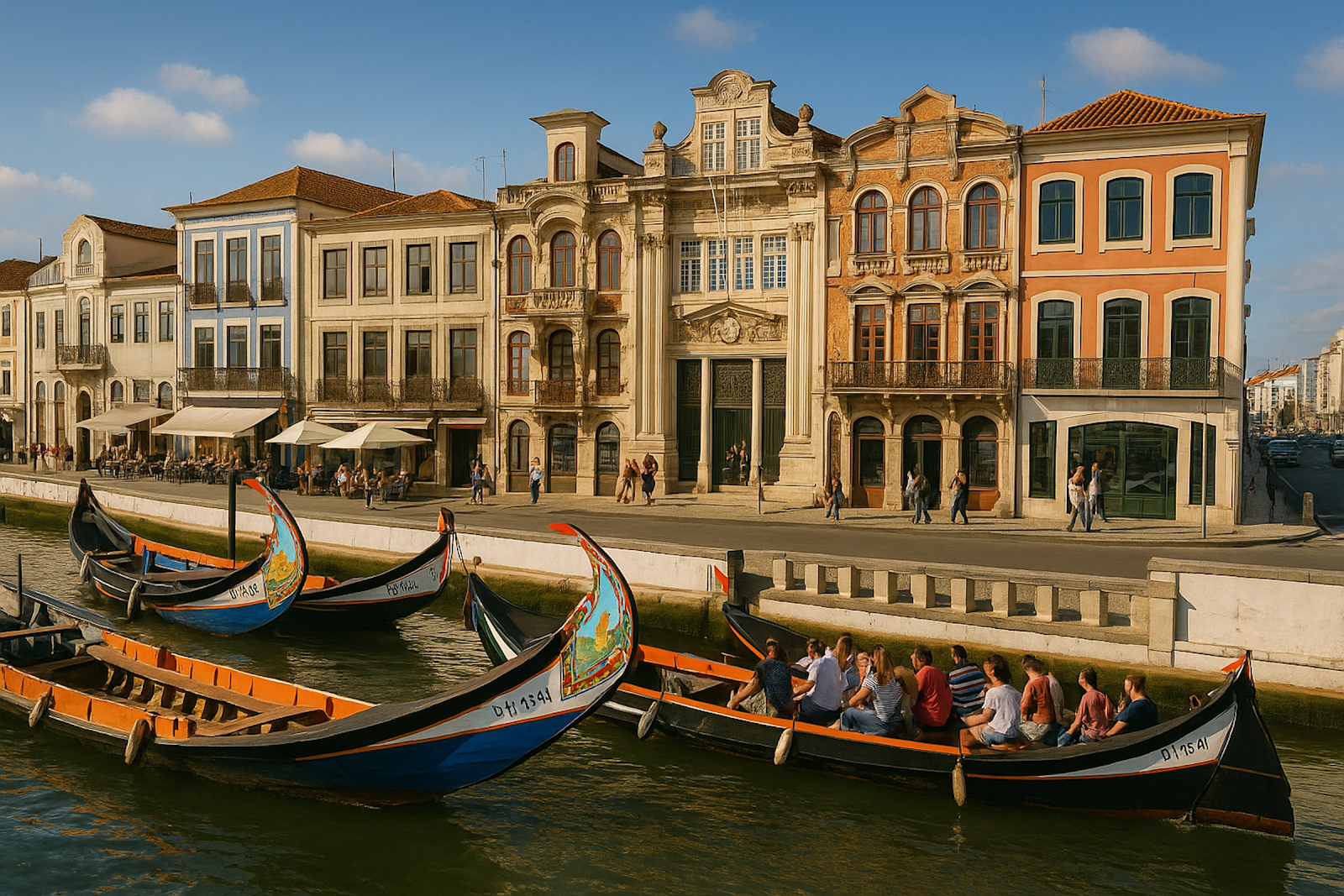
### 4. Aveiro: The Venice of Portugal Heading south from Porto, you can reach the city of Aveiro in about an hour. Known for its network of canals, Aveiro is a unique destination where traditional colorful boats called *moliceiros* once gathered seaweed. Today, these boats take visitors on gentle tours through the city waterways.
Aveiro is also famous for its Art Nouveau architecture and its signature sweet, *ovos moles* (a rich egg yolk and sugar treat). A short bus or taxi ride from the train station takes you to Costa Nova, a nearby beach area famous for its iconic "striped houses." These brightly painted wooden cottages were originally used by fishermen to store their gear and now serve as some of the most photographed summer homes in the country.
## From Faro: Exploring the Eastern Algarve
While many people think of the Algarve only for its resorts, the eastern side of the region offers a more authentic, laid-back atmosphere. The regional train line that runs from Faro is a simple way to see a different side of the south.
### 5. Tavira: The City of Churches Tavira is widely considered the most beautiful town in the Algarve. The train ride from Faro is short and scenic, passing through the Ria Formosa Natural Park. Tavira manages to feel untouched by mass tourism, maintaining a slow pace of life and a distinct character.
The town is split by the Gilão River, which is crossed by an ancient bridge often referred to as the Roman Bridge. Tavira is known for its dozens of historic churches and the remains of a hilltop castle with a beautiful garden inside. If you have time, you can take a small ferry from the town center to the Ilha de Tavira, a massive sandbar island with miles of pristine beaches and clear water.
### 6. Olhão: A Taste of the Sea Just a few minutes east of Faro by train lies Olhão, the Algarve’s busiest fishing port. This town has a very different feel from the rest of the region, influenced by North African architecture with its square, flat-roofed white houses.
The main attraction in Olhão is the waterfront market, housed in two distinctive red brick buildings. Here, you can see the incredible variety of fresh fish and seafood caught that morning, along with local fruits, honey, and crafts. The waterfront is lined with cafes where you can enjoy grilled sardines or a cold drink while watching the fishing boats come and go. It is a gritty, honest, and vibrant look at local life in southern Portugal.
## Practical Tips for Train Travel
Using the Portuguese rail system (Comboios de Portugal or CP) is generally straightforward. Here are a few things to keep in mind for your day trips:
* **Station Names:** Always check which station your train departs from. In Lisbon, Sintra trains leave from Rossio, but trains to the south often leave from Sete Rios or Santa Apolónia. In Porto, most regional trips start or pass through Sao Bento, but some long-distance services only stop at Campanhã. * **Ticket Types:** For short urban trips (like Lisbon to Cascais or Porto to Guimarães), you often use a rechargeable card. For longer regional or Alfa Pendular (high speed) trains, you should buy your ticket at the counter or a machine before boarding. * **Validation:** Don't forget to tap your card or validate your ticket at the yellow or green machines on the platform before you get on the train. * **Sundays and Holidays:** Train frequencies are often reduced on weekends and public holidays, so always check the latest schedule on the official CP website or mobile app.
## Beyond the Tracks
While the train is a fantastic way to hop between major towns, it does have its limits. Many of Portugal’s most breathtaking hidden gems, such as the remote villages of the Schist country, the deep corners of the Douro Valley, or the ancient cork forests of the Alentejo, are not easily accessible by rail.
For travelers who want to see more than just the station stops, a private service offers a level of depth and comfort that public transport cannot match. Having a professional driver means you don't have to worry about schedules, luggage, or navigating unfamiliar roads. It allows you to combine multiple destinations in a single day, like visiting both a historic palace and a remote coastal cliff that no train could ever reach.
Portugal Magik has spent 14 years helping visitors discover the authentic heart of the country. With a premium fleet of Mercedes-Benz vehicles including E-Class sedans and V-Class vans, the experience is about more than just getting from point A to point B. It is about the stories, the flexibility to stop for a photo, and the ease of a door-to-door service led by an English-speaking local expert.
If you love the idea of exploring these beautiful regions but prefer a more personalized, seamless pace, a private tour is the ideal choice. You can enjoy the scenery without checking your watch or worrying about the last train home.
Request your personalized proposal today and let us show you the very best of Portugal in comfort and style.