5 Local Pastries to Try Across Portugal
By Portugal Magik · Published 2026-10-06
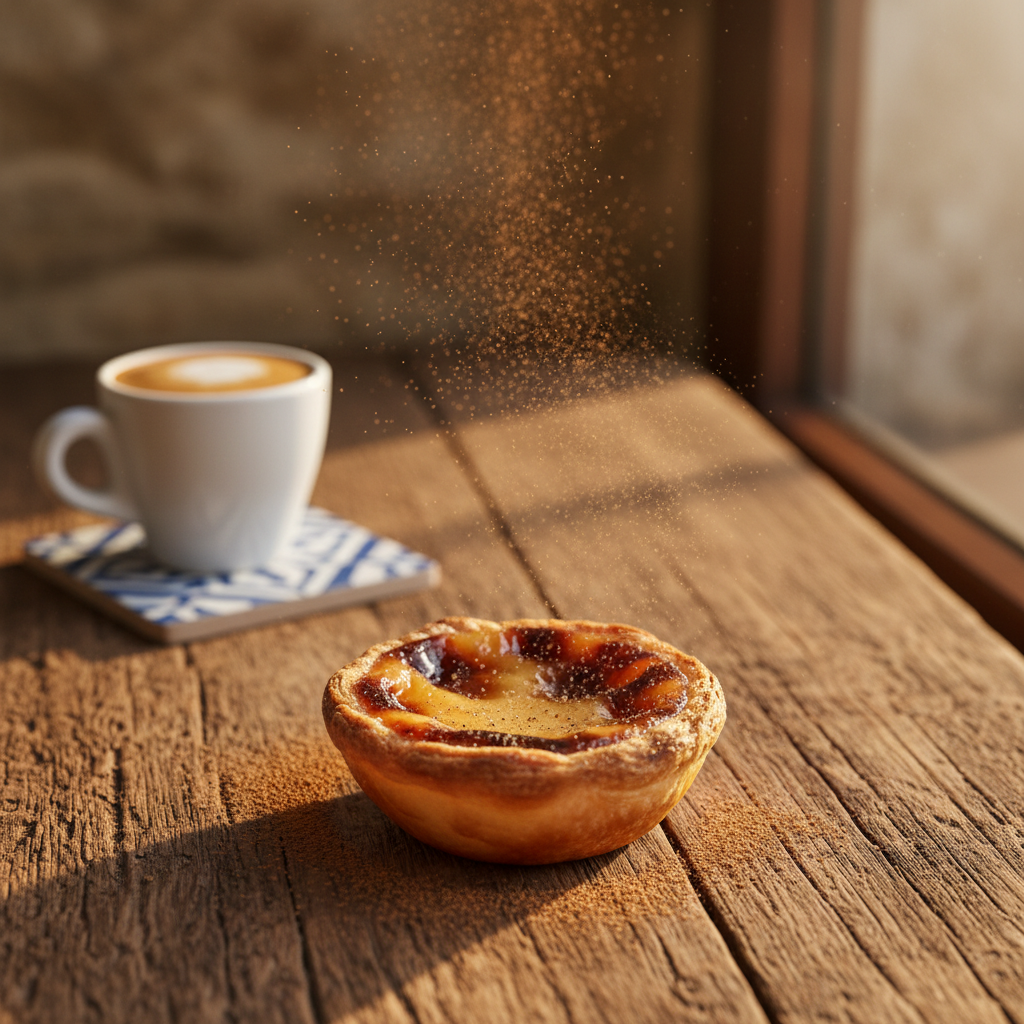
Discover the rich world of Portuguese sweets, from the iconic Pastel de Belém to the almond-filled delights of the Algarve, and learn the history behind these delicious traditions.
When you walk through the streets of any Portuguese town, the first thing that usually hits you is the scent of toasted sugar and warm cinnamon. Portugal has a deep, centuries-old relationship with pastry making that goes far beyond the famous custard tart everyone knows.
This tradition started largely in the kitchens of Catholic convents and monasteries. Centuries ago, egg whites were used in massive quantities to starch the habits of monks and nuns or to clarify wine. This left a surplus of egg yolks. Not wanting to waste anything, the clergy mixed the yolks with sugar (which was becoming abundant due to trade) to create what we now call "conventual sweets."
Today, these recipes are the backbone of Portuguese cafe culture. Whether you are in a bustling Lisbon square or a quiet village in the Alentejo, the local "pastelaria" is the heart of the community. Here are five local pastries you should look for as you travel across Portugal.
## 1. Pastel de Belém (Lisbon)
While you can find "Pastéis de Nata" all over the country, the Pastel de Belém is the original version found only in the Belém district of Lisbon. The recipe remains a closely guarded secret, known by only a few master bakers at the Fábrica de Pastéis de Belém.
The pastry is defined by its incredibly thin, shattered-glass crispness. When you bite into it, the puff pastry base should crunch loudly, contrasting with the smooth, slightly charred custard cream inside. Local etiquette suggests sprinkling your tart with a bit of cinnamon and powdered sugar while it is still warm from the oven.
In Lisbon, these are more than just a snack; they are a ritual. Standing at a marble counter with a "bica" (a strong Portuguese espresso) and a couple of these tarts is the quintessential Lisbon experience.
## 2. Travesseiro de Sintra (Sintra)
Just a short drive from the capital lies the misty, romantic town of Sintra. While the town is famous for its palaces, food lovers flock here for the "Travesseiro," which translates to "pillow."
This pastry is a rectangular puff pastry sleeve, light and airy, filled with a rich cream made from egg yolks, sugar, and almonds. Some versions include a hint of secret ingredients that locals claim give it a unique forest-like sweetness. The outside is dusted with a fine coating of granulated sugar.
The most famous place to find these is Piriquita, a bakery that has been operating since the mid-nineteenth century. Eating a warm Travesseiro after a morning exploring the Pena Palace or the Quinta da Regaleira is a highlight for many visitors to the region.
## 3. Ovos Moles (Aveiro)
Traveling north to the coastal city of Aveiro, often called the Venice of Portugal because of its canals and colorful boats, you will encounter Ovos Moles. These are perhaps the most artistic of all Portuguese sweets.
The name literally means "soft eggs." The filling is a simple but intense mixture of egg yolks and sugar syrup, cooked to a specific creamy consistency. What makes them unique is the casing. The mixture is encased in a thin wafer, similar to the communion wafers used in churches, and molded into shapes inspired by the sea: shells, fish, and whelks.
This pastry was the first in Portugal to receive a Protected Geographical Indication from the European Union, meaning the real deal must come from Aveiro. They are sweet, delicate, and a perfect representation of the city's maritime heritage.
## 4. Pão de Ló (Ovar and Alfeizerão)
Pão de Ló is often translated as "sponge cake," but that description does not do it justice. While you can find firm, bread-like versions across the country, the versions found in towns like Ovar or Alfeizerão are something else entirely.
In these regions, the cake is intentionally left underbaked in the center. When you cut into the paper-lined mold, the golden, creamy egg center flows out like a rich sauce. It is made using only three ingredients: eggs (lots of them), sugar, and a small amount of flour.
The texture is a contrast between the light, fluffy cake on the edges and the decadent, liquid center. It is often served at family gatherings and during Easter, but specialized shops in central Portugal offer it year-round for those seeking a truly indulgent experience.
## 5. Dom Rodrigo (Algarve)
Moving to the southern coast, the pastries take on a different character, often reflecting the Moorish influence in the region through the heavy use of almonds and citrus. The Dom Rodrigo is the star of the Algarve.
This sweet looks like a small gift, usually wrapped in colorful metallic foil. Inside, you find a cluster of "fios de ovos" (delicate threads of eggs cooked in syrup), mixed with almond paste and cinnamon. The whole mixture is often lightly caramelized.
It is incredibly sweet and rich, usually eaten with a spoon or directly from its foil wrapper. It represents the sun-drenched flavors of the south and is the perfect way to end a meal of fresh Atlantic seafood.
## Tips for the Best Pastry Experience
To enjoy these like a local, keep a few things in mind. First, the "Pastelaria" is not just a bakery; it is a social hub. Most Portuguese people visit one at least once a day.
Second, coffee is the mandatory companion. Whether you prefer a "café" (espresso), a "meia de leite" (half milk, half coffee), or a "galão" (a tall glass of milky coffee), the bitterness of the coffee perfectly balances the high sugar content of the conventual sweets.
Finally, always ask for the "doce regional" (regional sweet). Every small town in Portugal usually has one specific pastry they are famous for. Even if it is not on this list, it is almost certainly worth trying.
## Exploring Portugal in Comfort
Seeing these sights and tasting these flavors is much easier when you do not have to worry about navigation or parking. Portugal has diverse landscapes, from the rolling plains of the Alentejo to the mountainous roads of the Douro Valley.
Traveling between these regions in a premium vehicle allows you to focus on the scenery and the flavors rather than the logistics. A professional driver can help you navigate the narrow streets of ancient towns where these bakeries are tucked away, ensuring you arrive relaxed and ready to explore.
Whether you are planning a day trip from Lisbon to Sintra or a multi-day journey from the Algarve to the northern borders, having a dedicated transport service provides the flexibility to stop whenever a local bakery catches your eye.
Portugal Magik has 14 years of experience helping travelers discover the authentic side of the country. With a fleet of Mercedes-Benz E-Class, V-Class, and Sprinter vehicles, we provide a high-end transport experience tailored to your needs. Our English-speaking drivers are dedicated to discerning international travelers seeking premium experiences across Portugal.
Request your personalized proposal today and let us help you plan your journey through the flavors of Portugal.